Dog Breed · Germany
Boxer
An athletic, clownish family dog with a short coat and boundless affection for its people.
By WARN Research & Conservation TeamLast updated
In brief
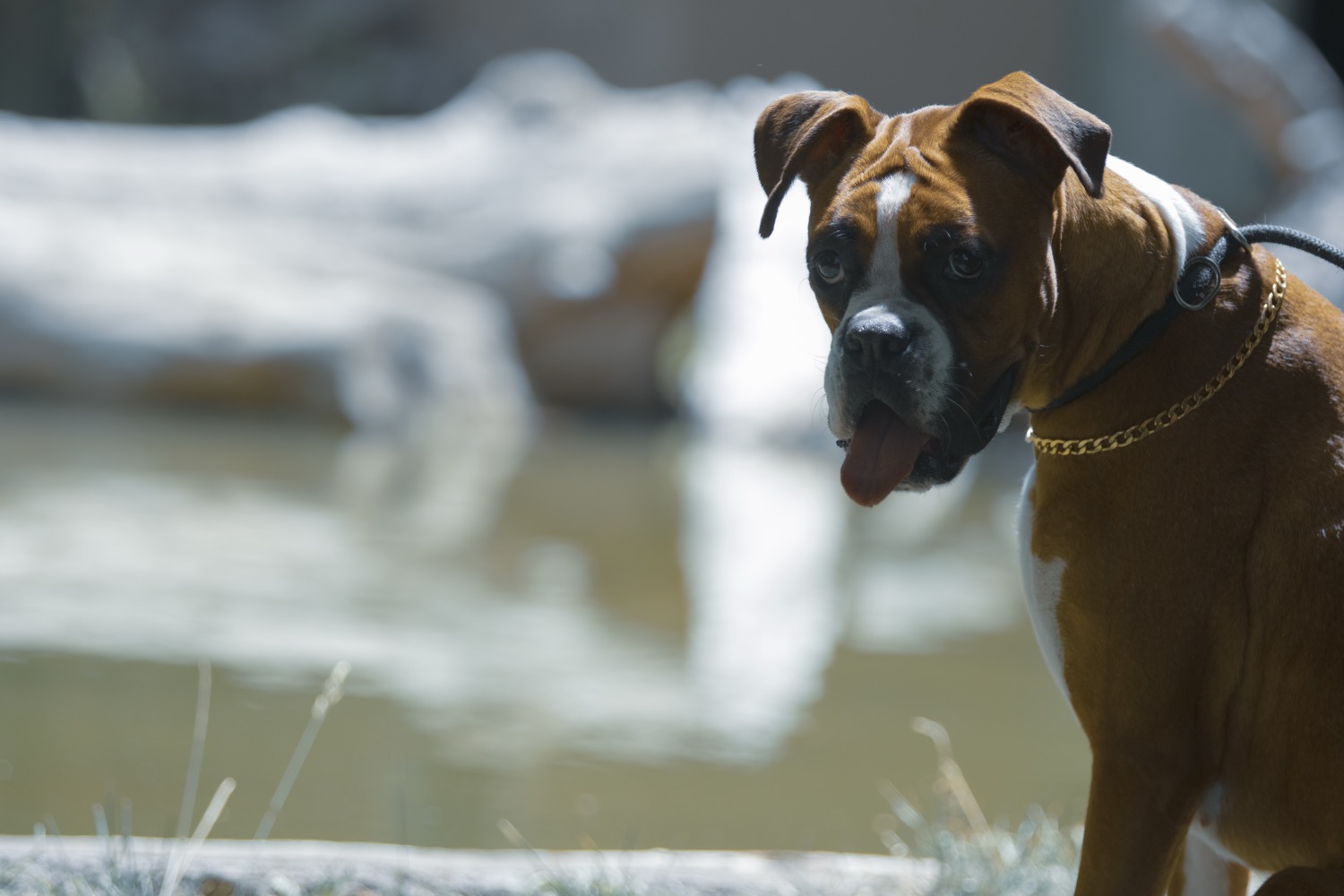
The Boxer is a medium-to-large German working breed known for its athletic build, square muzzle and famously playful, clownish personality. Its defining trait is exuberant, affectionate energy, making it a devoted, fun-loving family companion that stays youthful and bouncy well into adulthood.
What are the key facts about a Boxer?
The Boxer is a dog breed from Germany: large (25–32 kg), playful, energetic, loyal. An athletic, clownish family dog with a short coat and boundless affection for its people.
| Origin | Germany |
|---|---|
| Size | Large (25–32 kg) |
| Weight | 25-32 kg (55-71 lb); females typically 25-29 kg, males 30-32 kg |
| Lifespan | 10–14 years |
| Coat | A short, smooth, tight-fitting coat in fawn or brindle, often with white markings and a dark mask. Grooming is very easy: a weekly rub with a grooming mitt or soft brush removes loose hair and keeps the coat glossy. Boxers shed moderately and are fairly clean dogs that need only occasional bathing, though their short coat offers little protection in cold or wet weather. |
| Temperament | Playful, energetic, loyal |
| Good with | An excellent choice for active families, including those with children, thanks to their patient, playful nature and strong bond with their people. They suit first-time owners willing to commit to training, as their exuberance and slow maturation need consistent guidance. They prefer a home with a garden over a small flat, need plenty of daily exercise, and generally get on well with other pets when socialised early. |
Is a Boxer a good dog for you?
A Boxer is a good dog when your home matches an excellent choice for active families, including those with children, thanks to their patient, playful nature and strong bond with their people. they suit first-time owners willing to commit to training, as their exuberance and slow maturation need consistent guidance. they prefer a home with a garden over a small flat, need plenty of daily exercise, and generally get on well with other pets when socialised early.. It is a playful, energetic, loyal large (25–32 kg) breed from Germany.
An athletic, clownish family dog with a short coat and boundless affection for its people. That one-line pitch is not a care plan. Factor grooming (A short, smooth, tight-fitting coat in fawn or brindle, often with white markings and a dark mask. Grooming is very easy: a weekly rub with a grooming mitt or soft brush removes loose hair and keeps the coat glossy. Boxers shed moderately and are fairly clean dogs that need only occasional bathing, though their short coat offers little protection in cold or wet weather.), typical adult size (25-32 kg (55-71 lb); females typically 25-29 kg, males 30-32 kg), and the health issues listed below before you pay a deposit.
Meet adults of the breed, not only puppies or kittens, and prefer rescue or health-screened homes. A Boxer that looks right in a photo can still be the wrong animal for a small flat, a full-time office job, or a household that wanted a low-energy companion.
What is a Boxer?
An athletic, clownish family dog with a short coat and boundless affection for its people. Origin is Germany; coat or markings are described as A short, smooth, tight-fitting coat in fawn or brindle, often with white markings and a dark mask. Grooming is very easy: a weekly rub with a grooming mitt or soft brush removes loose hair and keeps the coat glossy. Boxers shed moderately and are fairly clean dogs that need only occasional bathing, though their short coat offers little protection in cold or wet weather..
Kennel and registry labels describe a type. Individual Boxers still vary, and rescue animals may be mixes.
Where does the Boxer come from?
Boxers come from Germany. The Boxer was developed in Germany in the late 19th century from the now-extinct Bullenbeisser, a powerful hunting dog used to seize boar and deer, crossed with a smaller English bulldog type.
Breeders in Munich refined the modern Boxer in the 1890s, and the first breed club, the Deutscher Boxer Club, was founded in 1895. Valued for courage and trainability, Boxers served extensively as messenger, guard and pack-carrying dogs during both World Wars. Returning soldiers helped popularise them as family companions, and the breed became a firm favourite across Europe and North America.
How much care does a Boxer need?
Plan 10–14 years of food, vet care, grooming and time. A Boxer is large (25–32 kg) (25-32 kg (55-71 lb); females typically 25-29 kg, males 30-32 kg) from Germany, with coat care described as a short, smooth, tight-fitting coat in fawn or brindle, often with white markings and a dark mask. grooming is very easy: a weekly rub with a grooming mitt or soft brush removes loose hair and keeps the coat glossy. boxers shed moderately and are fairly clean dogs that need only occasional bathing, though their short coat offers little protection in cold or wet weather..
This temperament does not thrive on a 20-minute walk and eight hours alone.
Grooming follows the coat, not a generic clip: A short, smooth, tight-fitting coat in fawn or brindle, often with white markings and a dark mask. Grooming is very easy: a weekly rub with a grooming mitt or soft brush removes loose hair and keeps the coat glossy. Boxers shed moderately and are fairly clean dogs that need only occasional bathing, though their short coat offers little protection in cold or wet weather.. Keep the animal lean; extra weight is a joint and heart tax, especially in a large dog.
Budget for unexpected vet bills. The health section below is why “cheap to buy” is not the same as cheap to keep.
What surprises people about the Boxer?
A few details about the breed, alongside the practical care information in this guide.
- The breed is thought to be named for its habit of 'boxing' with its front paws when playing or sparring.
- Boxers were among the earliest breeds trained as guide dogs for blind people in the early 20th century.
- Their distinctive undershot jaw was originally functional, letting their Bullenbeisser ancestors grip large game while still breathing.
- Boxers are one of the slowest-maturing breeds, often remaining puppyish in behaviour until around three years old.
What health issues should you know about in a Boxer?
Health concerns to discuss with your vet, including changes to watch for and everyday care. This is general guidance, not veterinary advice — always speak to your vet.
Hip dysplasia
An inherited malformation of the hip joint that can cause stiffness, lameness, or arthritis as the dog ages.
Care: Keep dogs lean, choose health-screened parents, and seek vet advice for pain management or surgery if needed.
Heart conditions
Heart conditions can occur in this breed and may need veterinary monitoring.
Care: Discuss prevention and treatment with your vet.
Cancer risks
Cancer risks can occur in this breed and may need veterinary monitoring.
Care: Discuss prevention and treatment with your vet.
Who should skip a Boxer?
Skip a Boxer if you are owners who wanted a low-exercise companion. This Germany dog is large (25–32 kg) and playful, energetic, loyal — the mismatch is usually lifestyle, not a missing accessory.
This page is allowed to say no. Skip if you are owners who wanted a low-exercise companion.
A different dog breed on this site may fit. Wanting “a Boxer” after a film or a colour photo is not a reason to ignore the skip list.
What are the hidden catches with a Boxer?
The hidden cost of a Boxer is usually not the purchase price. It is years of care, the health list on this page, and the mismatch between a playful, energetic, loyal animal and a busy home.
The impulse-buy catch
A Boxer from Germany is often sold on looks. Coat, colour and size are not a temperament test. Meet the adult animal, ask about health screening, and walk away from pressure sales.
The hip dysplasia catch
An inherited malformation of the hip joint that can cause stiffness, lameness, or arthritis as the dog ages. Keep dogs lean, choose health-screened parents, and seek vet advice for pain management or surgery if needed.
The heart conditions catch
Heart conditions can occur in this breed and may need veterinary monitoring. Discuss prevention and treatment with your vet.
How does a Boxer compare with Australian Shepherd and Yorkshire Terrier?
A Boxer is not interchangeable with Australian Shepherd and Yorkshire Terrier. Compare origin, size, lifespan and temperament before you choose — those four lines prevent most regret.
| Dog fact | Boxer | Australian Shepherd | Yorkshire Terrier |
|---|---|---|---|
| Origin | Germany | United States | England |
| Size | Large (25–32 kg) | Medium (18–29 kg) | Toy (up to 3 kg) |
| Lifespan | 10–14 years | 10–14 years | 12–16 years |
| Temperament | Playful, energetic, loyal | Intelligent, energetic, loyal | Bold, affectionate, lively |
What is the verdict on the Boxer?
Choose a Boxer only if the care, skip-if and health sections still look like your life after a week of thinking. Otherwise pick a different dog or wait. Rescue is usually the better first door than a waiting-list puppy or kitten.
If the match is real, budget for 10–14 years of vet care and do not skip health screening. If it is not, walking away is the kind choice — for you and for the animal.
Every dog deserves a chance
Whatever breed steals your heart, millions of dogs around the world have no home at all. A symbolic adoption or a gift to WARN funds humane care for street and community dogs — vaccination, neutering and emergency treatment.