Wildlife Guide · North America & South America
Capuchin Monkey
Cebus capucinus
The clever New World monkey
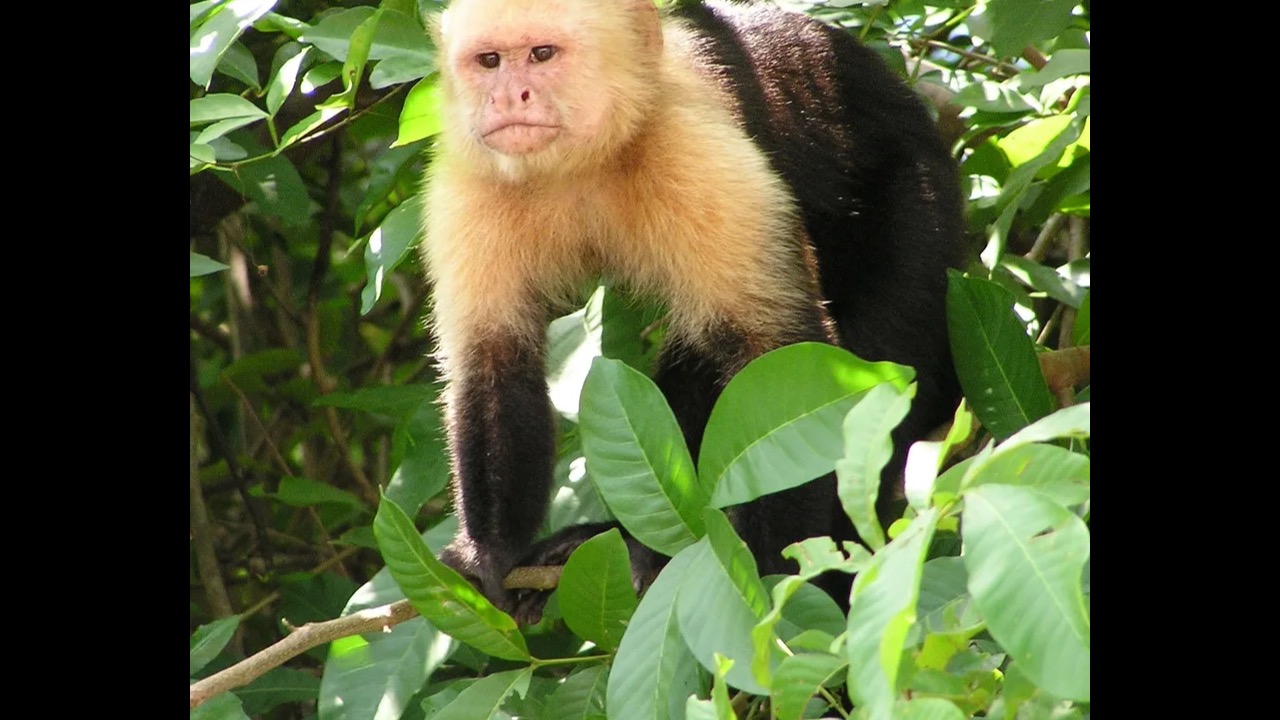
Photo: David M. Jensen (Storkk) / Wikimedia Commons (CC BY-SA 3.0)
In brief
The capuchin is a small, highly intelligent New World monkey found in the tropical forests of Central America and northwest South America. Weighing about 3 to 4 kg and measuring roughly half a metre in body length, it is an agile tree-dweller that uses its prehensile tail for balance.
Also in Animals A to Z · Animals that start with C
By WARN Research & Conservation Team Last updated
The capuchin is a small, highly intelligent New World monkey found in the tropical forests of Central America and northwest South America. Weighing about 3 to 4 kg and measuring roughly half a metre in body length, it is an agile tree-dweller that uses its prehensile tail for balance. Capuchins are famous for their problem-solving and use of simple tools, and they can live for 20 to 25 years in the wild. The IUCN lists them as Least Concern.
0.55 m
Typical length
4 kg
Typical weight
24 km/h
Top speed
25 yrs
Lifespan
Figures sourced from Wikipedia — Capuchin Monkey, Wikidata — Capuchin Monkey .
Capuchin Monkey: Quick Facts
| Scientific name | Cebus capucinus |
|---|---|
| Diet | Omnivore — fruit, insects, small vertebrates, and nuts |
| Habitat | Tropical forests of Central America and northwest South America |
| Lifespan | 20–25 years in the wild (longer in captivity) |
| Weight | 3–4 kg (6.6–8.8 lb) |
| Top speed | Up to 24 km/h (15 mph) in trees |
| Conservation status | Least Concern (IUCN) |
Scientific Classification
| Kingdom | Animalia |
|---|---|
| Phylum | Chordata |
| Class | Mammalia |
| Order | Primates |
| Family | Cebidae |
| Genus | Cebus |
Conservation Status
- IUCN Status
- Least Concern (IUCN Red List category)
- Population
- Global population not compiled for this guide
- Trend
- See the IUCN Red List assessment
- Assessed
- See the IUCN Red List assessment
- CITES
- See CITES appendices
Conservation figures are drawn from the IUCN Red List and CITES; this guide links to the authoritative sources rather than restating population counts.
Key Facts: Capuchin Monkey
- White-faced capuchins live across the tropical forests of Central America and the north-western fringe of South America, from Honduras down to Colombia and Ecuador.
- Capuchins are among the most intelligent of the New World monkeys, with large brains relative to their body size.
- As omnivores, capuchins eat a broad and opportunistic diet of fruit, insects, small vertebrates, and nuts.
Range and habitat
White-faced capuchins live across the tropical forests of Central America and the north-western fringe of South America, from Honduras down to Colombia and Ecuador. They occupy a wide variety of woodland, from lowland rainforest to dry and mangrove forest, and are highly adaptable. Most of their lives are spent in the canopy and mid-levels of the forest, though they will descend to lower branches and occasionally the ground to forage. This flexibility has helped keep them widespread and common across their range.
Intelligence and tool use
Capuchins are among the most intelligent of the New World monkeys, with large brains relative to their body size. They are well documented using simple tools, such as stones to crack open nuts and shellfish, and they rub crushed plants and insects into their fur, which may deter parasites. Their dexterity and learning ability have long made them a focus of scientific study into primate cognition. In captivity, this same cleverness has seen them trained to assist people with disabilities.
Diet and foraging
As omnivores, capuchins eat a broad and opportunistic diet of fruit, insects, small vertebrates, and nuts. They are inventive foragers, tearing apart bark, prising open pods, and searching leaf litter for hidden prey. Their strong hands and problem-solving skills let them reach foods that many other monkeys cannot. By carrying and dropping seeds as they feed, capuchins help spread the plants of the forest they live in.
Movement through the trees
Capuchins are agile, quadrupedal climbers that run and leap through the branches, reaching speeds of up to 24 km/h in the trees. Their semi-prehensile tail acts as a fifth limb, curling around branches to steady them and free their hands for feeding. They rarely make the long, arm-swinging leaps of larger primates, instead moving in quick, controlled bounds. On the ground they move less confidently and prefer to stay aloft where they are safer from predators.
Reproduction and lifespan
Females usually give birth to a single infant after a gestation of about five to six months. The newborn clings to its mother's back and is cared for by her and, at times, other members of the troop. Capuchins mature slowly for a small monkey, reflecting their long lives of 20 to 25 years in the wild and often longer in captivity. This slow pace of life is closely tied to their large brains and lengthy learning period.
What WARN Does
WARN does not run a dedicated capuchin monkey programme — this guide is part of the World Animal Rescue Network's free educational library. The capuchin monkey is currently widespread and not globally threatened, and this guide helps readers understand the pressures that can change that. Building public understanding of species like the capuchin monkey supports the broader conservation awareness that underpins WARN's partner-led rescue work across its network.
If clear, science-based wildlife guides like this help you understand and value animals, please consider supporting the World Animal Rescue Network's educational and rescue work so we can keep producing them.
Capuchin Monkey: Frequently Asked Questions
Why are capuchin monkeys considered so intelligent?
What do capuchin monkeys eat?
Where do capuchin monkeys live?
How long do capuchin monkeys live?
Do capuchin monkeys make good pets?
Are capuchin monkeys endangered?
Are capuchin monkeys dangerous?
How big is a capuchin monkey?
Sources & References
Population figures, conservation status and biological facts on this page are drawn from authoritative scientific and intergovernmental sources.
Terms used on this page
Plain-English definitions, from our wildlife and conservation glossary.
Latest Capuchin Monkey Stories
Quick, fact-checked reads on the capuchin monkey — amazing facts, key questions and the threats it faces.
Species
12 Amazing Facts About the Jaguar, the Americas' Biggest Cat
From a skull-piercing bite to a love of swimming, here are 12 fascinating, fact-checked things that make the jaguar the most powerful cat in the Americas.
Read the storySpecies
11 Amazing Facts About the Pink River Dolphin (the Amazon's Blushing Boto)
From a head that swivels 90 degrees to a blush built from battle scars, here are 11 true facts about the Amazon's pink river dolphin, the largest freshwater dolphin on Earth.
Read the storySpecies
Pink River Dolphin vs Tucuxi: How to Tell the Two Amazon Dolphins Apart
Both swim the same Amazon waters, but the pink boto and the grey tucuxi are only distant cousins. Here is how to tell them apart at a glance.
Read the storyExplore more animals
Discover more animals, their habitats and their conservation status in the WARN wildlife-guide library.
Enjoyed this Capuchin Monkey guide?
Receive appeal updates, animal-welfare news and published funding reports. Unsubscribe any time.
We only use your address for WARN updates. See our privacy policy.
Social life
Capuchins live in groups of around 10 to 35 individuals, led by a dominant male and female. These troops are noisy and cooperative, grooming one another and joining together to mob predators such as snakes and birds of prey. Communication relies on a rich mix of calls, facial expressions, and body postures. Young capuchins learn foraging techniques and social rules by closely watching the adults around them.