Wildlife Guide · Oceans
Bull Shark
Carcharhinus leucas
The shark that swims into freshwater
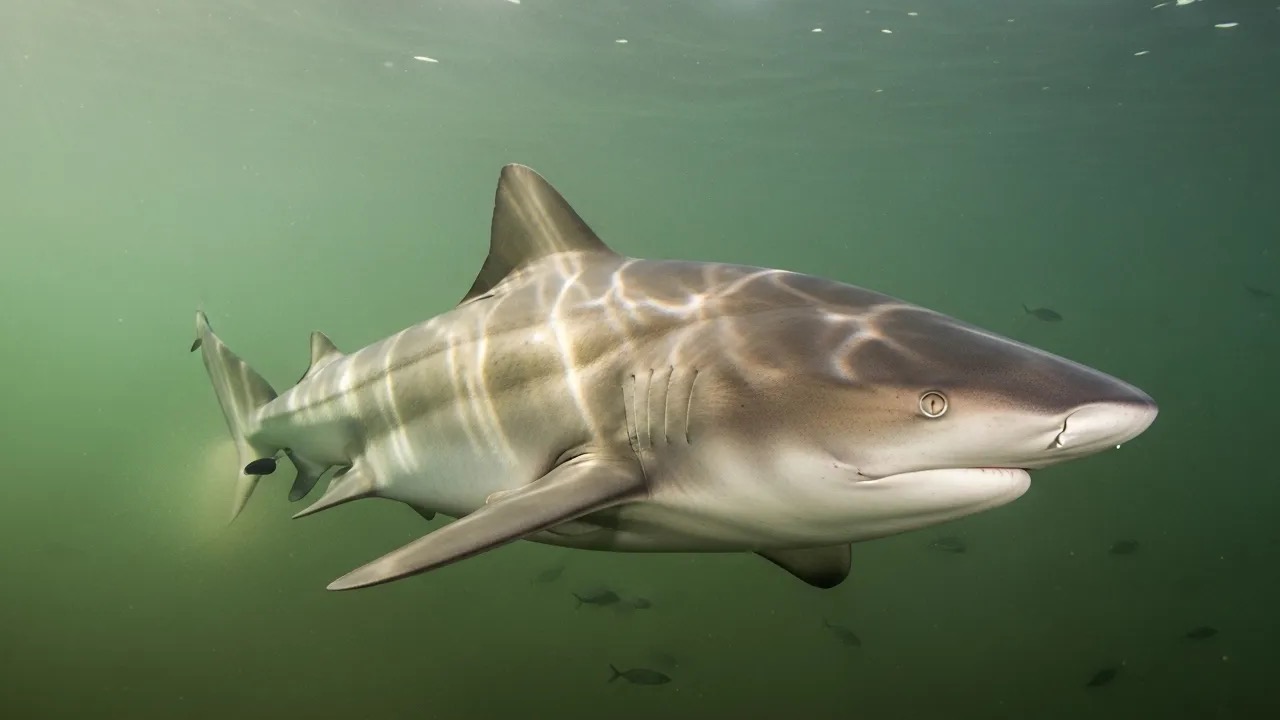
Photo: Philip Halling / Wikimedia Commons (CC BY-SA 2.0)
In brief
The bull shark (Carcharhinus leucas) is a stocky, aggressive coastal shark famous for swimming far up rivers and into freshwater lakes. It grows up to about 3.5 m (11 ft) long and 130 kg (290 lb), and hunts a wide range of prey in warm seas, rivers, and estuaries.
Also in Animals A to Z · Animals that start with B
By WARN Research & Conservation Team Last updated
The bull shark (Carcharhinus leucas) is a stocky, aggressive coastal shark famous for swimming far up rivers and into freshwater lakes. It grows up to about 3.5 m (11 ft) long and 130 kg (290 lb), and hunts a wide range of prey in warm seas, rivers, and estuaries. Fast in short bursts, it can reach around 40 km/h (25 mph) and lives 16 to 25 years. The IUCN lists it as Vulnerable.
3.5 m
Typical length
130 kg
Typical weight
40 km/h
Top speed
20 yrs
Lifespan
Figures sourced from IUCN Red List — Carcharhinus leucas, Wikipedia — Bull Shark, Wikidata — Bull Shark .
Bull Shark: Quick Facts
| Scientific name | Carcharhinus leucas |
|---|---|
| Diet | Carnivore |
| Habitat | Warm coastal seas, rivers, and lakes |
| Lifespan | 16–25 years |
| Length | 2–3.5 m (7–11 ft) |
| Top speed | Up to 40 km/h (25 mph) in bursts |
| Conservation status | Vulnerable (IUCN) |
Scientific Classification
| Kingdom | Animalia |
|---|---|
| Phylum | Chordata |
| Class | Chondrichthyes |
| Order | Carcharhiniformes |
| Family | Carcharhinidae |
| Genus | Carcharhinus |
Conservation Status
- IUCN Status
- Vulnerable (IUCN Red List category)
- Population
- Global population not compiled for this guide
- Trend
- See the IUCN Red List assessment
- Assessed
- See the IUCN Red List assessment
- CITES
- See CITES appendices
Conservation figures are drawn from the IUCN Red List and CITES; this guide links to the authoritative sources rather than restating population counts.
Key Facts: Bull Shark
- Bull sharks are heavy-bodied and muscular, typically 2 to 3.5 m (7 to 11 ft) long and weighing up to about 130 kg (290 lb), with females larger than males.
- The bull shark is one of the very few sharks that can thrive in freshwater as well as the sea.
- Bull sharks are opportunistic carnivores with one of the broadest diets of any shark.
Size and appearance
Bull sharks are heavy-bodied and muscular, typically 2 to 3.5 m (7 to 11 ft) long and weighing up to about 130 kg (290 lb), with females larger than males. They are grey above and pale below, with a short, broad, rounded snout that gives them their name and their pugnacious look. Their small eyes suggest they often rely on other senses in the murky water they favour. Powerful jaws and stout teeth let them tackle unusually large and varied prey for their size.
Life in freshwater
The bull shark is one of the very few sharks that can thrive in freshwater as well as the sea. Special adaptations in its kidneys, gills, and other organs let it control the salt balance in its body, so it can swim far up rivers and into lakes. Bull sharks have been recorded thousands of kilometres up the Amazon and Mississippi and living in Lake Nicaragua. This ability lets them hunt and give birth in places most sharks can never reach.
Hunting and diet
Bull sharks are opportunistic carnivores with one of the broadest diets of any shark. They eat bony fish, other sharks and rays, turtles, crustaceans, seabirds, and even dolphins, taking almost anything they can overpower. They often hunt in shallow, cloudy coastal water and river mouths, using surprise and sudden bursts of speed of up to about 40 km/h (25 mph). This adaptable appetite is part of why they succeed in so many habitats.
Reproduction and young
Female bull sharks give birth to live young, usually producing litters of around one to a dozen pups after a gestation of roughly a year. They favour shallow, brackish estuaries and river mouths as nurseries, where the young are relatively safe from larger ocean predators. Newborn pups are about 70 cm long and are independent from birth. Bull sharks live for around 16 to 25 years in the wild.
Encounters with people
Because bull sharks are large, bold, and often swim in the shallow, murky water where people swim, they are considered one of the shark species most likely to be involved in bites on humans. Their tolerance of rivers and estuaries brings them into contact with people far from the open sea. Serious incidents are still rare, and most bull sharks show little interest in people. Sensible caution in murky coastal and river water reduces the already low risk.
Conservation status
The bull shark is listed as Vulnerable by the IUCN. Like many sharks it is slow to mature and produces relatively few young, so populations recover slowly from pressure. Overfishing, capture for fins and meat, and the loss of the coastal and estuary habitats it uses as nurseries all threaten its numbers. Protecting river mouths and limiting catches are key to keeping the species healthy.
What WARN Does
WARN does not run a dedicated bull shark programme — this guide is part of the World Animal Rescue Network's free educational library. The bull shark faces documented conservation pressure in the wild, which is why clear, sourced public information about it matters. Building public understanding of species like the bull shark supports the broader conservation awareness that underpins WARN's partner-led rescue work across its network.
If clear, science-based wildlife guides like this help you understand and value animals, please consider supporting the World Animal Rescue Network's educational and rescue work so we can keep producing them.
Bull Shark: Frequently Asked Questions
Can bull sharks live in freshwater?
How big do bull sharks get?
Are bull sharks dangerous to humans?
What do bull sharks eat?
How fast can a bull shark swim?
How long do bull sharks live?
Where do bull sharks live?
Sources & References
Population figures, conservation status and biological facts on this page are drawn from authoritative scientific and intergovernmental sources.
Terms used on this page
Plain-English definitions, from our wildlife and conservation glossary.
Latest Bull Shark Stories
Quick, fact-checked reads on the bull shark — amazing facts, key questions and the threats it faces.
Species
Why Are Sea Turtles Endangered? The Threats — and How to Help
Sea turtles have survived for more than 100 million years, yet within a few human generations most species have been pushed toward extinction. Here is what is driving the decline — bycatch, plastic, poaching and lost nesting beaches — and what actually helps.
Read the storySpecies
12 Amazing Facts About the Humpback Whale, the Ocean's Great Singer
From hours-long songs that only males sing to flippers longer than any other whale, here are 12 genuinely surprising facts about the humpback whale.
Read the storySpecies
How Big Is a Humpback Whale? Size, Weight and Strength Explained
Humpback whales reach 14 to 16 metres and weigh up to 30 tonnes, with the longest flippers of any whale. Here's how their size, weight and power really compare.
Read the storyExplore more animals
Discover more animals, their habitats and their conservation status in the WARN wildlife-guide library.
Enjoyed this Bull Shark guide?
Receive appeal updates, animal-welfare news and published funding reports. Unsubscribe any time.
We only use your address for WARN updates. See our privacy policy.