Wildlife Guide · North America
Brown Recluse Spider
Loxosceles reclusa
The violin-marked spider of the American South
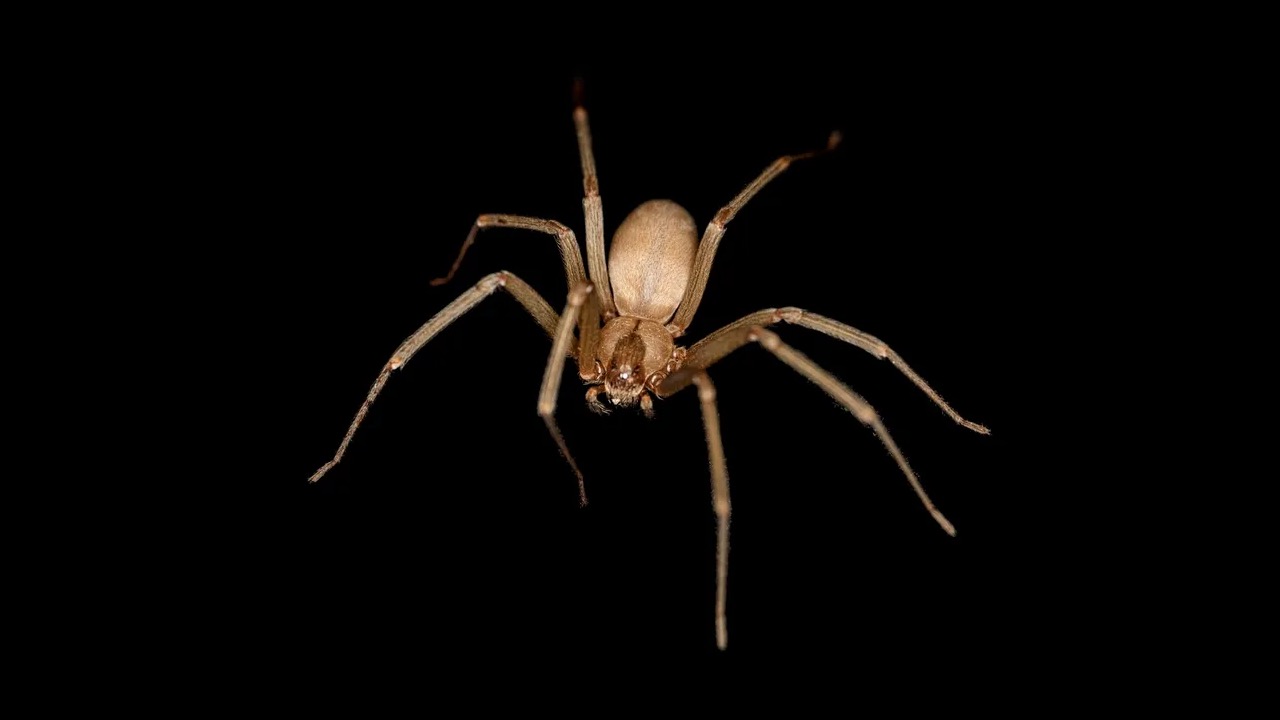
Photo: Wikimedia Commons / Wikimedia Commons (CC BY-SA 3.0)
In brief
The brown recluse is a small venomous spider named for a violin-shaped mark on its cephalothorax and its shy, reclusive habits. Found mainly in the central and southern United States, it bites rarely but can cause necrotic skin lesions.
Also in Animals A to Z · Animals that start with B
By WARN Research & Conservation Team Last updated
The brown recluse is a small venomous spider named for a violin-shaped mark on its cephalothorax and its shy, reclusive habits. Found mainly in the central and southern United States, it bites rarely but can cause necrotic skin lesions. Adults are 6–20 mm long and listed Not Evaluated by IUCN.
0.015 m
Typical length
1 g
Typical weight
0.5 km/h
Top speed
3 yrs
Lifespan
Figures sourced from Wikipedia — Brown Recluse Spider, Wikidata — Brown Recluse Spider .
Brown Recluse Spider: Quick Facts
| Scientific name | Loxosceles reclusa |
|---|---|
| Diet | Carnivore — insects and other small arthropods |
| Habitat | Dark undisturbed spaces — attics, closets, sheds, and woodpiles |
| Lifespan | 2–4 years; slow-growing and long-lived for a spider |
| Weight | 0.5–1 g (0.0005–0.001 kg) |
| Top speed | Quick short bursts when threatened; otherwise sedentary |
| Conservation status | Not Evaluated (IUCN) |
Scientific Classification
| Kingdom | Animalia |
|---|---|
| Phylum | Arthropoda |
| Class | Arachnida |
| Order | Araneae |
| Family | Sicariidae |
| Genus | Loxosceles |
Conservation Status
- IUCN Status
- Not Evaluated (IUCN Red List category)
- Population
- Global population not compiled for this guide
- Trend
- See the IUCN Red List assessment
- Assessed
- See the IUCN Red List assessment
- CITES
- See CITES appendices
Conservation figures are drawn from the IUCN Red List and CITES; this guide links to the authoritative sources rather than restating population counts.
Key Facts: Brown Recluse Spider
- Brown recluses avoid open spaces and daylight, spinning irregular webs in undisturbed corners rather than catching prey in orb webs.
- The dark violin-shaped mark on the cephalothorax helps identification, though similar marks occur on harmless species.
- Bites occur when spiders are trapped against skin in clothing or bedding — they do not chase people.
Reclusive habits
Brown recluses avoid open spaces and daylight, spinning irregular webs in undisturbed corners rather than catching prey in orb webs. They hunt small insects at night and tolerate crowding — dozens may share a hidden void in infested buildings.
Violin marking and identification
The dark violin-shaped mark on the cephalothorax helps identification, though similar marks occur on harmless species. Six eyes in three pairs (most spiders have eight) is a diagnostic feature. Misidentification is common outside their native range.
Venom and necrosis
Bites occur when spiders are trapped against skin in clothing or bedding — they do not chase people. Venom contains enzymes that can cause necrotic wounds in some victims, though many bites heal without serious tissue damage. Medical attention is advised for suspected bites.
Geographic limits and myths
Brown recluses are native to the south-central United States and rarely found outside this range despite frequent misidentifications elsewhere. Not Evaluated by IUCN. Reducing clutter, shaking out stored clothing, and sealing entry points limit indoor encounters.
What WARN Does
WARN does not run a dedicated brown recluse spider programme — this guide is part of the World Animal Rescue Network's free educational library. The brown recluse spider is currently widespread and not globally threatened, and this guide helps readers understand the pressures that can change that. Building public understanding of species like the brown recluse spider supports the broader conservation awareness that underpins WARN's partner-led rescue work across its network.
If clear, science-based wildlife guides like this help you understand and value animals, please consider supporting the World Animal Rescue Network's educational and rescue work so we can keep producing them.
Brown Recluse Spider: Frequently Asked Questions
Are brown recluse bites deadly?
Where do brown recluse spiders live?
How do you identify a brown recluse?
Do brown recluse spiders jump?
How do you prevent brown recluse bites?
What do brown recluse spiders eat?
Are brown recluse spiders dangerous?
How long do brown recluse spiders live?
How big is a brown recluse spider?
Sources & References
Population figures, conservation status and biological facts on this page are drawn from authoritative scientific and intergovernmental sources.
Terms used on this page
Plain-English definitions, from our wildlife and conservation glossary.
Latest Brown Recluse Spider Stories
Quick, fact-checked reads on the brown recluse spider — amazing facts, key questions and the threats it faces.
Species
12 Amazing Facts About Grey Wolves (And Why Alpha Wolves Aren't Real)
A howl that carries 16 km, a pack that is really a family, and the debunked study behind the 'alpha wolf' myth. Twelve verified facts.
Read the storySpecies
12 Amazing Facts About Beavers (Iron in Their Teeth, and They Rebuild Rivers)
Orange iron-hardened incisors, transparent eyelids, and a keystone role that reduces flooding and drought. Twelve facts.
Read the storySpecies
12 Amazing Facts About Wolverines (They Take Down Prey Five Times Their Size)
Frost-resistant fur, jaws that crush frozen bone, and territories the size of small countries. Twelve verified facts.
Read the storyExplore more animals
Discover more animals, their habitats and their conservation status in the WARN wildlife-guide library.
Enjoyed this Brown Recluse Spider guide?
Receive appeal updates, animal-welfare news and published funding reports. Unsubscribe any time.
We only use your address for WARN updates. See our privacy policy.