Wildlife Guide · Africa
Bonobo
Pan paniscus
The peaceful ape of the Congo Basin
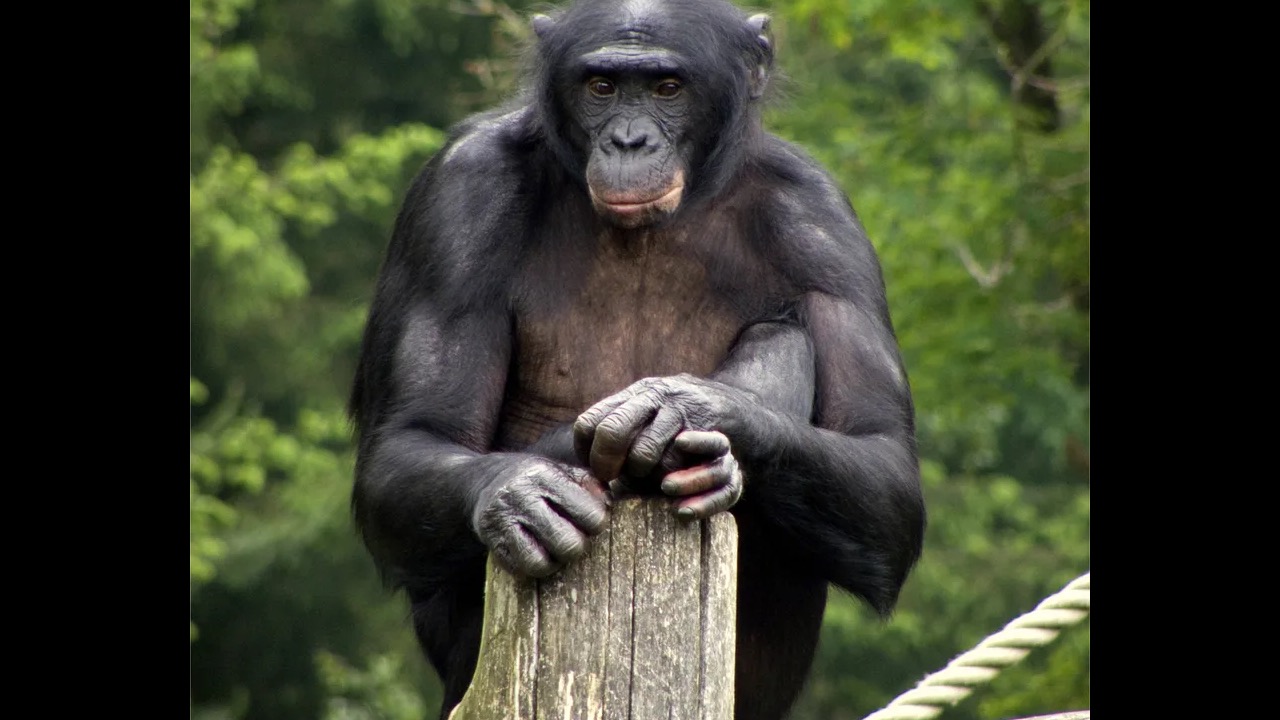
Photo: natataek / Wikimedia Commons (CC BY-SA 3.0)
In brief
Bonobos are great apes found only in the Democratic Republic of Congo, closely related to chimpanzees but generally less aggressive, with female-led social bonds and extensive use of social behaviour to resolve conflict. Listed Endangered, they weigh 30–50 kg and face habitat loss and bushmeat hunting.
Also in Animals A to Z · Animals that start with B
By WARN Research & Conservation Team Last updated
Bonobos are great apes found only in the Democratic Republic of Congo, closely related to chimpanzees but generally less aggressive, with female-led social bonds and extensive use of social behaviour to resolve conflict. Listed Endangered, they weigh 30–50 kg and face habitat loss and bushmeat hunting.
1.1 m
Typical length
40 kg
Typical weight
25 km/h
Top speed
45 yrs
Lifespan
Figures sourced from IUCN Red List — Bonobo .
Bonobo: Quick Facts
| Scientific name | Pan paniscus |
|---|---|
| Diet | Omnivore — fruit, leaves, seeds, and occasional small mammals |
| Habitat | Lowland and swamp forests south of the Congo River |
| Lifespan | 40–50 years in the wild |
| Weight | 30–50 kg (66–110 lb); females slightly smaller |
| Top speed | Knuckle-walking; agile in trees |
| Conservation status | Endangered (IUCN) |
Scientific Classification
| Kingdom | Animalia |
|---|---|
| Phylum | Chordata |
| Class | Mammalia |
| Order | Primates |
| Family | Hominidae |
| Genus | Pan |
Conservation Status
- IUCN Status
- Endangered (IUCN Red List)
- Population
- See the IUCN Red List assessment
- Trend
- Decreasing
- Assessed
- 2016
- CITES
- See CITES appendices
Key documented threats: Poaching for the commercial bushmeat trade; Habitat loss and degradation; Civil unrest and weak law enforcement; Slow reproductive rate limiting recovery.
Key Facts: Bonobo
- Bonobo groups are led by strong female alliances that cooperate to manage aggression and access food.
- Bonobos evolved separately from chimpanzees after the Congo River formed a barrier roughly two million years ago.
- Bonobos pass mirror tests, use tools in captivity, and show advanced communication in language research projects.
How do bonobo societies work?
Bonobo groups are led by strong female alliances that cooperate to manage aggression and access food. Females migrate between groups and form bonds that reduce male dominance compared with chimpanzees. Social grooming and play are central to group cohesion. That pattern is well documented in field studies south of the Congo River; it is not a claim that bonobos never fight. They do. The difference is frequency and the social tools used to repair tension afterwards.
Why do bonobos live only south of the Congo River?
Bonobos evolved separately from chimpanzees after the Congo River formed a barrier roughly two million years ago. They occupy forests exclusively south of the river in the Democratic Republic of Congo — a range far smaller and more fragmented than that of chimps. The river is wide enough, and dangerous enough, that it has kept the two Pan species from reuniting. There are no wild bonobos in East Africa, West Africa, or anywhere outside the DRC.
How intelligent are bonobos?
Bonobos pass mirror tests, use tools in captivity, and show advanced communication in language research projects. In the wild they forage mainly for ripe fruit, sharing patches peacefully more often than chimpanzees do. Intelligence is not a conservation shield: a species can be cognitively extraordinary and still be hunted out of a forest that law enforcement cannot reach.
Why are bonobos endangered?
Fewer than 20,000 bonobos may remain, listed Endangered from bushmeat hunting, logging, and civil conflict in the DRC. Protected areas such as Salonga National Park are critical, but enforcement remains challenging in remote rainforest. The IUCN assessment (2016) is the source for status and trend; this guide does not invent a newer census.
Does WARN run a bonobo programme?
No. The Democratic Republic of Congo is not in WARN’s partner-network country list. This guide is part of the free educational library. A donation to The related appeal explains potential support and the current funding status; this guide does not confirm a WARN grant.
What WARN Does
WARN does not run a dedicated bonobo programme — this guide is part of the World Animal Rescue Network's free educational library. The bonobo faces documented conservation pressure in the wild, which is why clear, sourced public information about it matters. Building public understanding of species like the bonobo supports the broader conservation awareness that underpins WARN's partner-led rescue work across its network.
If clear, science-based wildlife guides like this help you understand and value animals, please consider supporting the World Animal Rescue Network's educational and rescue work so we can keep producing them.
Bonobo: Frequently Asked Questions
Bonobo vs chimpanzee — what is the difference?
Are bonobos peaceful?
Where do bonobos live?
How intelligent are bonobos?
Are bonobos endangered?
What do bonobos eat?
Are bonobos dangerous?
How long do bonobos live?
How big is a bonobo?
Sources & References
Population figures, conservation status and biological facts on this page are drawn from authoritative scientific and intergovernmental sources.
Terms used on this page
Plain-English definitions, from our wildlife and conservation glossary.
Latest Bonobo Stories
Quick, fact-checked reads on the bonobo — amazing facts, key questions and the threats it faces.
Explore more animals
Discover more animals, their habitats and their conservation status in the WARN wildlife-guide library.
Enjoyed this Bonobo guide?
Receive appeal updates, animal-welfare news and published funding reports. Unsubscribe any time.
We only use your address for WARN updates. See our privacy policy.