Wildlife Guide · Oceans
Blue Tang
Paracanthurus hepatus
The bright blue reef fish from Finding Nemo
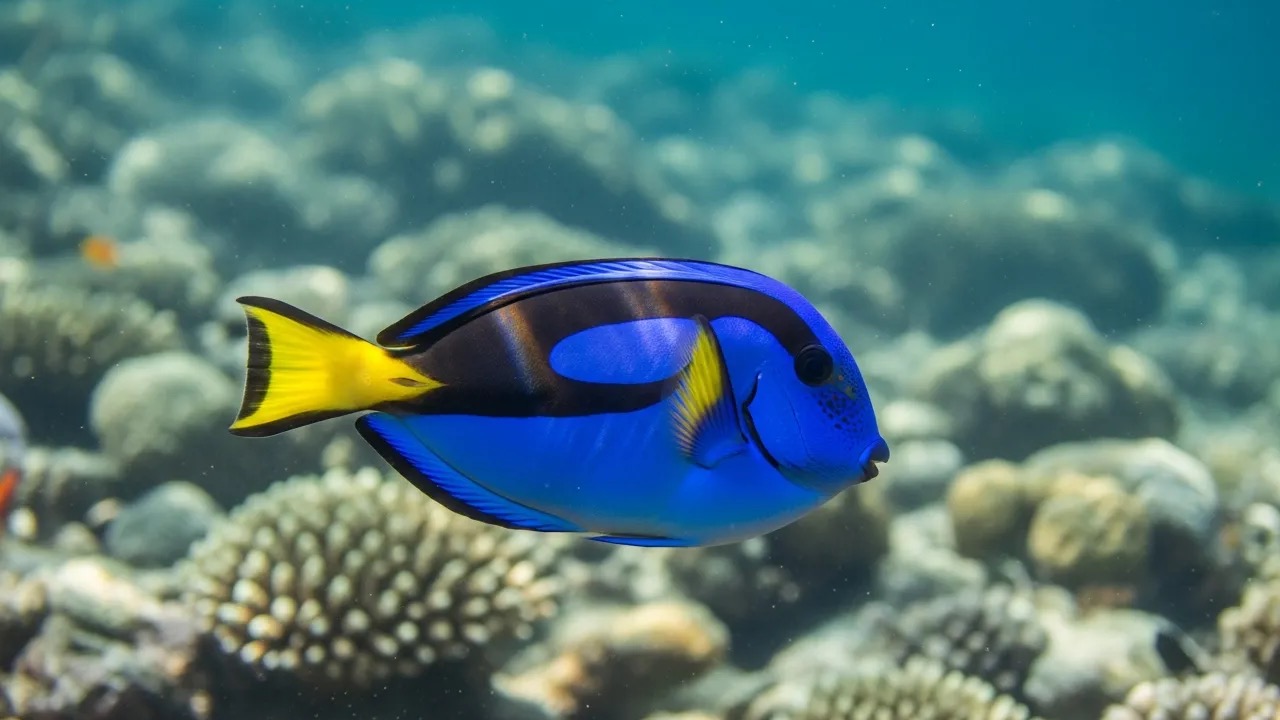
Photo: NOAA-JMA / Wikimedia Commons (CC BY 4.0)
In brief
The blue tang (Paracanthurus hepatus) is a vivid royal-blue reef fish with black markings and a bright yellow tail, best known as the character Dory from Finding Nemo. It lives on coral reefs across the Indo-Pacific, where it grazes mainly on algae.
Also in Animals A to Z · Animals that start with B
By WARN Research & Conservation Team Last updated
The blue tang (Paracanthurus hepatus) is a vivid royal-blue reef fish with black markings and a bright yellow tail, best known as the character Dory from Finding Nemo. It lives on coral reefs across the Indo-Pacific, where it grazes mainly on algae. Growing to about 30 cm long and weighing up to 0.6 kg, it is a fast, agile swimmer that darts among coral for shelter. Blue tangs can live up to around 20 years.
0.3 m
Typical length
600 g
Typical weight
10 km/h
Top speed
20 yrs
Lifespan
Figures sourced from IUCN Red List — Paracanthurus hepatus, Wikipedia — Blue Tang, Wikidata — Blue Tang .
Blue Tang: Quick Facts
| Scientific name | Paracanthurus hepatus |
|---|---|
| Diet | Omnivore (mostly algae) |
| Habitat | Indo-Pacific coral reefs |
| Lifespan | Up to about 20 years |
| Length | Up to about 30 cm (12 in) |
| Top speed | Fast, agile reef swimmer |
| Conservation status | Least Concern (IUCN) |
Scientific Classification
| Kingdom | Animalia |
|---|---|
| Phylum | Chordata |
| Class | Actinopterygii |
| Order | Acanthuriformes |
| Family | Acanthuridae |
| Genus | Paracanthurus |
Conservation Status
- IUCN Status
- Least Concern (IUCN Red List category)
- Population
- Global population not compiled for this guide
- Trend
- See the IUCN Red List assessment
- Assessed
- See the IUCN Red List assessment
- CITES
- See CITES appendices
Conservation figures are drawn from the IUCN Red List and CITES; this guide links to the authoritative sources rather than restating population counts.
Key Facts: Blue Tang
- The blue tang is one of the most recognisable reef fish, with an oval, flattened body painted in brilliant royal blue, a bold black pattern often described as a painter's palette, and a striking yellow tail.
- Blue tangs are omnivores that feed mainly on algae, which they nibble from coral and rock throughout the day.
- The blue tang belongs to the surgeonfish family, named for the sharp, scalpel-like spines set on either side of the base of the tail.
Appearance and colour
The blue tang is one of the most recognisable reef fish, with an oval, flattened body painted in brilliant royal blue, a bold black pattern often described as a painter's palette, and a striking yellow tail. Its colour can shift with mood and time of day, deepening or fading depending on the fish's condition and stress level. Juveniles start out bright yellow and gradually gain the blue adult colouring as they grow. This eye-catching pattern has made the species a favourite in aquariums and a star of the cinema screen.
Diet and feeding
Blue tangs are omnivores that feed mainly on algae, which they nibble from coral and rock throughout the day. By grazing on fast-growing algae they help keep reef surfaces clear, giving corals room to grow. They also take plankton drifting in the water column, and in captivity they will accept a mixed diet of plant and animal foods. Their small mouths and fine teeth are well suited to scraping and picking at the reef.
The tang's defensive spines
The blue tang belongs to the surgeonfish family, named for the sharp, scalpel-like spines set on either side of the base of the tail. These spines normally lie flat in a groove but can be flicked out to slash at a rival or predator, and in this species they may carry a mild venom that adds sting to the wound. When threatened, a blue tang can also play dead, lying on its side and staying motionless until the danger passes. Together these defences help a fairly small fish survive on a crowded, predator-rich reef.
Swimming and behaviour
Blue tangs are fast, agile swimmers, cruising the reef at speeds of up to around 10 km/h (6 mph) and darting into coral crevices at the first sign of danger. They propel themselves mainly with their pectoral fins, which gives them precise control for hovering and turning among the branching coral. Young fish and adults often gather in loose groups that move over the reef together, offering safety in numbers. At night they wedge themselves into cracks in the coral to rest, out of reach of hunting predators.
Reproduction and life cycle
Blue tangs gather to spawn in groups, releasing eggs and sperm into the water where fertilisation takes place. The tiny eggs float with the plankton, and the larvae drift in open water before settling onto a reef and taking on their juvenile colours. On the reef they can live for up to around 20 years, a long life for a fish of their size. Because they are so difficult to breed in captivity, most blue tangs in the aquarium trade are still caught from the wild.
What WARN Does
WARN does not run a dedicated blue tang programme — this guide is part of the World Animal Rescue Network's free educational library. The blue tang is currently widespread and not globally threatened, and this guide helps readers understand the pressures that can change that. Building public understanding of species like the blue tang supports the broader conservation awareness that underpins WARN's partner-led rescue work across its network.
If clear, science-based wildlife guides like this help you understand and value animals, please consider supporting the World Animal Rescue Network's educational and rescue work so we can keep producing them.
Blue Tang: Frequently Asked Questions
Is the blue tang the fish from Finding Nemo?
What do blue tangs eat?
How big do blue tangs get?
Are blue tangs dangerous?
How long do blue tangs live?
Where do blue tangs live?
Sources & References
Population figures, conservation status and biological facts on this page are drawn from authoritative scientific and intergovernmental sources.
Terms used on this page
Plain-English definitions, from our wildlife and conservation glossary.
Latest Blue Tang Stories
Quick, fact-checked reads on the blue tang — amazing facts, key questions and the threats it faces.
Species
Why Are Sea Turtles Endangered? The Threats — and How to Help
Sea turtles have survived for more than 100 million years, yet within a few human generations most species have been pushed toward extinction. Here is what is driving the decline — bycatch, plastic, poaching and lost nesting beaches — and what actually helps.
Read the storySpecies
12 Amazing Facts About the Humpback Whale, the Ocean's Great Singer
From hours-long songs that only males sing to flippers longer than any other whale, here are 12 genuinely surprising facts about the humpback whale.
Read the storySpecies
How Big Is a Humpback Whale? Size, Weight and Strength Explained
Humpback whales reach 14 to 16 metres and weigh up to 30 tonnes, with the longest flippers of any whale. Here's how their size, weight and power really compare.
Read the storyExplore more animals
Discover more animals, their habitats and their conservation status in the WARN wildlife-guide library.
Enjoyed this Blue Tang guide?
Receive appeal updates, animal-welfare news and published funding reports. Unsubscribe any time.
We only use your address for WARN updates. See our privacy policy.