Wildlife Guide · Australia & New Guinea and nearby islands
Bandicoot
Order Peramelemorphia — bandicoots and bilbies (family Peramelidae and others)
Marsupials with the shortest pregnancies on Earth — and a placenta more like a placental mammal than most pouched animals.
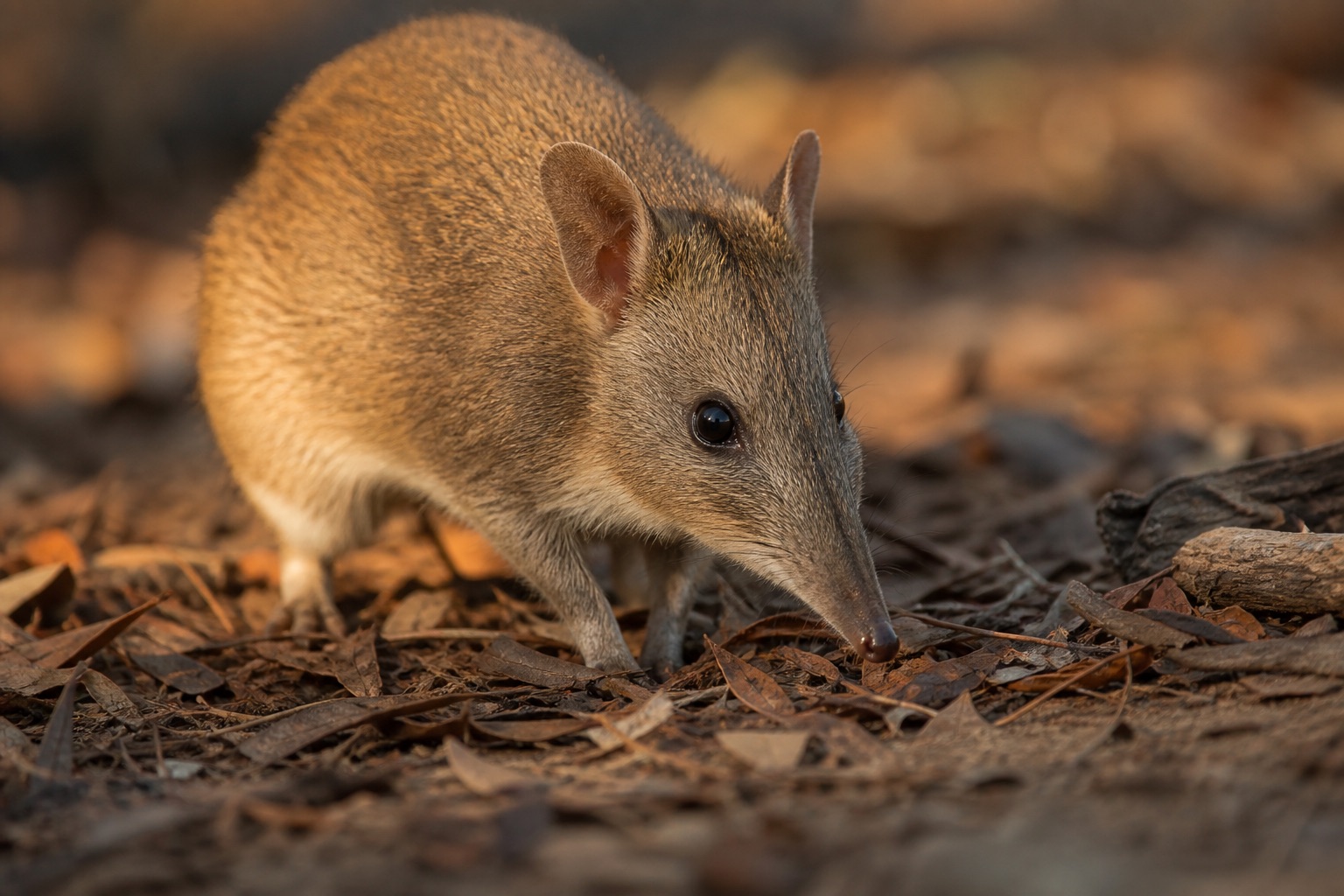
AI-generated educational wildlife portrait — World Animal Rescue Network · AI visualisation, not a photograph
In brief
Bandicoots are small marsupials of the order Peramelemorphia with gestation as short as about twelve days, a unusually advanced marsupial placenta, and a rearward-opening pouch; the name covers many species across Australia, New Guinea and Wallacea with varying IUCN status.
Also in Animals A to Z · Animals that start with B
By WARN Research & Conservation Team Last updated
Bandicoot is an everyday name for a group of small, ground-dwelling marsupials in the order Peramelemorphia — not a single species. Around twenty living species span Australia, New Guinea and parts of Wallacea, from the widespread northern brown bandicoot to New Guinea's giant bandicoot and several Australian species now extinct or restricted to islands and fenced reserves. What unites them is biology rather than appearance. Bandicoots have among the shortest gestation periods of any mammal — as brief as about twelve days in some species — yet they also develop one of the most advanced placentas among marsupials, with a chorioallantoic placenta that nourishes the embryo in utero far longer than the brief gestation of a kangaroo. The pouch opens backward, so dirt is not scooped in while digging. This page is a genus-level overview; individual species differ in size, range and conservation status.
~12 days
Shortest gestation recorded — northern brown bandicoot
Backward
Pouch opening — faces rear to keep out soil while digging
Placenta
Chorioallantoic — advanced among marsupials
20+
Living species in order Peramelemorphia
Figures sourced from IUCN Red List — Peramelemorphia, Australian Museum — bandicoots .
Bandicoot: Quick Facts
| Gestation | As short as about twelve days in some species |
|---|---|
| Pouch | Opens backward — away from the head |
| Placenta | Chorioallantoic — advanced among marsupials |
| Diet | Insects, worms, roots and fungi |
| Scope | Genus-level overview — many species |
| Main threats | Predators, clearing, hunting — vary by species |
Scientific Classification
| Kingdom | Animalia |
|---|---|
| Phylum | Chordata |
| Class | Mammalia |
| Infraclass | Marsupialia |
| Order | Peramelemorphia |
| Families | Peramelidae, Thylacomyidae (bilbies) and others |
| Species | Around twenty living species — status varies |
Conservation Status
- IUCN Status
- Not Evaluated
- Population
- Unknown for most New Guinea species
- Trend
- Decreasing for several Australian species
- Assessed
- Varies by species
- CITES
- Varies by species
IUCN status varies by species. Several Australian bandicoots are extinct or survive only on islands and in fenced reserves. New Guinea species are poorly surveyed.
Did you know?
Bandicoots can complete gestation in about twelve days — and still develop one of the most advanced placentas among marsupials before the young move to the backward-facing pouch.
Key Facts: Bandicoot
- Bandicoot is a group name, not one species — around twenty living species in the order Peramelemorphia across Australia, New Guinea and Wallacea.
- Some bandicoots have gestation periods as short as about twelve days, among the briefest of any mammal.
- Bandicoots develop a chorioallantoic placenta — more advanced than the yolk-sac placenta of most marsupials — nourishing the embryo in utero before birth into the pouch.
- The pouch opens toward the rear so soil is not pushed in while the animal digs for insects, worms and roots.
- Several Australian bandicoot species are extinct or Critically Endangered; New Guinea species are less studied but face hunting and forest loss.
- In New Guinea, over 90% of land is held under customary tenure, so forest-dwelling bandicoots depend on landowner decisions as much as on formal protection.
Twelve days from mating to birth
The northern brown bandicoot of Australia completes gestation in about twelve days — the shortest recorded for any mammal. The young are born at an early stage, as in all marsupials, but the interval between mating and birth is extraordinarily compressed compared with even other marsupials.
That speed is paired with an unusually sophisticated placenta. Most marsupials rely on a yolk-sac placenta that provides limited nourishment; bandicoots form a chorioallantoic placenta more akin to placental mammals, with a temporary connection between embryo and uterine wall. The combination — brief gestation plus advanced in-utero nourishment — is unique among living marsupials and reflects an evolutionary experiment within the order Peramelemorphia.
The backward pouch
Bandicoots dig with their forefeet and snout for insects, larvae, worms and roots. A forward-opening pouch would fill with soil during digging, so the opening faces backward — toward the tail — keeping the pouch cavity clear while the animal works ground litter.
After birth the tiny young crawl to the teats and attach; development completes in the pouch over several weeks. The hind limbs are longer than the forelimbs, adapted for hopping escape rather than climbing — bandicoots are ground specialists, unlike the arboreal possums and cuscuses of New Guinea.
Australia, New Guinea and Wallacea
Bandicoots radiated across Australia and into New Guinea and nearby islands. Australian species include the northern brown bandicoot — still common in parts of the north — and several that are extinct on the mainland or survive only on offshore islands and inside predator-proof fences. The pig-footed bandicoot is extinct; the eastern barred bandicoot was restored to fenced reserves after mainland loss.
New Guinea holds larger species including the giant bandicoot, poorly known and restricted to forest. Wallacea — the island zone between Asian and Australian faunas — holds related peramelemorphians on some islands. Status varies sharply by species; this overview cannot substitute for species-level assessments.
Threats and customary land in New Guinea
Australian bandicoot declines are tied to introduced foxes and cats, habitat fragmentation and historical clearing. Fenced sanctuaries and island refuges have been essential for species that cannot coexist with introduced predators on the mainland.
In New Guinea, introduced predators are fewer, but hunting and forest clearance remain pressures on ground-dwelling mammals. Over 90% of land in Papua New Guinea is under customary tenure; lowland and hill forest conversion for gardens, logging and mining removes cover for forest bandicoots. Data on New Guinea species are sparse, which means declines may be under-recorded rather than absent.
What WARN Does
WARN publishes free, sourced species education, including honest genus-level overviews where one English name covers many species. Bandicoot describes a marsupial order, not a single animal — gestation of about twelve days and a rearward pouch are the shared biology; conservation status is species-specific.
If this guide helps you understand wildlife and the pressures it faces, a gift to WARN supports habitat protection and free public education in our partner countries.
Bandicoot: Frequently Asked Questions
What is a bandicoot?
How long is bandicoot gestation?
Why does a bandicoot pouch open backward?
Do bandicoots have a placenta?
What do bandicoots eat?
Where do bandicoots live?
Are bandicoots dangerous?
How long do bandicoots live?
How big is a bandicoot?
Sources & References
Population figures, conservation status and biological facts on this page are drawn from authoritative scientific and intergovernmental sources.
Terms used on this page
Plain-English definitions, from our wildlife and conservation glossary.
Latest Bandicoot Stories
Quick, fact-checked reads on the bandicoot — amazing facts, key questions and the threats it faces.
Species
Why Are Dugongs Disappearing — and What's Being Done to Save Them?
Dugongs are vanishing from waters where they once thrived, declared functionally extinct in China and critically endangered in East Africa. Here's why — and the work that offers hope.
Read the storySpecies
12 Amazing Facts About Koalas (They Are Not Bears, and They Have Fingerprints)
Fingerprints indistinguishable from ours, 20 hours of sleep a day, and a diet that would poison most animals. Twelve koala facts.
Read the storySpecies
12 Amazing Facts About Kangaroos (They Cannot Walk Backwards)
Tendons that work like springs, a tail used as a fifth leg, and the ability to pause a pregnancy. Twelve verified kangaroo facts.
Read the storyExplore more animals
Discover more animals, their habitats and their conservation status in the WARN wildlife-guide library.
Enjoyed this Bandicoot guide?
Receive appeal updates, animal-welfare news and published funding reports. Unsubscribe any time.
We only use your address for WARN updates. See our privacy policy.