Wildlife Guide · Africa
African Wild Dog
Lycaon pictus
Africa's cooperative pack hunter
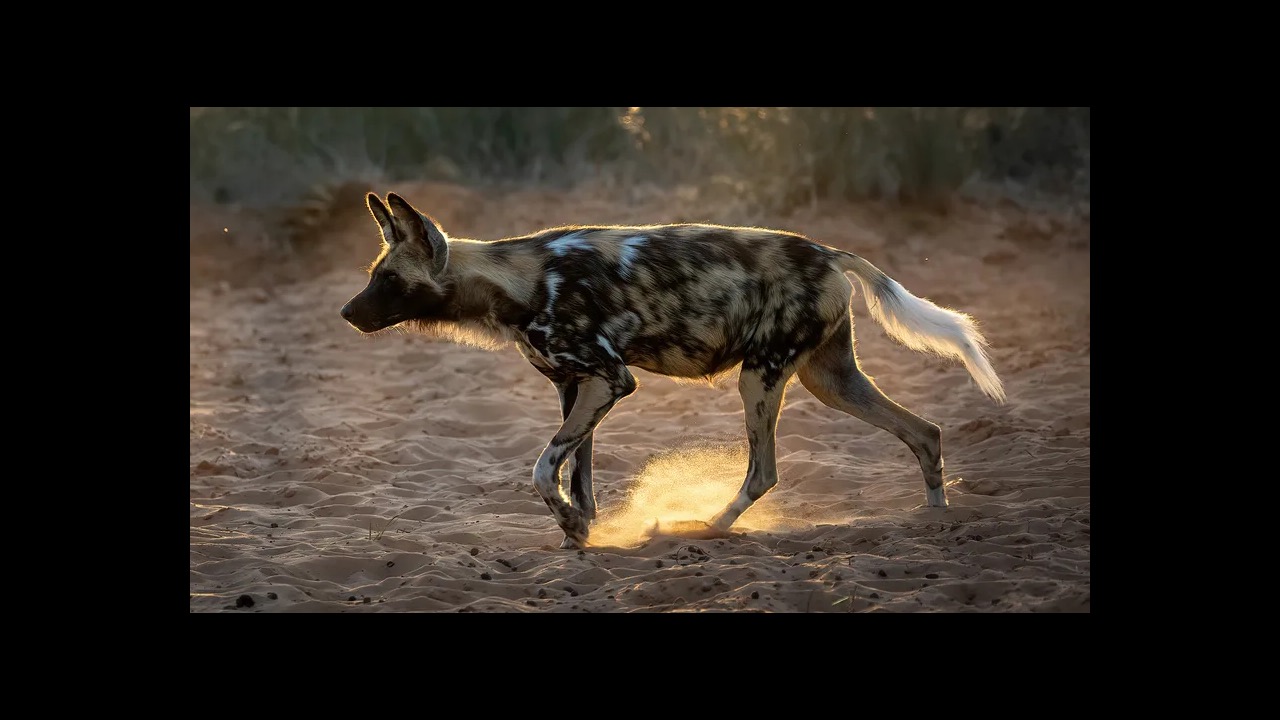
Photo: AfricanConservation / Wikimedia Commons (CC BY-SA 4.0)
In brief
The African wild dog is a lean, long-legged carnivore of sub-Saharan Africa, famous for its mottled coat of black, tan, and white patches. Weighing 20 to 30 kg and standing about 1.1 m in body length, it is one of the world's most efficient pack hunters, chasing prey at up to 60 km/h.
Also in Animals A to Z · Animals that start with A
By WARN Research & Conservation Team Last updated
The African wild dog is a lean, long-legged carnivore of sub-Saharan Africa, famous for its mottled coat of black, tan, and white patches. Weighing 20 to 30 kg and standing about 1.1 m in body length, it is one of the world's most efficient pack hunters, chasing prey at up to 60 km/h. Packs are intensely social and cooperative. With only a few thousand left, the IUCN lists the species as Endangered.
1.1 m
Typical length
25 kg
Typical weight
60 km/h
Top speed
11 yrs
Lifespan
Figures sourced from IUCN Red List — African Wild Dog, Wikipedia — African Wild Dog, Wikidata — African Wild Dog .
African Wild Dog: Quick Facts
| Scientific name | Lycaon pictus |
|---|---|
| Diet | Carnivore — antelope, warthog, and medium-sized mammals |
| Habitat | Savannas, grasslands, and open woodlands of sub-Saharan Africa |
| Lifespan | 10–11 years in the wild (longer in captivity) |
| Weight | 20–30 kg (44–66 lb); males slightly larger |
| Top speed | Up to 60 km/h (37 mph) in sustained pursuit |
| Conservation status | Endangered (IUCN) |
Scientific Classification
| Kingdom | Animalia |
|---|---|
| Phylum | Chordata |
| Class | Mammalia |
| Order | Carnivora |
| Family | Canidae |
| Genus | Lycaon |
Conservation Status
- IUCN Status
- Endangered (IUCN Red List)
- Population
- See the IUCN Red List assessment
- Trend
- Decreasing
- Assessed
- 2020
- CITES
- See CITES appendices
Key documented threats: Habitat fragmentation; Human–wildlife conflict; Infectious disease from domestic dogs; Road mortality and snaring.
Key Facts: African Wild Dog
- Also called the painted wolf, the African wild dog wears a unique coat blotched with black, yellow-tan, and white, so no two individuals look alike.
- African wild dogs are among the most social of all carnivores, living in packs led by a dominant breeding pair.
- These dogs are carnivores that hunt medium-sized antelope such as impala and kudu, along with warthog and smaller game.
Appearance and identity
Also called the painted wolf, the African wild dog wears a unique coat blotched with black, yellow-tan, and white, so no two individuals look alike. It has large, rounded 'satellite-dish' ears that help with hearing and shed heat, a lean frame built for endurance, and only four toes on each foot rather than five. Adults weigh between 20 and 30 kg, with males slightly larger than females. This is Africa's only member of its genus, distinct from wolves, jackals, and domestic dogs.
Hunting and diet
These dogs are carnivores that hunt medium-sized antelope such as impala and kudu, along with warthog and smaller game. Instead of ambushing, they run their prey down in a sustained, coordinated chase, reaching speeds of up to 60 km/h and wearing quarry out over long distances. Their teamwork makes them extraordinarily successful, with hunts often ending in a kill far more reliably than those of lions or hyenas. After a kill, pups are allowed to eat first, an unusual mark of their cooperative nature.
Breeding and pups
Normally only the dominant pair breeds, producing a large litter after a gestation of about 70 days. Litters can be exceptionally big, sometimes exceeding ten pups, which are raised in a den and guarded by the whole pack. Adults returning from a hunt regurgitate meat for the pups and for any pack members that stayed behind. Young dogs remain with the pack to help rear the next generation before some disperse to form new packs.
Why it is endangered
The African wild dog is listed as Endangered, with only a few thousand individuals remaining across a fragmented range. Habitat loss and the break-up of large wild areas force packs into contact with people, leading to conflict with livestock farmers and deaths on roads. They are also highly vulnerable to diseases such as rabies and canine distemper caught from domestic dogs. Because they need vast territories, protecting connected landscapes and wildlife corridors is vital to their survival.
Range and habitat
African wild dogs once roamed across much of the continent but now survive mainly in southern and eastern Africa. They favour savannas, grasslands, and open woodlands where there is room to run down prey. Some of the strongest populations persist in large protected areas such as those in Botswana, Zimbabwe, and Tanzania. Each pack ranges over a huge home area, which is why fragmented habitat hits them so hard.
What WARN Does
WARN does not run a dedicated african wild dog programme — this guide is part of the World Animal Rescue Network's free educational library. The african wild dog faces documented conservation pressure in the wild, which is why clear, sourced public information about it matters. Building public understanding of species like the african wild dog supports the broader conservation awareness that underpins WARN's partner-led rescue work across its network.
If clear, science-based wildlife guides like this help you understand and value animals, please consider supporting the World Animal Rescue Network's educational and rescue work so we can keep producing them.
African Wild Dog: Frequently Asked Questions
Are African wild dogs actually dogs?
How fast can an African wild dog run?
Why are African wild dogs endangered?
How successful are African wild dogs at hunting?
Why do African wild dogs sneeze?
How long do African wild dogs live?
What do African wild dogs eat?
Where do African wild dogs live?
Are African wild dogs dangerous?
How big is an African wild dog?
Sources & References
Population figures, conservation status and biological facts on this page are drawn from authoritative scientific and intergovernmental sources.
Terms used on this page
Plain-English definitions, from our wildlife and conservation glossary.
Latest African Wild Dog Stories
Quick, fact-checked reads on the african wild dog — amazing facts, key questions and the threats it faces.
Guides
Pangolin Species Explained: All Eight of the World's Most Trafficked Mammal
There are eight pangolin species — four in Africa and four in Asia. All eight are trafficked. Here is the briefing.
Read the storySpecies
Tiger vs Lion: 7 Key Differences Between the Two Biggest Cats
Tigers are bigger, stripier and solitary; lions are social and live in prides. Here's how the two largest cats really differ in size, habitat and behaviour.
Read the storySpecies
Asian vs African Elephant: 7 Key Differences
Ears, back shape, tusks and size all set Asian and African elephants apart. Here is a clear, science-backed guide to telling the world's three elephant species apart.
Read the storyExplore more animals
Discover more animals, their habitats and their conservation status in the WARN wildlife-guide library.
Enjoyed this African Wild Dog guide?
Receive appeal updates, animal-welfare news and published funding reports. Unsubscribe any time.
We only use your address for WARN updates. See our privacy policy.