Pakistan · Captive cruelty

Bear Baiting in Pakistan

Bear baiting sets fighting dogs on a tethered bear with its teeth pulled and claws filed. It has been illegal in Pakistan since 1890 — and it is finally in decline.

By the WARN Research & Conservation TeamChecked against IUCN Red List & CITES sourcesLast updated

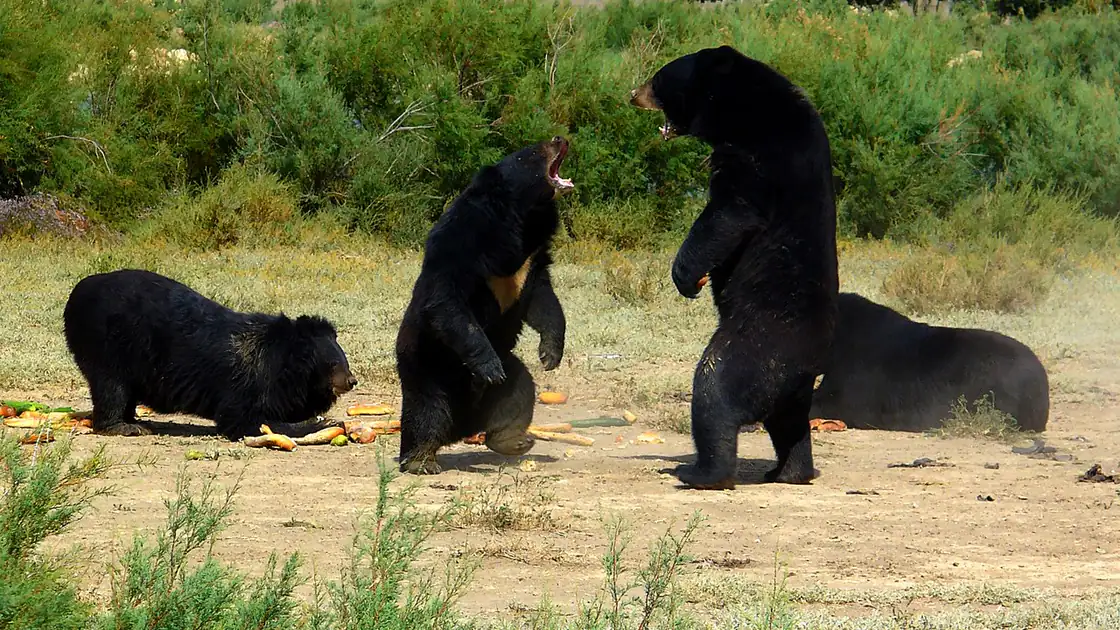
An Asian black bear (Ursus thibetanus), the species most often taken from the wild for bear baiting in Pakistan

In brief

Bear baiting is a blood sport in which fighting dogs are set on a tethered bear, usually an Asian black bear poached from the wild and prepared by having its canine teeth pulled out and its claws filed down. It has been illegal in Pakistan under the Prevention of Cruelty to Animals Act since 1890, but survives in some rural areas. It is now in genuine decline: around 300 bears were being used for baiting in 2003, against roughly 70 by recent estimates.

1890

Illegal under the Cruelty to Animals Act

~300 → ~70

Baiting bears, 2003 to recent estimates

~3 min

Typical length of one fight

Vulnerable

Asian black bear, IUCN Red List

Guide 1

What bear baiting is

A bear is tethered in the middle of a ring and fighting dogs are released at it. A single contest lasts around three minutes, and a bear is often forced through several in one day. Before it ever reaches the ring the animal has been disarmed: its canine teeth are pulled out and its claws are filed down, so it cannot defend itself effectively against the dogs. The events are organised predominantly by local gangsters who own the fighting dogs.

Guide 2

Where the bears come from

The bears are poached from the wild — mostly Asian black bears, the same species also caged for bile elsewhere in Asia, along with Himalayan brown bears. The Asian black bear is listed as Vulnerable on the IUCN Red List and on CITES Appendix I, so the trade that supplies baiting is illegal on both animal-welfare and wildlife grounds.

Guide 3

It is already illegal — and already declining

Bear baiting has been banned in Pakistan under the Prevention of Cruelty to Animals Act since 1890. The problem has never been the absence of a law; it has been enforcement in rural areas where the events are organised. What has worked is sustained monitoring paired with somewhere for confiscated bears to go. When monitoring work began in 2003 there were roughly 300 bears in the baiting trade; recent estimates put it at around 70.

Guide 4

What effective help looks like

A rescued baiting bear cannot be released: with no canines and filed claws it cannot survive in the wild, so it needs lifetime sanctuary care. That capacity is what the decline was built on — Kund Park opened in 2000, and the Balkasar sanctuary was established in 2010 by the Bioresource Research Centre with the World Society for the Protection of Animals (now World Animal Protection), and holds dozens of former baiting bears. Supporting the organisations that run that sanctuary capacity and monitoring is the effective route. WARN funds partner-led rescue in Pakistan — street dogs in Karachi, at Karachi street dogs appeal — but it does not fund bear-baiting work, and will not ask you to fund a programme it does not run.

Guide 5

Why UK Donors Choose WARN — Transparent Partner Grants

WARN is a registered UK Community Interest Company (Company no. 17298990) and is not a charity, so it cannot claim Gift Aid. The donation case is transparent partner-led welfare where support reaches practical field needs. WARN states upfront that gifts fund WARN's 17-country partner network across South Asia, Southeast Asia, East Africa, Southern Africa and South America programmes through vetted local partners — not WARN-run sanctuaries. Every gift is receipted; give one-off at donate or monthly at monthly giving.

Guide 6

What Your Gift Buys on the Ground

Roughly £15–25 funds one street dog through catch, neuter, rabies vaccination and return in network countries. £100 supports a small clinic day. £500 helps stock quarantine after a trafficking seizure. Monthly gifts let partners plan multi-year CNVR instead of crisis-only response.

Source Notes

WARN uses named intergovernmental, conservation and animal-welfare sources for numeric claims. These notes summarise the source basis for this page.

World Animal Protection — Ending Bear Baiting

Campaign and monitoring work behind the fall from roughly 300 baiting bears in 2003 to around 70.

Read the source — World Animal Protection — Ending Bear Baiting (opens in a new tab)

Balkasar Bear Sanctuary

Established 2010 by the Bioresource Research Centre with WSPA (now World Animal Protection); houses rescued baiting bears that cannot be released.

Read the source — Balkasar Bear Sanctuary (opens in a new tab)

IUCN Red List — Ursus thibetanus (Garshelis & Steinmetz, 2020)

Asian black bear assessed as Vulnerable; listed on CITES Appendix I.

Read the source — IUCN Red List — Ursus thibetanus (Garshelis & Steinmetz, 2020) (opens in a new tab)

Bear Baiting in Pakistan: Frequently Asked Questions

Is bear baiting legal in Pakistan?
No. It has been illegal under the Prevention of Cruelty to Animals Act since 1890. It persists in some rural areas because enforcement there is difficult, not because the practice is permitted.
Is bear baiting still happening?
Yes, but far less than it was. Around 300 bears were in the baiting trade when monitoring began in 2003; recent estimates put it near 70. It is one of the few animal-cruelty trades genuinely in retreat.
Why can’t rescued baiting bears be released?
Because of what is done to them beforehand. Their canine teeth are pulled out and their claws filed down, so they cannot forage or defend themselves in the wild. A rescued baiting bear needs sanctuary care for the rest of its life, which is why sanctuary capacity — not just enforcement — is what ended most of the trade.
Does WARN fund bear rescue in Pakistan?
No. WARN funds partner-led street dog rescue in Pakistan (see Karachi street dogs appeal) but runs no bear-baiting programme and has no sanctuary partner there. This page is educational. Support the organisations that do run that sanctuary capacity.
Is WARN a registered charity?
World Animal Rescue Network (WARN) is World Animal Rescue Network CIC (Company number 17298990), a registered UK Community Interest Company — not a registered charity. See registration status for full legal identity.
Can I claim Gift Aid on donations to WARN?
No. Gift Aid is only available to UK registered charities. World Animal Rescue Network is a registered global not-for-profit animal welfare organisation, not a registered charity. International donors should check their own local rules. See registration status.
Are WARN donations US tax-deductible?
No. WARN is not a US 501(c)(3). US donors should consult a tax adviser; all supporters receive payment receipts for their records.
Can I give monthly instead of one-off?
Yes — set up recurring support at monthly giving or symbolic adoption from £5/month at symbolic adoption. Cancel anytime by email with no penalty.

Help Fund Frontline Rescue

World Animal Rescue Network CIC (Company no. 17298990) raises funds for established local partners. Your support helps build the rescue capacity these animals need.

WARN’s work for Asian bears