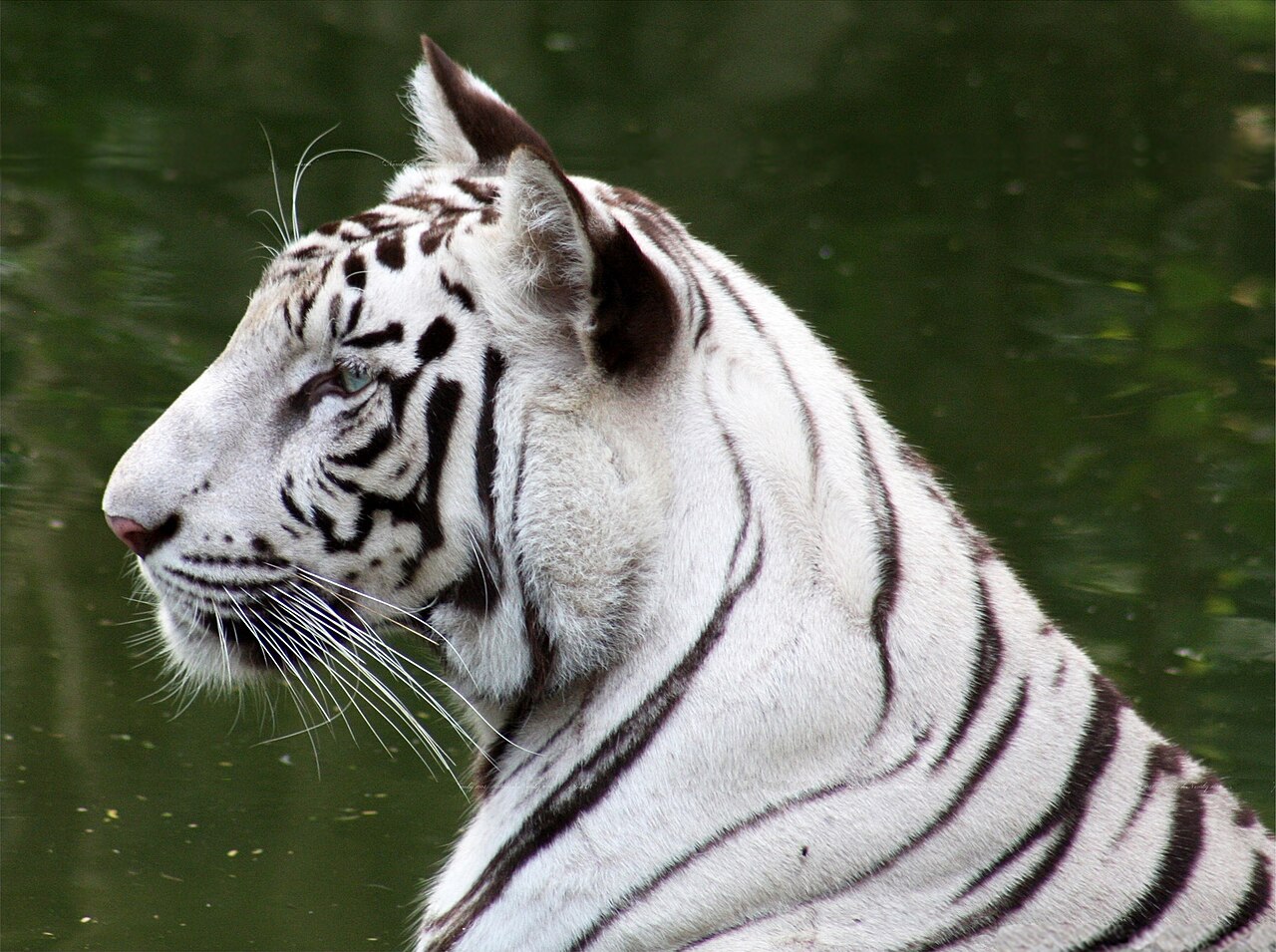
How big, fast and strong is a tiger?
The tiger (Panthera tigris) is the largest cat on the planet, and its size translates into formidable power. Below are the headline measurements, with the caveat that figures vary a lot between subspecies. For the full profile, see our tiger species guide.
How big is a tiger?
Size depends heavily on subspecies. The Sumatran tiger, the smallest survivor, measures roughly 2.2 to 2.5 m head-and-body, with males around 100 to 140 kg and females about 75 to 110 kg. Mainland tigers are far larger, and the Amur (Siberian) tiger, the biggest of all, can exceed 300 kg, heavier than any lion.
How fast is a tiger?
Over a short burst a tiger can reach roughly 49 to 65 km/h. Crucially, it cannot sustain that pace. Tigers are ambush hunters that stalk to within metres of prey and rely on a single explosive rush, not a long chase, so a deer that detects the cat early often escapes.
How strong is a tiger?
A large mainland tiger's bite force is estimated at around 1,000 PSI, roughly six times the bite of an average human. Combined with retractable claws and the muscle mass of a 200-plus-kilogram body, this lets a tiger pull down prey much larger than itself and drag a carcass that several people would struggle to move.
How long do tigers live?
Wild tigers usually live about 10 to 15 years; in managed care they can reach roughly 20.
Why the biggest cat is also one of the most fragile
Raw power has not protected tigers from human pressure. The Critically Endangered Sumatran tiger (fewer than 600 in the wild) and the Malayan tiger (around 80 to 120 mature individuals) show how a top predator can still be pushed to the edge by snares, poaching and shrinking forest. Strength is no defence against a wire trap.
Patrols that remove snares before a tiger walks into one are some of the most effective protection there is. Our Tiger Appeal helps fund that work in WARN's range countries.
Read the full Tiger wildlife guide for the facts, IUCN status and conservation context — or donate to WARN to help fund the local partners protecting this species.