12 amazing tiger facts, fact-checked
The tiger (Panthera tigris) is the biggest cat that has ever prowled a forest, and almost everything about it is built on a grand scale, from its swimming habit to a roar that carries across a valley. Here are twelve verified facts about this striped predator. For the full species profile, see our tiger guide.
1. Tigers are the largest cats on Earth
No living cat outweighs a tiger. The biggest subspecies, the Amur tiger, can exceed 300 kg, dwarfing even a lion.
2. Their stripes are on the skin, not just the fur
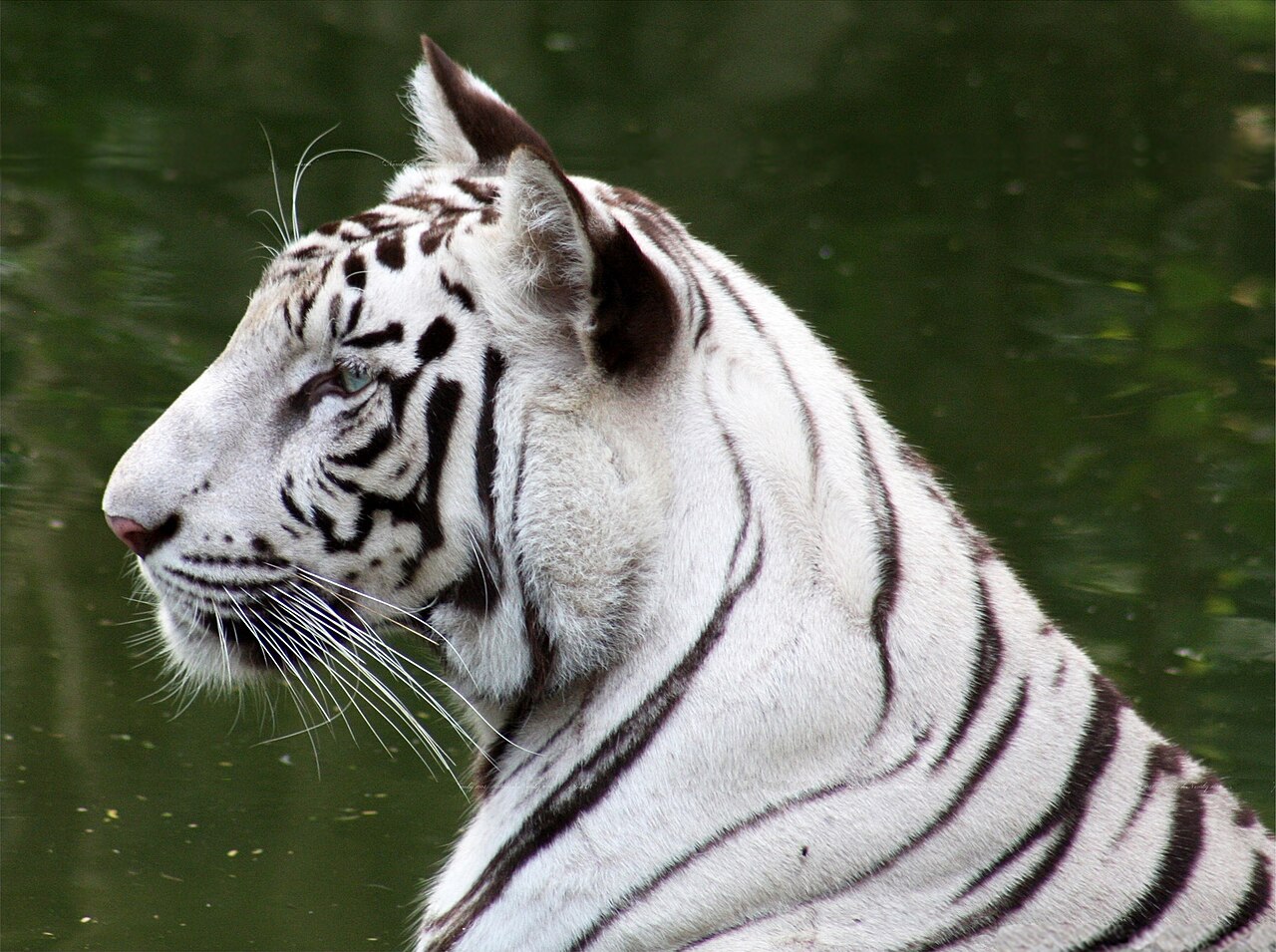
Shave a tiger and the stripe pattern remains, printed onto the skin underneath like ink. The coloured hair follicles sit in pigmented skin.
3. Every stripe pattern is unique
Like a human fingerprint, no two tigers share the same arrangement of stripes, which lets researchers identify individuals from camera-trap photos.
4. They love water
Unlike most cats, tigers are confident swimmers that wade into rivers to cool off and cross between patches of forest.
5. A tiger's roar carries about 3 km
Under the right conditions a full roar can be heard up to three kilometres away, a low blast partly produced by sound below the range of human hearing.
6. They hunt by ambush, not chase
Tigers stalk close and explode forward in a short rush. They sprint only in brief bursts and cannot keep up a long pursuit.
7. The Sumatran tiger is the smallest survivor
The Sumatran tiger of Indonesia is the smallest tiger subspecies still alive, an adaptation to dense island rainforest.
8. Cubs are raised by mum alone
After a gestation of roughly 100 days a female gives birth to two to four cubs and raises them by herself for about two years.
9. They are solitary and territorial
Adult tigers patrol large home ranges, marking boundaries with scent and claw scratches rather than living in groups.
10. Their stripes are camouflage
Vertical stripes break up the body's outline in tall grass and dappled forest, a trick biologists call disruptive coloration.
11. Two of the rarest populations live in WARN's range
The Critically Endangered Sumatran tiger (Indonesia) and Malayan tiger (Malaysia) sit inside the World Animal Rescue Network's funded focus countries.
12. They are running out of room
Tigers have lost the great majority of their historic Asian range and now survive in fragmented forest pockets, which is why every individual counts.
Snare removal and anti-poaching patrols keep many of these animals alive. If you'd like to help that frontline work, our Tiger Appeal funds local partner teams in Sumatra and Malaysia.
Read the full Tiger wildlife guide for the facts, IUCN status and conservation context — or donate to WARN to help fund the local partners protecting this species.