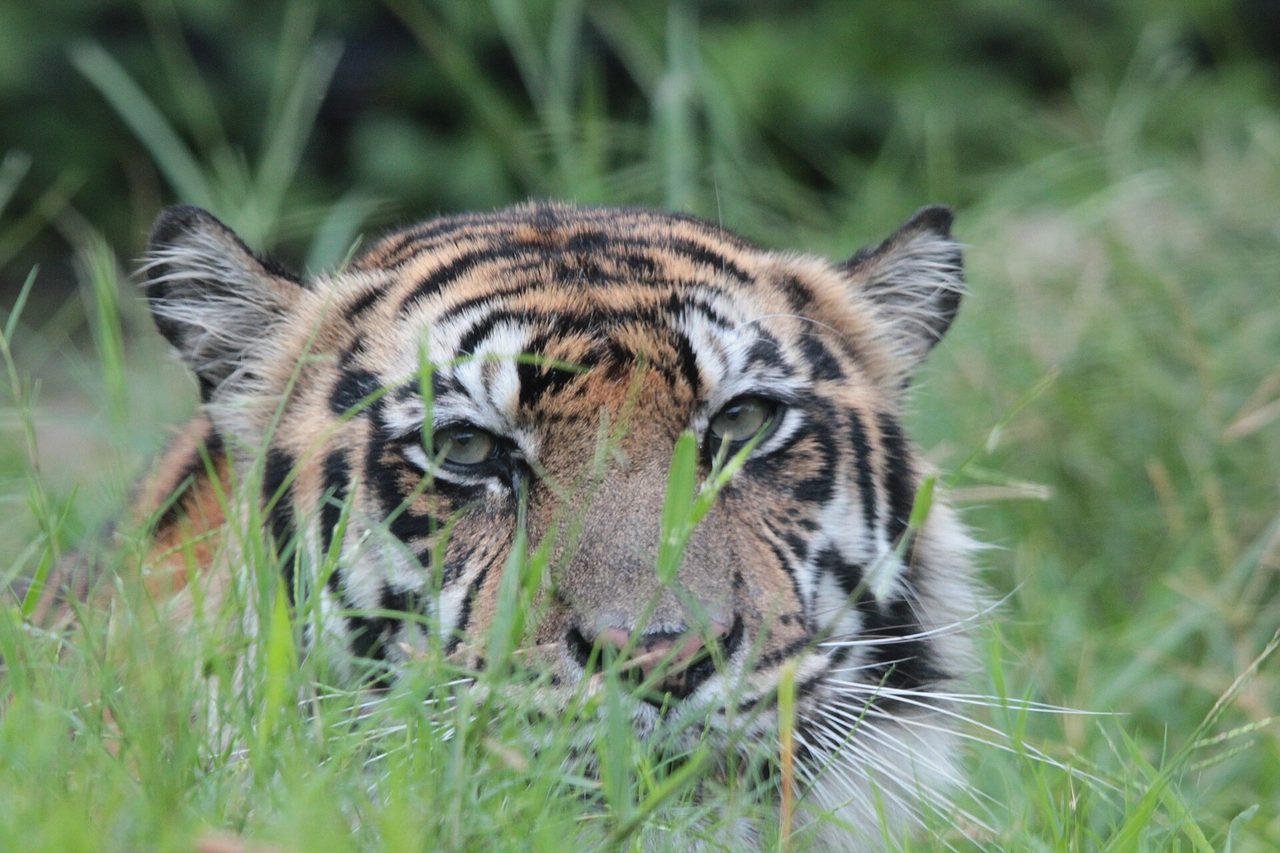
A Sumatran tiger with dense dark stripes and a thick ruff stalking through rainforest undergrowth on Sumatra, Indonesia
Species

· INDONESIA · 9 min read

The Sumatran Tiger: The Last Tigers of Indonesia

In brief

The Sumatran tiger (Panthera tigris sondaica) is a Critically Endangered tiger population native to the island of Sumatra in Indonesia, with an estimated fewer than 400 wild individuals remaining — the last surviving tiger population in Indonesia after the documented extinctions of the Javan and Bali tigers in the 20th century.

Wild individuals remaining
Fewer than 400 Wild individuals remaining
Weight adults rarely exceed
140 kg Weight adults rarely exceed
IUCN Red List status
Critically Endangered IUCN Red List status

What are the key takeaways from this briefing?

  • The smallest of the surviving tiger populations, with adults rarely exceeding 140 kg.
  • Estimated fewer than 400 wild individuals remain, all on the island of Sumatra.
  • Listed as Critically Endangered on the IUCN Red List; CITES Appendix I.
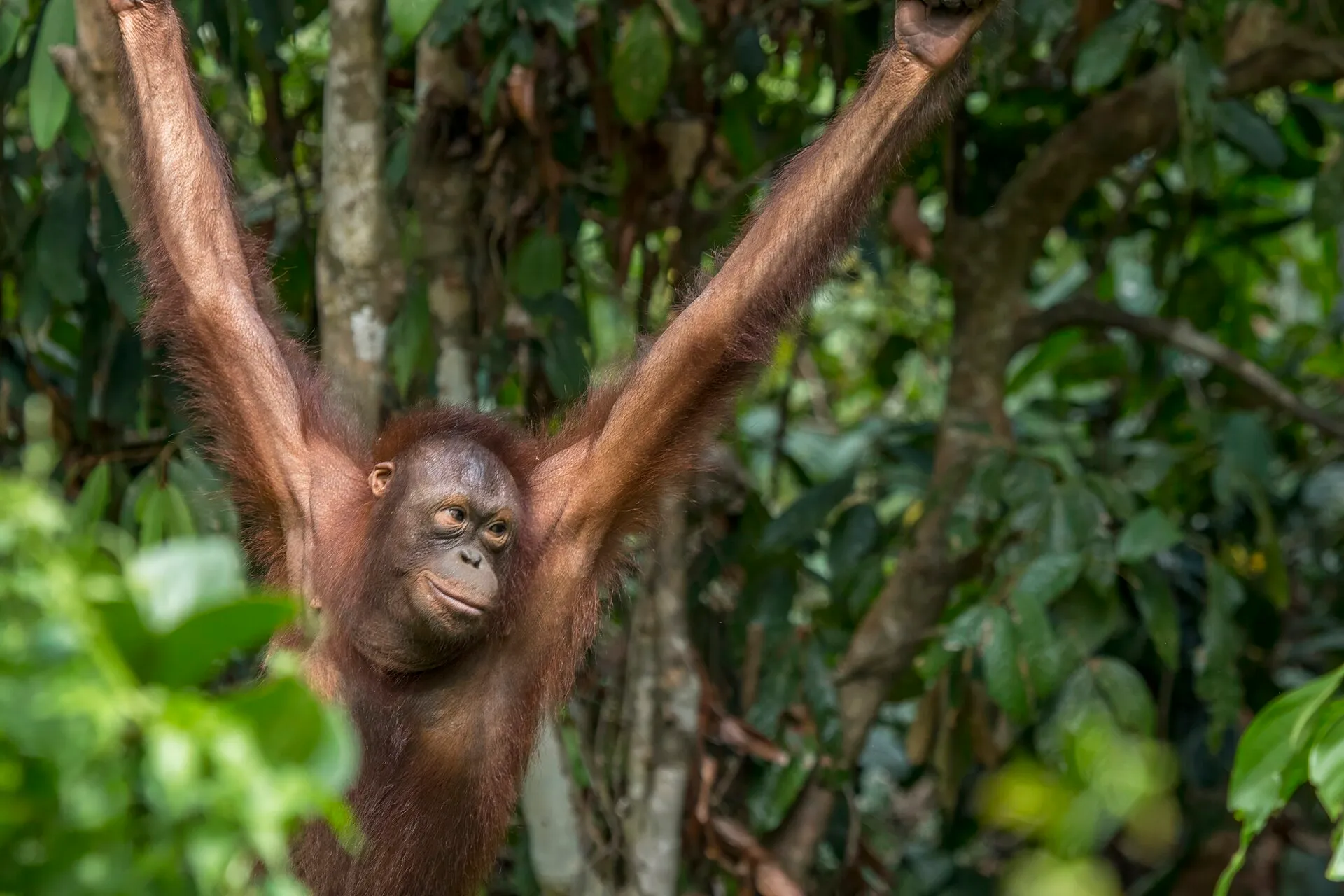
  • Indonesia is one of WARN's partner-network countries — the same country as our Borneo orangutan programme.
  • Major threats: poaching for trade in skins and bones, palm-oil and pulp-wood deforestation, and snaring as bycatch.

The Sumatran tiger (Panthera tigris sondaica) is the only tiger population still alive in Indonesia. The Javan tiger was declared extinct in the 1970s; the Bali tiger was lost decades earlier. The Sumatran tiger is the smallest of the surviving tigers and one of the most genetically distinct.

WARN's planned Indonesia programme — best known so far for our orangutan appeal in Kalimantan — operates in the same country, against the same drivers of forest loss, and through the same kinds of partner relationships that any tiger work in Sumatra requires.

How many Sumatran tigers are left?

Reliable camera-trap and DNA-survey estimates place the wild population at under 400 individuals, fragmented across protected areas on Sumatra including Gunung Leuser, Kerinci Seblat, Bukit Barisan Selatan and Way Kambas national parks. The IUCN Red List lists the population as Critically Endangered.

What should you know about the threats?

  • Poaching for the illegal wildlife trade. Tiger skins, bones, teeth and claws move through the same trafficking networks that the UNODC has repeatedly identified as transnational organised crime. Sumatran tiger parts have been seized in markets in Sumatra itself, in Java, and onwards in Vietnam and China.
  • Deforestation. Sumatra has lost an estimated half of its remaining lowland rainforest in the last three decades to palm-oil, pulp-wood and small-holder agriculture. Tiger ranges are being reduced to disconnected fragments.
  • Snaring. Wire snares set for bushmeat regularly catch tigers as bycatch. A snared tiger that escapes often dies later of infected limb wounds.
  • Human-tiger conflict. Tigers displaced from cleared forest enter villages and plantations, where retaliatory killing is common.

What should you know about rescue and sanctuary realities?

Almost no rescued Sumatran tiger can be returned to the wild. Confiscated cubs are usually too habituated; adults rescued from market or conflict situations frequently have injuries that disqualify release. Lifetime sanctuary care, with the genetic-value option of a managed conservation-breeding programme, is the standard outcome.

How WARN fits in?

Our planned tiger work reflects our ambition to fund partner-led tiger rescue in Asia as our Indonesia operations mature. We are not running our own Sumatran tiger sanctuary and we are not asking supporters to fund work we have not yet built. We are asking supporters to back the country-level capacity — Indonesian veterinary teams, snare-removal patrols, anti-trafficking intelligence — that any future Sumatran tiger work depends on.

Sources: IUCN Red List, CITES Appendix I, UNEP-WCMC, UNODC World Wildlife Crime Report.

Is it true that the smallest of the surviving tiger populations, with adults rarely exceeding 140 kg?

The smallest of the surviving tiger populations, with adults rarely exceeding 140 kg. That scale is ecology, not a pet-shop talking point. Sumatran tiger needs room to use a body like that in INDONESIA, which is why habitat fragmentation hits so hard.

Is it true that estimated fewer than 400 wild individuals remain, all on the island of Sumatra?

Estimated fewer than 400 wild individuals remain, all on the island of Sumatra. Estimated fewer than 400 wild individuals remain, all on the island of Sumatra is one of the details people actually search for about Sumatran tiger. It holds as a field note from INDONESIA; it is not a care sheet and not a substitute for the species guide.

Is it true that listed as Critically Endangered on the IUCN Red List; CITES Appendix I?

Listed as Critically Endangered on the IUCN Red List; CITES Appendix I. A fact list is not an IUCN assessment. Sumatran tiger still needs habitat, enforcement and honest funding — see the full species guide rather than stopping at trivia.

Is it true that indonesia is one of WARN's partner-network countries — the same country as our Borneo orangutan programme?

Indonesia is one of WARN's partner-network countries — the same country as our Borneo orangutan programme. Indonesia is one of WARN's partner-network countries — the same country as our Borneo orangutan programme is one of the details people actually search for about Sumatran tiger.

Is it true that major threats: poaching for trade in skins and bones, palm-oil and pulp-wood deforestation, and snaring as bycatch?

Major threats: poaching for trade in skins and bones, palm-oil and pulp-wood deforestation, and snaring as bycatch. A fact list is not an IUCN assessment. Sumatran tiger still needs habitat, enforcement and honest funding — see the full species guide rather than stopping at trivia.

Is it true that poaching for the illegal wildlife trade. Tiger skins, bones, teeth and claws move through the same trafficking networks that the UNODC has repeatedly identified as transnational organised crime. Sumatran tiger parts have been seized in markets in Sumatra itself, in Java, and onwards in Vietnam and China?

Poaching for the illegal wildlife trade. Tiger skins, bones, teeth and claws move through the same trafficking networks that the UNODC has repeatedly identified as transnational organised crime. Sumatran tiger parts have been seized in markets in Sumatra itself, in Java, and onwards in Vietnam and China.

Is it true that deforestation. Sumatra has lost an estimated half of its remaining lowland rainforest in the last three decades to palm-oil, pulp-wood and small-holder agriculture. Tiger ranges are being reduced to disconnected fragments?

Deforestation. Sumatra has lost an estimated half of its remaining lowland rainforest in the last three decades to palm-oil, pulp-wood and small-holder agriculture. Tiger ranges are being reduced to disconnected fragments. Tiger ranges are being reduced to disconnected fragments is one of the details people actually search for about Sumatran tiger.

Is it true that snaring. Wire snares set for bushmeat regularly catch tigers as bycatch. A snared tiger that escapes often dies later of infected limb wounds?

Snaring. Wire snares set for bushmeat regularly catch tigers as bycatch. A snared tiger that escapes often dies later of infected limb wounds. A snared tiger that escapes often dies later of infected limb wounds is one of the details people actually search for about Sumatran tiger.

Is it true that human-tiger conflict. Tigers displaced from cleared forest enter villages and plantations, where retaliatory killing is common?

Human-tiger conflict. Tigers displaced from cleared forest enter villages and plantations, where retaliatory killing is common. A fact list is not an IUCN assessment. Sumatran tiger still needs habitat, enforcement and honest funding — see the full species guide rather than stopping at trivia.

What is this briefing not?

This briefing is not a substitute for the full Sumatran tiger wildlife guide, not a pet-care manual, and not a first-person field dispatch. It is a desk-researched explainer for people who searched a specific question about Sumatran tiger. The setting is INDONESIA.

The Sumatran Tiger: The Last Tigers of Indonesia sits in the newsroom as a species explainer. It is not a Field notes dispatch from a partner clinic, and it is not a reason to keep Sumatran tiger. Location context: INDONESIA.

Who should skip this page?

Skip this page if you wanted a complete IUCN-style species profile, veterinary advice, or permission to keep Sumatran tiger as a pet. You will not find those here. Read the wildlife guide next if you need status, range and sources in one place.

Skip it if you needed veterinary instructions, a travel itinerary, or a fundraising story dressed up as science. The skip is the point: a page that cannot say no is not a guide.

How does this briefing compare to the full species guide?

This page answers the search in the headline. The wildlife guide answers status, threats, and what is actually known. Use both; do not cite the listicle as if it were the Red List. The Sumatran tiger is the only surviving Indonesian tiger subspecies — the Javan and Bali tigers are already extinct.

Claims this briefing actually stands behind
Takeaway
The smallest of the surviving tiger populations, with adults rarely exceeding 140 kg.
Estimated fewer than 400 wild individuals remain, all on the island of Sumatra.
Listed as Critically Endangered on the IUCN Red List; CITES Appendix I.
Indonesia is one of WARN's partner-network countries — the same country as our Borneo orangutan programme.

What is the catch with a short wildlife briefing?

The catch with wildlife listicles is that a true fact can still be the wrong takeaway. “Amazing” is not the same as “safe to keep”, and a number without a source is trivia. Every figure on this page should be read against the cited IUCN or zoo pages, not against a screenshot.

Factory “12 facts” pages elsewhere on the web pad the same three sentences. Here each heading is a real question, each answer is meant to stand alone, and the sources at the end are the audit trail. If a number is not on this page or in those sources, we did not invent it.

What should you do after reading this?

Use this briefing to answer the question in the title, then go to the species guide for status and sources. If you want to help Sumatran tiger, fund habitat and enforcement — do not buy the animal. The Sumatran tiger (Panthera tigris sondaica) is a Critically Endangered tiger population native to the island of Sumatra in Indonesia, with an estimated fewer than 400 wild individuals remaining — the last surviving tiger population in Indonesia after the documented extinctions of the Javan and Bali tigers in the 20th century.

If you want to support WARN’s partner work, donate knowing we are a community interest company, not a registered charity. If you want the animal itself, you have the wrong page.

Read the verdict on the first screen, the skip-if before you share the page, and the sources at the end before you quote a number. That is the whole contract of this briefing.

What do people ask about this briefing?

Is this Sumatran tiger briefing a complete species guide?
No. It is a newsroom explainer for a specific search. Status, range and the full source list live on the wildlife guide where one exists. The briefing is set in INDONESIA. The Sumatran tiger is the only surviving Indonesian tiger subspecies — the Javan and Bali tigers are already extinct.
Should you keep a Sumatran tiger as a pet after reading this?
No. Amazing facts are not a care plan. Wild animals belong in wild habitat; buying one, posing with one, or sharing selling ads all worsen the trade. Location context on this page is INDONESIA. The Sumatran tiger is the only surviving Indonesian tiger subspecies — the Javan and Bali tigers are already extinct.
Who should skip this Sumatran tiger page?
Anyone who needed veterinary advice, a full IUCN profile, or permission to handle the animal. This page will tell you to leave if that is you. The Sumatran tiger is the only surviving Indonesian tiger subspecies — the Javan and Bali tigers are already extinct.
What is the one-line answer on Sumatran tiger?
The Sumatran tiger (Panthera tigris sondaica) is a Critically Endangered tiger population native to the island of Sumatra in Indonesia, with an estimated fewer than 400 wild individuals remaining — the last surviving tiger population in Indonesia after the documented extinctions of the Javan and Bali tigers in the 20th century.
Where is this Sumatran tiger briefing set?
The location context is INDONESIA. That is geography for the story, not a claim that WARN runs a programme in every place named. The Sumatran tiger is the only surviving Indonesian tiger subspecies — the Javan and Bali tigers are already extinct.
Where does WARN work on Sumatran tiger?
Only claim a programme where this site already names one. This briefing is desk research about Sumatran tiger in INDONESIA; it does not invent a field team to match the headline. Read the species guide and appeals for funded work.
Is it true that the smallest of the surviving tiger populations, with adults rarely exceeding 140 kg?
The smallest of the surviving tiger populations, with adults rarely exceeding 140 kg. The Sumatran tiger is the only surviving Indonesian tiger subspecies — the Javan and Bali tigers are already extinct. Fewer than an estimated 400 wild individuals remain, all on a single island.
Is it true that estimated fewer than 400 wild individuals remain, all on the island of Sumatra?
Estimated fewer than 400 wild individuals remain, all on the island of Sumatra. The Sumatran tiger is the only surviving Indonesian tiger subspecies — the Javan and Bali tigers are already extinct. Fewer than an estimated 400 wild individuals remain, all on a single island.
W

WARN Research & Conservation Team

World Animal Rescue Network

Published Updated 9 min read · 1,711 words
Share
Support animal rescue