Animal Comparison
Cobra vs Viper
Cobras are elapids that can spread a hood; vipers have long folding fangs and usually broader heads. Both can be dangerous.
By WARN Research & Conservation Team Last updated
In brief — Cobra vs Viper
Cobras are hooded elapids with fixed front fangs; vipers are folding-fang snakes with a different head and strike toolkit.
Cobras are elapid snakes that can spread ribs into a hood and deliver venom through relatively short, fixed front fangs. Vipers have longer folding fangs, often a broader triangular head, and a different venom delivery mechanism. Both groups include medically important species; neither word is a single worldwide species.
See the difference
Images are shown at different scales. Read each caption for the species, source and context.
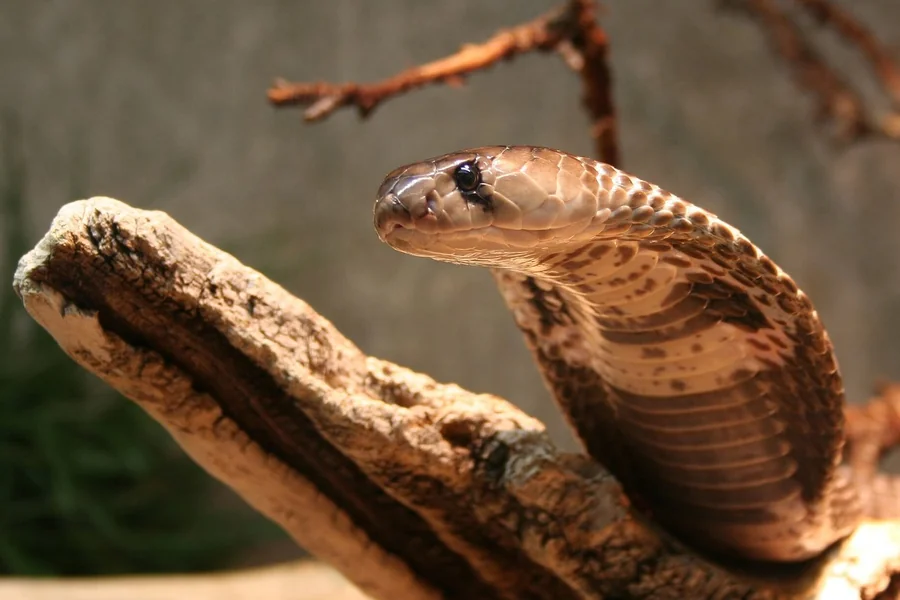
Cobra — hooded elapid
AI-generated educational wildlife portrait — World Animal Rescue Network
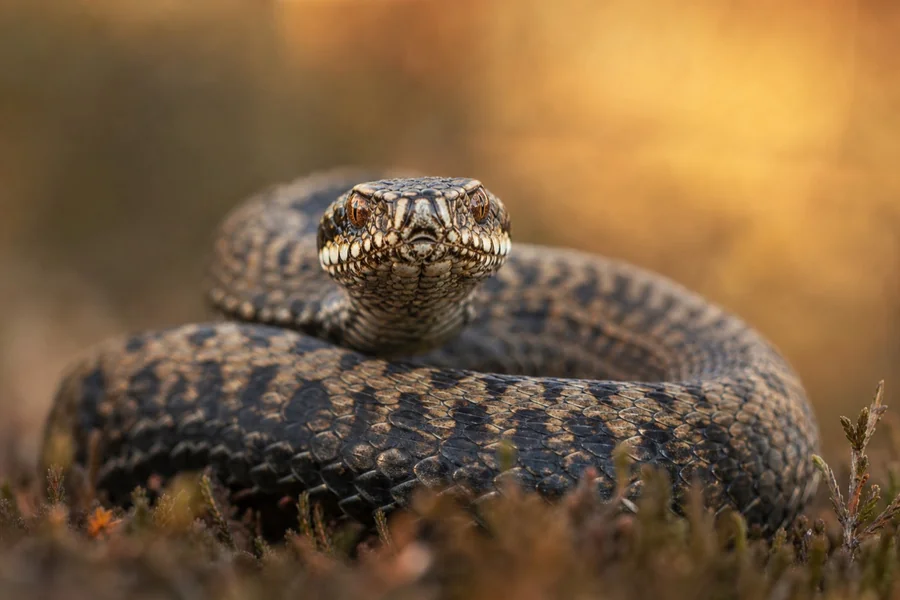
Viper — triangular head, folding fangs
AI-generated educational wildlife portrait — World Animal Rescue Network
Cobra vs Viper: At a Glance
| Feature | Cobra | Viper |
|---|---|---|
| Family (typical) | Elapidae | Viperidae |
| Fangs | Short, fixed front fangs | Long, folding front fangs |
| Hood | Many can spread a hood | No cobra-style hood |
| Head shape stereotype | More oval when not hooding | Often broad, triangular |
| Heat pits | Absent in cobras | Present in pit vipers |
| Venom style (general) | Often neurotoxic-leaning | Often cytotoxic/haemotoxic-leaning |
| Warning display | Rear, hood, sometimes spit | Coil, hiss; rattles in rattlesnakes |
| Example species | Indian cobra, king cobra | Adder, gaboon viper, rattlesnake |
| Spitting | Some Naja spit venom | Do not spit like cobras |
| Medical importance | High in range countries | High in range countries |
Size and physical differences
King cobras can exceed 3–4 m, longer than most vipers; many vipers are shorter but heavily built, typically under 2 m.
Cobra versus viper compares two medically famous snake groups that people often merge into a single fear category. Cobras, in everyday use, are certain elapids — notably Naja species and the king cobra — that raise the front body and spread a hood. Vipers (Viperidae) include adders, rattlesnakes, gaboon vipers and many others with long hinged fangs that fold against the roof of the mouth when not striking.
Head shape and fang mechanics are the practical contrasts. A viper often looks blunt-headed and heavy-cheeked because of venom glands and fang architecture. A cobra’s warning display is the hood. Geography matters: which species you might meet depends entirely on continent and habitat.
This comparison sticks to marks you can use without laboratory gear: size, shape, behaviour and the words people actually type into a search box. Scientific names are given where they prevent a regional mix-up. Where published measurements disagree, this page gives the range rather than a single tidy figure that implies more certainty than the sources support.
Fangs and strike mechanics
Viper fangs are long and hinged. They fold away until a strike rotates them forward, injecting venom deep into tissue. Cobra fangs are shorter and relatively fixed at the front of the mouth, more like other elapids such as mambas. That architectural difference is why vipers can look heavy in the head and why their bite mechanics appear in every first-aid textbook. It does not mean one group is always "more venomous" — toxicity, yield and human access to antivenom decide medical outcomes more than fang length alone. Field observers should combine silhouette, behaviour and habitat before naming what they see. Where published measurements disagree, this page gives the range rather than a single tidy figure. Treat a single trait as supporting evidence rather than a complete identification.
Hoods, pits and warning signals
A cobra’s hood is a visual warning produced by spreading elongated ribs and neck skin. Vipers do not hood. Pit vipers add another sensor: facial pits that detect warm prey. True vipers without pits still rely on other senses. Rattlesnakes add an acoustic warning. Spitting cobras can eject venom toward eyes — a specialised defence absent in vipers. Learn the local warning signals; do not assume every raised snake is a cobra, and do not assume every triangular head abroad is safe to approach for a photo. Field observers should combine silhouette, behaviour and habitat before naming what they see. Where published measurements disagree, this page gives the range rather than a single tidy figure. Treat a single trait as supporting evidence rather than a complete identification.
Venom stereotypes need caution
Classroom summaries often say cobra venom is neurotoxic and viper venom is haemotoxic or tissue-destroying. There is a real tendency in that direction for many species, but venoms are mixtures and exceptions exist. Medical treatment depends on the species and the syndrome in front of clinicians, not on the everyday word cobra or viper. Never use internet stereotypes to self-treat. The identification comparison is for understanding biology and risk awareness, not for substituting professional care. Field observers should combine silhouette, behaviour and habitat before naming what they see. Where published measurements disagree, this page gives the range rather than a single tidy figure. Treat a single trait as supporting evidence rather than a complete identification. Local field guides remain the final check when similar species share a landscape.
Which word applies where
Cobra is used widely in Africa and Asia for hooded elapids; it is not a native label for British wildlife. Viper covers the European adder and a global family. People searching cobra versus viper may be comparing zoo animals, travel risks or games. Answer with family traits first, then name the regional species that matter. A king cobra is not a Naja cobra; a rattlesnake is a pit viper. Precision prevents false confidence. Field observers should combine silhouette, behaviour and habitat before naming what they see. Where published measurements disagree, this page gives the range rather than a single tidy figure. Treat a single trait as supporting evidence rather than a complete identification. Local field guides remain the final check when similar species share a landscape.
Why the comparison matters
Snakebite first response and public education collapse when every dangerous snake is called a cobra. Fang type, behaviour and local species lists differ. Conservation also differs: habitat loss and persecution hit both groups, but not identically. Accurate names keep advice attached to the animal present. WARN publishes these comparisons so high-intent questions get a sourced answer instead of an unsourced listicle. Field observers should combine silhouette, behaviour and habitat before naming what they see. Where published measurements disagree, this page gives the range rather than a single tidy figure. Treat a single trait as supporting evidence rather than a complete identification. Local field guides remain the final check when similar species share a landscape. When evidence is thin, prefer a broader label over a false precise name.
Did you know?
Spitting cobras aim for the eyes; the behaviour is a defence that buys time to escape rather than a hunting technique for catching prey.
Cobra vs Viper: FAQs
What is the difference between a cobra and a viper?
Is a rattlesnake a viper?
Which venom is stronger?
Do cobras and vipers live in the UK?
Can cobras spit?
Is a king cobra a true cobra?
Help protect animals
Learning about animals can help more people understand their needs. WARN raises funds for eligible animal-welfare organisations. Read the relevant appeal’s purpose, recipient status and fund terms, or share this free guide to raise awareness.
Stay connected with WARN
Receive appeal updates, animal-welfare news and published funding reports. Unsubscribe any time.
We only use your address for WARN updates. See our privacy policy.