Animal Comparison
Centipede vs Millipede
Centipedes are flatter, faster predators with one pair of legs per body segment; millipedes are rounder detritivores with two pairs on most segments.
By WARN Research & Conservation Team Last updated
In brief — Centipede vs Millipede
Flat, fast and predatory with one leg pair per segment usually means centipede; rounder, slower detritivore with two pairs means millipede.
Centipedes are elongated, often flattened arthropods that hunt with venomous fangs and usually show one pair of legs per body segment. Millipedes are typically rounder, slower animals that feed on decaying plant matter and have two pairs of legs on most body segments. Neither really has a hundred or a thousand legs; the names are old exaggerations.
See the difference
Images are shown at different scales. Read each caption for the species, source and context.
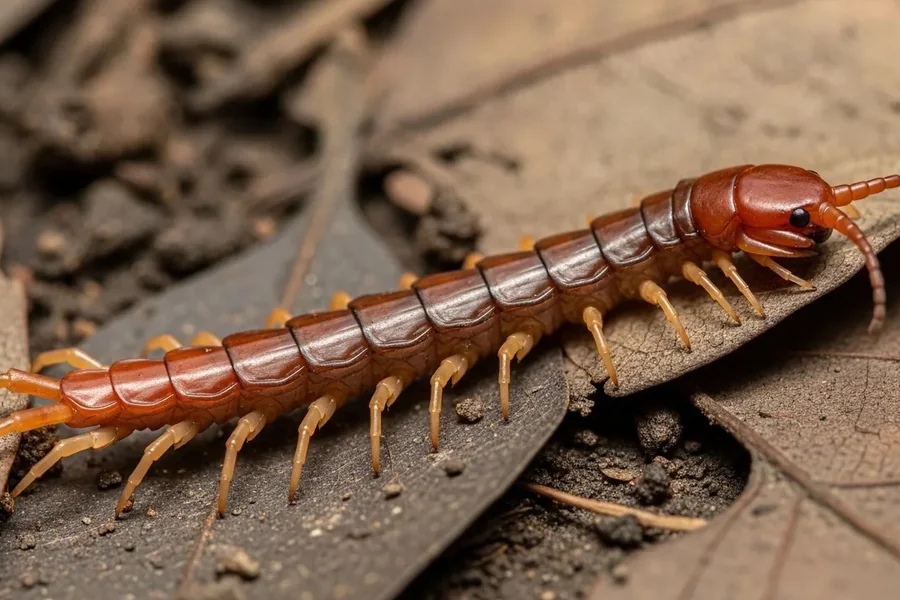
Centipede — one leg pair per segment
AI-generated educational wildlife portrait — World Animal Rescue Network
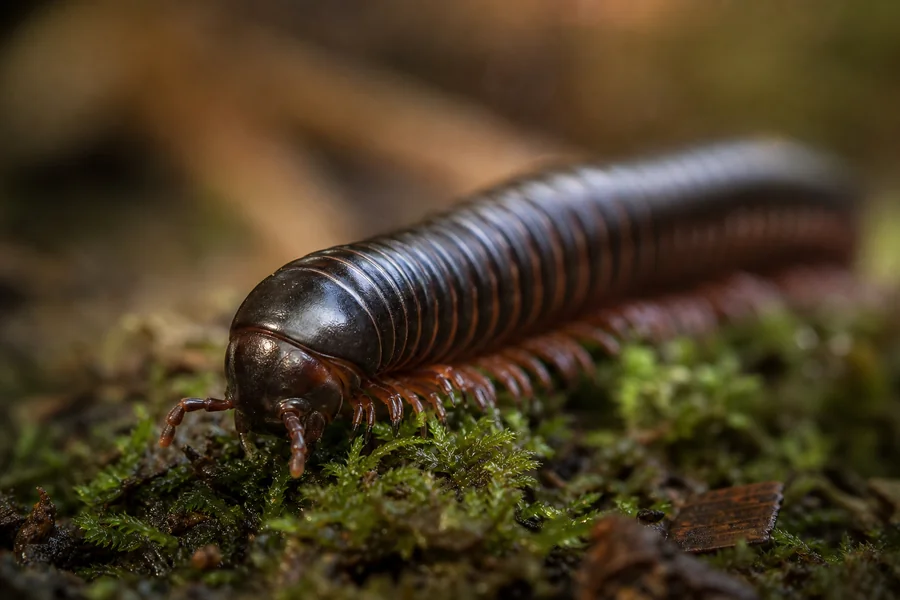
Millipede — two pairs on most segments
AI-generated educational wildlife portrait — World Animal Rescue Network
Centipede vs Millipede: At a Glance
| Feature | Centipede | Millipede |
|---|---|---|
| Legs per mid-body segment | One pair | Two pairs on most segments |
| Body shape | Often flattened | Often cylindrical or arched |
| Diet | Mostly predatory | Mostly decaying plant matter |
| Speed | Typically faster | Typically slower |
| Front end weapon | Venomous forcipules | No equivalent fangs; some chemical defences |
| Antennae | Present; sensory | Present; sensory |
| Defence coil | Less classic spiral coil | Many coil into a spiral |
| Habitat clue | Under logs, stones; hunting | Leaf litter, rotting wood |
| Leg-count myth | Not literally 100 legs | Not literally 1,000 legs |
| Human bite risk | Some species can bite painfully | Bite not the usual concern; secretions may irritate |
Size and physical differences
Sizes overlap widely by species: many garden centipedes are a few centimetres long, while some tropical species are much larger; common millipedes are often a few centimetres too, with giant forms elsewhere.
Centipede versus millipede is a classic arthropod mix-up driven by similar long bodies and many legs. Both belong to myriapods, but they live different ecological lives. Centipedes (class Chilopoda) are predators: quick, often flattened, with a pair of venomous forcipules behind the head used to subdue prey. Millipedes (class Diplopoda) are mostly scavengers of rotting vegetation, slower on rounded or flattened segments that commonly bear two leg pairs each.
Count the legs if you can see them clearly, then look at speed and body cross-section. A darting hunter under a log is behaving like a centipede. A deliberate, coiled detritivore is behaving like a millipede. The English names promise precise leg totals they cannot deliver; body plan and diet are the reliable story.
This comparison sticks to marks you can use without laboratory gear: size, shape, behaviour and the words people actually type into a search box. Scientific names are given where they prevent a regional mix-up. Where a popular belief is wrong, the correction leads; where two animals are simply different, the decisive field mark leads. Ranges and masses are given as working bands from standard natural-history references, not as courtroom measurements for every individual.
Leg pairs tell the body plan
On a centipede, each typical body segment carries one pair of legs. On a millipede, most segments are diplosegments carrying two pairs. That is the clean morphological rule taught in field guides. Counting every leg on a live animal is hard, so use the pattern along a short stretch of body: sparse single pairs versus denser double pairs. Combined with a flattened versus rounded cross-section, the identification usually settles quickly under a log. Use more than one mark before you decide — single-trait IDs fail on juveniles, regional forms and poor light. In practice, people meet these animals in brief glances. Slow down long enough to check the two or three marks in the table above before accepting the first common name that comes to mind. Mislabeling spreads through photos and social posts faster than corrections do, which is why a short, checkable comparison page earns its keep. When experts disagree on subspecies or English names, the underlying biology — diet, body plan, reproductive cycle — remains the stable part of the answer.
Predator versus recycler
Centipedes hunt insects and other small invertebrates, injecting venom through modified front appendages. Millipedes process dead plant material and contribute to decomposition in soil and litter. Finding one in a compost heap does not prove millipede — centipedes hunt there too — but feeding behaviour and mouthpart role differ completely. The ecological jobs explain why one dashes and the other trundles. Geography matters: the same English names attach to different species on different continents, and range often settles an argument faster than colour. In practice, people meet these animals in brief glances. Slow down long enough to check the two or three marks in the table above before accepting the first common name that comes to mind. Mislabeling spreads through photos and social posts faster than corrections do, which is why a short, checkable comparison page earns its keep. When experts disagree on subspecies or English names, the underlying biology — diet, body plan, reproductive cycle — remains the stable part of the answer.
Venom, bites and secretions
Some centipedes can deliver a painful bite to people; severity depends on species and individual reaction. Millipedes more often defend with chemical secretions that can irritate skin or stain fingers; they are not built as fang-first hunters of vertebrates. Handling either with bare hands is unnecessary for identification. A photograph and a clear look at legs beat a captured specimen for garden curiosity. Behaviour at the moment of observation — feeding, escape, nesting — is evidence, not a personality story about the whole species. In practice, people meet these animals in brief glances. Slow down long enough to check the two or three marks in the table above before accepting the first common name that comes to mind. Mislabeling spreads through photos and social posts faster than corrections do, which is why a short, checkable comparison page earns its keep. When experts disagree on subspecies or English names, the underlying biology — diet, body plan, reproductive cycle — remains the stable part of the answer.
Coiling and escape behaviour
Many millipedes coil into a tight spiral when threatened, protecting softer undersides behind a tough dorsal surface. Centipedes more often flee at speed or use their bite. Behaviour is not a perfect key — stressed animals invent exceptions — but a slow coil in leaf litter is a strong millipede hint, while a rapid sideways escape under bark fits many centipedes. Conservation status is assessed taxon by taxon; a group label like 'wasp' or 'antelope' is not an IUCN status. In practice, people meet these animals in brief glances. Slow down long enough to check the two or three marks in the table above before accepting the first common name that comes to mind. Mislabeling spreads through photos and social posts faster than corrections do, which is why a short, checkable comparison page earns its keep. When experts disagree on subspecies or English names, the underlying biology — diet, body plan, reproductive cycle — remains the stable part of the answer.
Why the names mislead
Centipede and millipede literally suggest hundred and thousand legs. Real counts vary by species and life stage and almost never match the poetry. Teaching children the Latin-rooted exaggeration without the body-plan rule creates lifelong confusion. Better lesson: one pair versus two pairs per segment, predator versus detritivore. If you are managing conflict with people or pets, identify first, then choose a proportionate response; misidentification wastes effort and can harm the wrong animal. In practice, people meet these animals in brief glances. Slow down long enough to check the two or three marks in the table above before accepting the first common name that comes to mind. Mislabeling spreads through photos and social posts faster than corrections do, which is why a short, checkable comparison page earns its keep. When experts disagree on subspecies or English names, the underlying biology — diet, body plan, reproductive cycle — remains the stable part of the answer.
Did you know?
The “milli-” and “centi-” in the names are poetic overcounts — the useful field rule is one leg pair per segment versus two.
Centipede vs Millipede: FAQs
What is the difference between a centipede and a millipede?
Which has more legs?
Do centipedes bite?
Are millipedes dangerous?
Why do millipedes coil up?
Are they insects?
Help protect animals
Learning about animals can help more people understand their needs. WARN raises funds for eligible animal-welfare organisations. Read the relevant appeal’s purpose, recipient status and fund terms, or share this free guide to raise awareness.
Stay connected with WARN
Receive appeal updates, animal-welfare news and published funding reports. Unsubscribe any time.
We only use your address for WARN updates. See our privacy policy.