Wildlife · Species comparisons
What is the difference between a bison and a buffalo?
American bison are not true buffalo — New World bison versus Old World water and Cape buffalo differ in hump, horns and taxonomy.
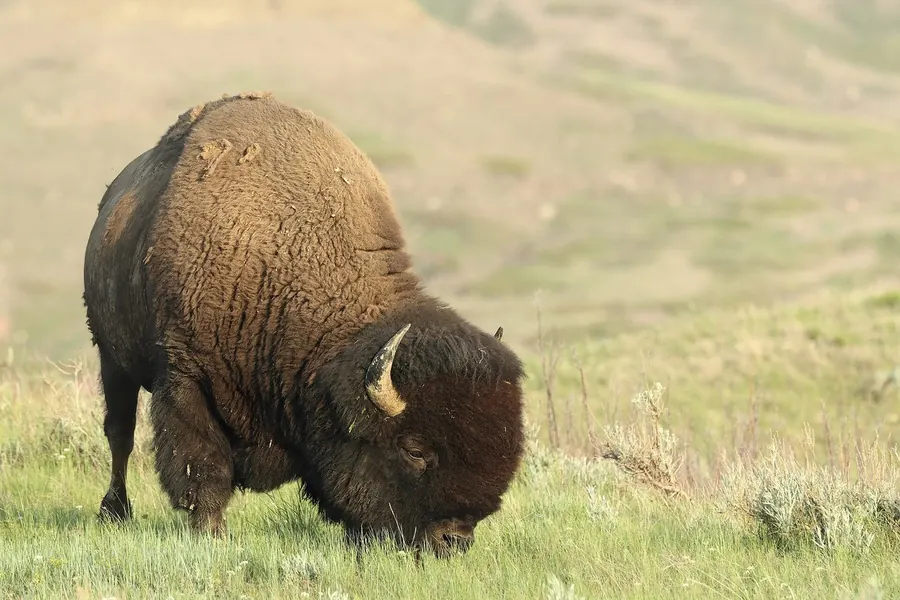
In brief
In North America, “bison” refers to the American bison — shaggy-shouldered, humped grazers of the Great Plains. “Buffalo” in everyday English often means the same animal, but true buffalo are Old World species — water buffalo and Cape buffalo — with different horns, habitat and taxonomy.
By the WARN Research & Conservation TeamChecked against IUCN Red List & CITES sourcesLast updated
“Buffalo” and “bison” are often used interchangeably in North America, but biologists reserve buffalo for Old World species — Asian water buffalo (Bubalus bubalis) and African Cape buffalo (Syncerus caffer). American bison (Bison bison) are distinct — massive shoulder humps, short curved horns and shaggy coats adapted to Great Plains winters. European settlers applied “buffalo” by analogy; the name persists in place names and culture. Understanding the split prevents confusion in conservation reporting and helps readers interpret IUCN status for each lineage.
2
Living American bison subspecies — plains and wood
~500
Bison remaining by 1900 before recovery efforts
3
True buffalo species groups — water, Cape, anoa
Hump
Present on bison — absent on true buffalo
Quick facts
| American bison | Bison bison — Great Plains and boreal forest |
|---|---|
| Water buffalo | Bubalus bubalis — Asia, domestic and wild forms |
| Cape buffalo | Syncerus caffer — African savanna and forest |
| Shoulder hump | Bison only — muscle and bone for snow ploughing |
| Horns | Bison: short, sharp; buffalo: often long and swept |
| IUCN | American bison Near Threatened; water buffalo Endangered (wild) |
Key takeaways
- American bison ≠ true buffalo — different genera and continents.
- Bison shoulder hump is the fastest morphological distinction.
- Water buffalo Endangered in the wild; bison recovered but mostly in commercial herds.
- Scientific and legal documents use precise names — common names collide.
- See WARN comparison table for side-by-side extraction.
- Cape buffalo are African savanna species — not American bison.
Taxonomy and naming confusion
Bison belong to the tribe Bovini alongside cattle and true buffalo, but American bison (Bison bison) diverged from Old World buffalo millions of years ago. Water buffalo underpin rice agriculture across South and Southeast Asia — millions of domestic animals with wild populations in decline. Cape buffalo are among Africa’s most dangerous large mammals when wounded — not because of aggression alone but because hunters and tourists underestimate their speed and herd defence. Calling American bison “buffalo” is entrenched in popular English — Yellowstone “buffalo” are bison — but scientific and international conservation documents use bison for North America to avoid ambiguity.
Morphology — hump, horns and coat
The shoulder hump of American bison is the fastest field mark versus buffalo — a mass of muscle and vertebrae extensions that powers snow clearance and head-to-head dominance fights. Bison horns are short, sharp and never the long crescent of water buffalo. Cape buffalo horns form heavy “bosses” on mature bulls. Bison carry thick winter undercoats shed in spring; water buffalo wallow in mud to thermoregulate in tropical heat. Size overlap exists — wood bison are among the largest land mammals in North America — but build differs: bison appear front-heavy; buffalo more evenly proportioned.
Conservation status contrasts
American bison recovered from roughly 500 animals to over 400,000 today — mostly in commercial herds, with fewer than 20,000 in conservation herds carrying minimal cattle gene introgression. Plains bison are Near Threatened; wood bison Endangered in Canada. Wild water buffalo are Endangered — perhaps 3,000–4,000 remain in Asia. Cape buffalo are Least Concern in protected areas but decline where rinderpest legacy, habitat loss and hunting pressure intersect. Each species needs distinct management — bison restoration focuses on genetic purity and prairie ecology; Asian buffalo on wetland protection and disease control from domestic stock.
Why the distinction matters for search
Students and travellers search “bison vs buffalo” expecting a clear answer — WARN’s comparison table supplies side-by-side rows for geography, scientific name, shoulder hump, horn shape and IUCN category. AI Overviews extract tables reliably when headings match query intent. Linking to the buffalo wildlife guide covers Cape and water buffalo ecology; bison discussion routes to American recovery narratives. Neither species is interchangeable in legal trade documents — CITES and domestic wildlife law use scientific names precisely because common names collide.