Animal Comparison
Bison vs Buffalo
Bison have a shoulder hump, shaggy beard and short horns; true buffalo (African and water buffalo) have neither hump nor beard, but longer, curved horns.
By the WARN Research & Conservation TeamChecked against IUCN Red List & CITES sourcesLast updated
In brief — Bison vs Buffalo
If it has a hump and a beard, it is a bison; if it has long curved horns and a flat back, it is a true buffalo.
The clearest difference is the hump: bison (genus Bison, native to North America and Europe) have a pronounced muscular hump above the front shoulders, a shaggy beard and mane, and short horns up to about 50-60cm (20-24in). True buffalo — African buffalo (Syncerus caffer) and water buffalo (Bubalus bubalis/arnee), native to Africa and Asia — have no shoulder hump, smoother coats, and much longer, more sweeping horns, with African buffalo growing a fused bony "boss" across the forehead.
See the difference
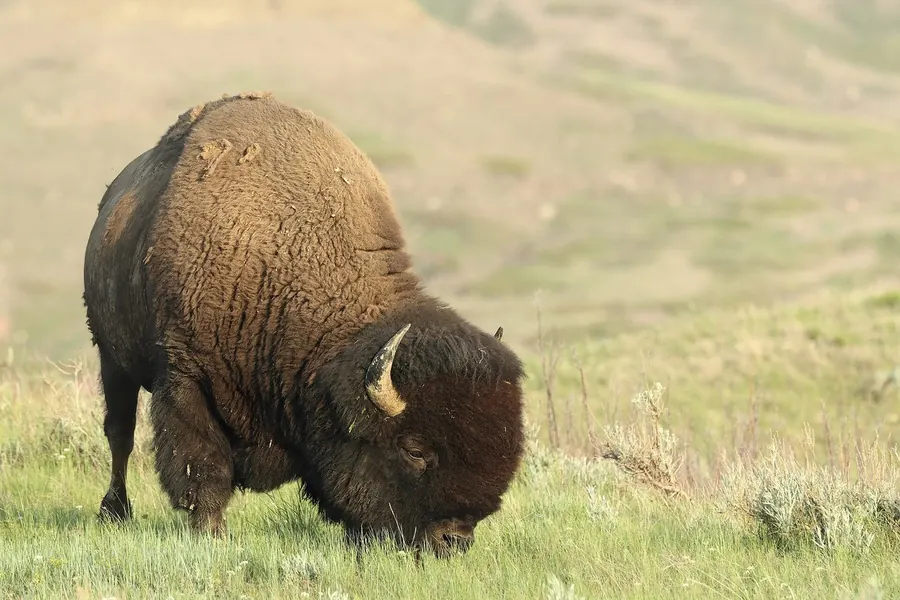
Bison — shoulder hump, beard, short sharp horns
Photo: Cephas / Wikimedia Commons (CC BY-SA 4.0)
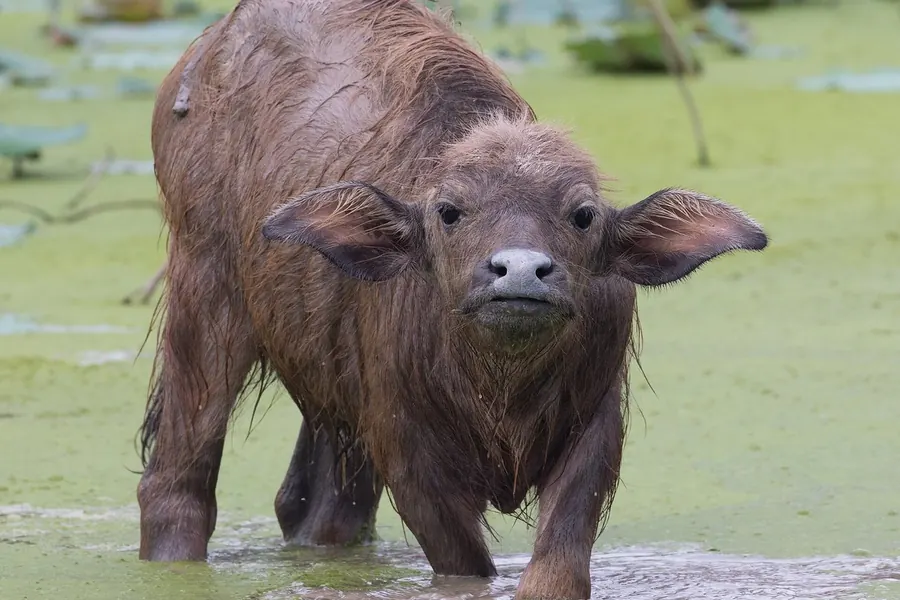
Buffalo — no hump, long sweeping curved horns
Source: Wikimedia Commons
Bison vs Buffalo: At a Glance
| Feature | Bison | Buffalo |
|---|---|---|
| Scientific genus | Bison (Bison bison, Bison bonasus) | Syncerus (African) / Bubalus (water buffalo) |
| Native range | North America; Europe/Caucasus | Sub-Saharan Africa; South & Southeast Asia |
| Shoulder hump | Prominent muscular hump | None; flat back |
| Beard/mane | Thick shaggy beard and mane | Smooth, short coat |
| Horns | Short, sharp, up to ~50-60cm | Long, curved; boss (African) or huge span (water buffalo) |
| Typical bull weight | 460-990kg (1,014-2,183lb) | 425-870kg African; 700-1,200kg wild water buffalo |
| IUCN status | Least Concern (American); Near Threatened (European) | Near Threatened (African); Endangered (wild water buffalo) |
| Typical lifespan | 15-20 years in the wild | 11-22 years in the wild |
Which is bigger & stronger?
Bison and the wild Asian water buffalo are similar heavyweights (both around 1,000-1,200 kg for large bulls), and both outweigh the African Cape buffalo (up to about 875 kg).
"Bison" and "buffalo" are often used as if they mean the same animal, especially in North America, where the American bison has been called "buffalo" since early European settlers mistook it for African and Asian cattle. In scientific terms, though, they are different animals. Bison belong to the genus Bison (American bison, Bison bison, and the European bison or wisent, Bison bonasus), native to grasslands of North America and Europe. True buffalo belong to separate genera entirely — Syncerus for the African (Cape) buffalo and Bubalus for the Asian water buffalo — and evolved independently on different continents. Both groups sit within the cattle family Bovidae, so they are distant relatives, but their similar bulky, horned build is mostly the result of convergent evolution rather than close ancestry.
Taxonomy and Origins
Bison and buffalo diverged onto separate continents and evolved their similarities independently. Bison (genus Bison) are native to North America and parts of Europe; the American bison (Bison bison) roamed the Great Plains in vast herds, while the European bison or wisent (Bison bonasus) survives in forested reserves in Poland, Belarus and the Caucasus. True buffalo split into two lineages: the African buffalo (Syncerus caffer), found across sub-Saharan savannas and wetlands, and the water buffalo (Bubalus bubalis, with the wild ancestor classified as Bubalus arnee), native to South and Southeast Asia. Despite the shared common name, no wild buffalo species occurs naturally in North America or Europe, and no wild bison occurs in Africa or Asia.
Hump, Coat and Horns
The single most reliable field mark is the shoulder hump: bison carry a tall muscular hump over the front shoulders, built to support an oversized head used for pushing snow aside while grazing, along with a thick shaggy mane and beard across the head, neck and forelegs. True buffalo lack this hump entirely and have short, smooth coats. Horn shape reverses the pattern: bison horns are short, sharp and curve gently upward, rarely exceeding about 50-60cm (20-24in), while buffalo horns are far larger and more dramatic — African buffalo grow a fused bony "boss" across the crown with horns sweeping outward then hooking upward, sometimes spanning over 1m (3.3ft) tip to tip, and water buffalo carry some of the longest horns of any living bovid, occasionally exceeding 2m (6.6ft) across in wild individuals.
Size and Build
American bison are the heavier animal on average: bulls typically weigh 460-990kg (1,014-2,183lb) and can exceed 1,000kg (2,205lb), standing about 1.5-2m (5-6.6ft) at the shoulder, with cows noticeably smaller at 360-640kg (794-1,411lb). African buffalo bulls weigh roughly 425-870kg (937-1,918lb), with cows around 300-600kg (661-1,323lb). Wild water buffalo are the largest of all three, with bulls reaching 700-1,200kg (1,543-2,646lb) and a longer, rangier body up to about 3m (9.8ft) head-to-body, though domesticated water buffalo are considerably smaller, typically 250-550kg (551-1,213lb), after thousands of years of selective breeding for farm work.
Habitat, Behaviour and Status
Bison are grassland grazers adapted to open plains and cold winters, living in matriarchal herds and once migrating in the millions across North America before near-extinction in the 1800s; conservation recovery means the American bison is now IUCN Least Concern, though conservation-dependent, while the European bison remains Near Threatened. African buffalo are highly social, water-dependent savanna grazers famed for defending herd members against predators, and are listed Near Threatened owing to habitat loss and disease. Wild water buffalo are wetland and floodplain grazers, now IUCN Endangered with fewer than 4,000 remaining because of habitat conversion and interbreeding with domestic buffalo, even though the domesticated form is one of the world's most common livestock species, with some 200 million kept across Asia for milk, meat and draught work.
Did you know?
A bison's hump is not fat or bone but a mass of muscle anchored to elongated vertebrae, giving it the leverage to swing its huge head like a snowplough through deep drifts — a tool no true buffalo needs in Africa's or Asia's warmer climates.
Bison vs Buffalo: FAQs
Is a bison a type of buffalo?
Which is bigger, a bison or a buffalo?
How can you tell a bison from a buffalo just by looking?
Why do Americans call bison "buffalo"?
Can bison and buffalo interbreed?
Are bison or buffalo endangered?
These animals need us
Understanding wildlife is the first step to protecting it. WARN funds partner-led rescue and conservation where the need is greatest — your support keeps that work going.