Wildlife Guide · Central and South America & Atlantic Forest and Amazon basin
Marmoset
Family Callitrichidae — marmosets and tamarins (genera Callithrix, Cebuella, Mico and others)
The pygmy marmoset is the smallest monkey on Earth — and one of the most heavily traded primate pets.
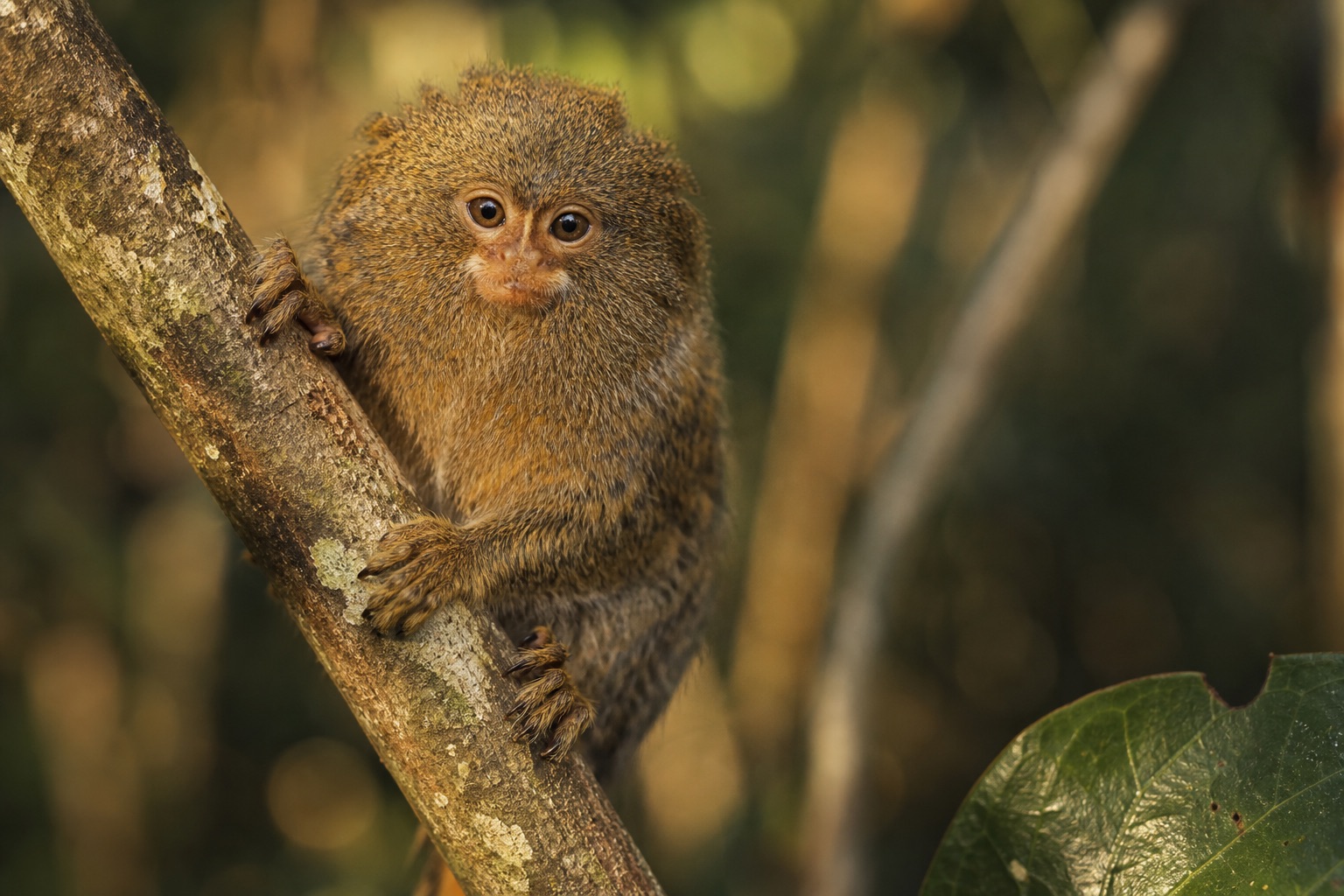
AI-generated educational wildlife portrait — World Animal Rescue Network · AI visualisation, not a photograph
In brief
Marmosets are small New World monkeys in the family Callitrichidae of Central and South America; the pygmy marmoset (Cebuella) at about 100 g is the smallest monkey alive, and the group is heavily traded as pets despite complex social and dietary needs.
Also in Animals A to Z · Animals that start with M
By WARN Research & Conservation Team Last updated
Marmosets are small New World monkeys of the family Callitrichidae — the same clade as tamarins, and distinct from the larger monkeys of Africa and Asia. They range from the pygmy marmoset, which weighs little more than 100 g and is the smallest monkey alive, to the common marmoset at several times that weight. All share a body plan adapted to life in trees: sharp claw-like nails for vertical clinging, specialised incisors for gouging bark, and a cooperative breeding system in which a dominant female usually produces twins that the rest of the group helps carry. Most marmosets eat fruit, insects and gum — exudates tapped from tree wounds that the animals reopen with their teeth. The pygmy marmoset is a gum-feeding specialist with home ranges sometimes smaller than half a hectare centred on a few productive trees. Common marmosets have spread into urban and degraded Atlantic Forest edge, where they are Least Concern; rarer species in the Amazon face logging, fire and capture for the pet trade. When people search 'marmoset', they usually mean either the pygmy marmoset — marketed online as a 'finger monkey' — or the common marmoset, the white-eared species used in biomedical research. Both are poor pets: they need social groups, specialist diets, vertical space and veterinary care most households cannot provide. CITES Appendix II covers the family; several species are Vulnerable or Endangered.
~100 g
Adult pygmy marmoset — the smallest monkey
Twins
Typical litter for many callitrichids
Gum
Primary diet for pygmy marmosets
CITES II
International trade regulated across the family
Figures sourced from IUCN Red List — Cebuella pygmaea (pygmy marmoset), IUCN Red List — Callithrix jacchus (common marmoset), CITES Appendices .
Marmoset: Quick Facts
| Smallest species | Pygmy marmoset — about 100 g |
|---|---|
| Typical group size | About 5–15 individuals |
| Diet | Fruit, insects and gum — varies by species |
| Breeding | Twins common; cooperative care by group |
| Lifespan | About 10–12 years in captivity |
| CITES | Appendix II for all callitrichids |
| Main threats | Pet trade, habitat loss, invasive spread (common marmoset) |
Scientific Classification
| Kingdom | Animalia |
|---|---|
| Phylum | Chordata |
| Class | Mammalia |
| Order | Primates |
| Family | Callitrichidae |
| Genus | Callithrix, Cebuella, Mico and others |
| Species | Over 20 species — status varies |
Conservation Status
- IUCN Status
- Varies — common marmoset Least Concern; pygmy marmoset Vulnerable
- Population
- Varies by species; no single estimate for the family
- Trend
- Decreasing for several Amazonian species; increasing for invasive common marmoset populations
- Assessed
- Varies
- CITES
- Appendix II
The family-level Least Concern label reflects the common marmoset; pygmy marmoset and several Amazonian marmosets are threatened. The pet trade is a cross-cutting welfare and conservation issue.
Did you know?
Pygmy marmoset home ranges can be as small as 0.1 ha — centred on one or two gum trees — because a reliable sap source supports the entire group without wide travel.
Key Facts: Marmoset
- Marmosets belong to Callitrichidae — small New World monkeys with claw-like nails and often cooperative breeding.
- The pygmy marmoset at roughly 100 g is the smallest monkey; the common marmoset is larger with distinctive white ear tufts.
- Many marmosets gouge tree bark to feed on gum and sap — pygmy marmosets are gum-feeding specialists.
- Twin births are typical; fathers and siblings help carry infants from the first weeks.
- The pet trade targets pygmy and common marmosets; welfare failures from wrong diet and isolation are common.
- IUCN status varies: common marmoset Least Concern; pygmy marmoset Vulnerable; several Amazonian species are threatened.
- All marmosets are CITES Appendix II — commercial trade requires permits.
What distinguishes a marmoset from other monkeys
Marmosets and tamarins together form Callitrichidae — the smallest anthropoid primates. Unlike most monkeys they have claw-like nails on all digits except the hallux, which bears a flat nail. That adaptation lets them cling vertically to trunks and vines while gouging bark. Teeth are specialised: lower incisors are chisel-shaped for scraping gum, and the molar row is short because gum and soft fruit need less grinding than leaves.
Social structure is distinctive. Groups of roughly five to fifteen typically contain one breeding female, one or two breeding males, and helpers — previous offspring that carry and feed twins. Suppression of reproduction in subordinate females is hormonal rather than purely behavioural. Twinning is the norm in many species, unusual among primates and demanding enough that alloparental care is essential.
The pygmy marmoset — smallest monkey, biggest pet-trade problem
The pygmy marmoset (Cebuella pygmaea) weighs about 100–140 g — lighter than many squirrels — with a head-and-body length of roughly 12–15 cm and a longer tail. It inhabits river-edge forest in the western Amazon, where family groups centre home ranges as small as 0.1–0.4 ha on one or two gum-producing trees.
The IUCN lists the pygmy marmoset as Vulnerable, threatened by habitat loss and capture for the illegal pet trade. Social media marketing as 'finger monkeys' drives demand; wild-caught animals are smuggled, and captive-bred animals are sold without adequate welfare guidance. Pygmy marmosets cannot thrive alone, on fruit alone, or in a small cage — metabolic bone disease and self-mutilation are documented outcomes.
Common marmoset — adaptable, invasive and overused in research
The common marmoset (Callithrix jacchus) from north-eastern Brazil is the species most people encounter in laboratories and, increasingly, in degraded Atlantic Forest where it has become invasive outside its native range. White ear tufts and a banded tail make it identifiable. It is Least Concern on the IUCN Red List because of its expanding population in disturbed habitat — a status that says nothing about welfare in the pet trade or research colonies.
Gum, sap, fruit and insects form the wild diet. Captive and pet marmosets fed fruit without adequate protein and calcium develop dental disease and metabolic bone disease. The species breeds well in captivity, which fuels both research use and the pet market — two industries with different standards and the same underlying problem of animals with needs that most private keepers cannot meet.
Conservation across the family
Callitrichid conservation is species-specific. Common marmosets need management as an invasive pest in parts of south-eastern Brazil where they compete with native fauna. Pygmy marmosets, buffy-tufted marmosets and several Amazonian Mico species need forest protection and anti-trafficking enforcement. Golden lion tamarins — close relatives in the same family — are among Brazil's best-known recovery stories; marmosets share their Atlantic Forest habitat but receive less funding and attention.
CITES Appendix II regulates international trade in all callitrichids. Domestic laws vary: many countries restrict or ban private primate ownership. The honest message for anyone searching 'marmoset' is that these are arboreal, social, gum-feeding primates — not domestic companions.
What WARN Does
WARN publishes free, sourced species education including honest guidance on widely traded wild animals. Marmosets are among the most commonly advertised primate pets and among the least suited to private keeping — accurate information reduces both trafficking demand and welfare failure.
If this guide helps you understand wildlife and the pressures it faces, a gift to WARN supports habitat protection and free public education in our partner countries.
Marmoset: Frequently Asked Questions
What do marmosets eat?
Where do marmosets live?
Are marmosets dangerous?
How long do marmosets live?
How big is a marmoset?
Can you keep a marmoset as a pet?
What is the smallest monkey?
Sources & References
Population figures, conservation status and biological facts on this page are drawn from authoritative scientific and intergovernmental sources.
Terms used on this page
Plain-English definitions, from our wildlife and conservation glossary.
Latest Marmoset Stories
Quick, fact-checked reads on the marmoset — amazing facts, key questions and the threats it faces.
Species
12 Amazing Facts About Sloths You Probably Didn't Know
From algae gardens growing in their fur to digesting a single leaf for weeks, here are twelve genuinely surprising, science-backed facts about the world's slowest mammal.
Read the storySpecies
How Slow Is a Sloth? The Science Behind the World's Slowest Mammal
Sloths crawl about 3 metres a minute and can spend a month digesting one leaf. Here's exactly how slow they are, in numbers, and why their slowness keeps them alive.
Read the storySpecies
Two-Toed vs Three-Toed Sloth: What's the Difference?
They look alike hanging in the trees, but two-toed and three-toed sloths differ in claws, diet, behaviour and conservation status. Here's how to tell them apart.
Read the storyExplore more animals
Discover more animals, their habitats and their conservation status in the WARN wildlife-guide library.
Enjoyed this Marmoset guide?
Receive appeal updates, animal-welfare news and published funding reports. Unsubscribe any time.
We only use your address for WARN updates. See our privacy policy.