Wildlife Guide · Oceans
Great White Shark
Carcharodon carcharias
The ocean's most famous apex predator
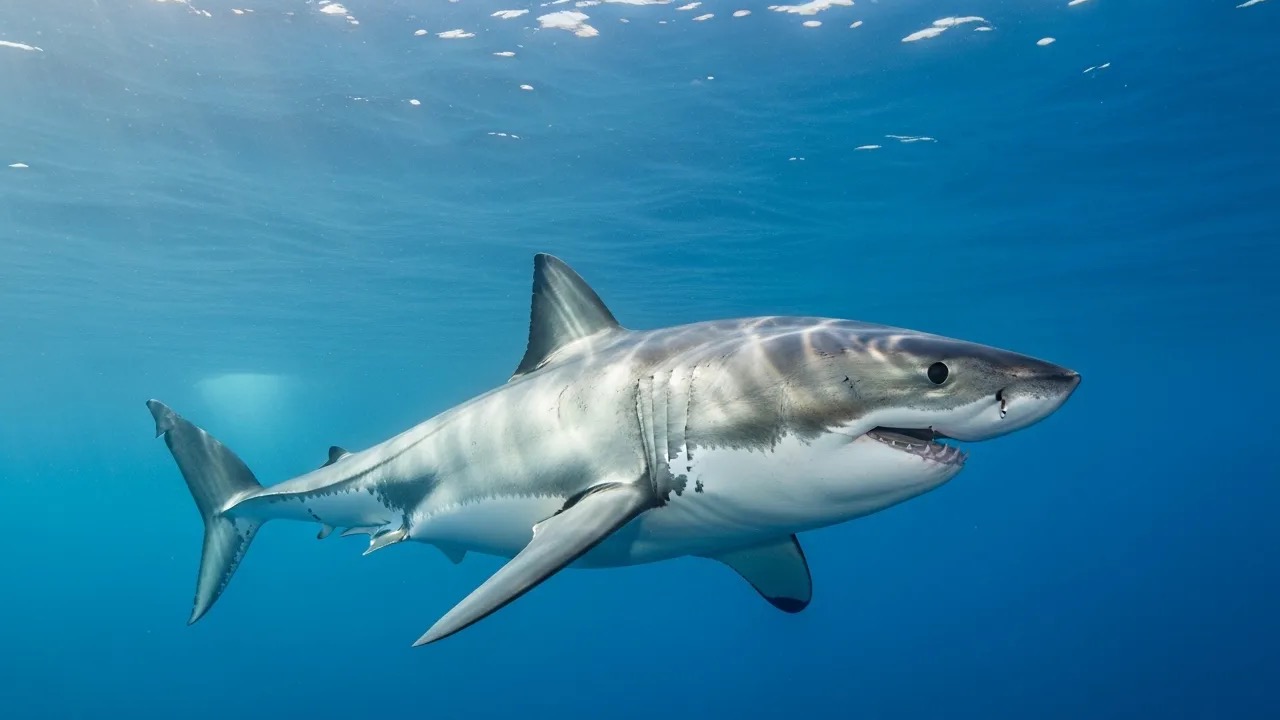
Photo: Pterantula (Terry Goss) at en.wikipedia / Wikimedia Commons (CC BY 2.5)
In brief
The great white shark (Carcharodon carcharias) is a large predatory fish found in cool and temperate coastal waters worldwide. It grows to around 4 to 4.6 m (13 to 15 ft), with some individuals exceeding 6 m, and can weigh up to 1,100 kg (2,400 lb).
Also in Animals A to Z · Animals that start with G
By WARN Research & Conservation Team Last updated
The great white shark (Carcharodon carcharias) is a large predatory fish found in cool and temperate coastal waters worldwide. It grows to around 4 to 4.6 m (13 to 15 ft), with some individuals exceeding 6 m, and can weigh up to 1,100 kg (2,400 lb). A powerful hunter of seals, sea lions, fish, and rays, it can swim in short bursts of up to 56 km/h (35 mph) and may live as long as 70 years. The IUCN lists it as Vulnerable.
4.6 m
Typical length
1100 kg
Typical weight
56 km/h
Top speed
70 yrs
Lifespan
Figures sourced from IUCN Red List — Great White Shark, Wikipedia — Great White Shark, Wikidata — Great White Shark .
Great White Shark: Quick Facts
| Scientific name | Carcharodon carcharias |
|---|---|
| Diet | Carnivore (seals, sea lions, fish, rays) |
| Habitat | Cool and temperate coastal waters worldwide |
| Lifespan | Up to 70 years |
| Weight | 680–1,100 kg (1,500–2,400 lb), sometimes more |
| Length | 4–4.6 m (13–15 ft); some exceed 6 m |
| Conservation status | Vulnerable (IUCN) |
Scientific Classification
| Kingdom | Animalia |
|---|---|
| Phylum | Chordata |
| Class | Chondrichthyes |
| Order | Lamniformes |
| Family | Lamnidae |
| Genus | Carcharodon |
Conservation Status
- IUCN Status
- Vulnerable (IUCN Red List)
- Population
- See the IUCN Red List assessment
- Trend
- Decreasing
- Assessed
- 2022
- CITES
- See CITES appendices
Key documented threats: Targeted and incidental capture in fisheries; Depletion of prey; Low productivity and late maturity; Shark-control programmes in some regions.
Key Facts: Great White Shark
- Great white sharks are the largest predatory fish on Earth, typically measuring 4 to 4.6 m (13 to 15 ft), though exceptional individuals exceed 6 m.
- Great whites are carnivores that feed mainly on seals, sea lions, fish, and rays, shifting toward larger marine mammals as they grow.
- Great whites have an extraordinary array of senses tuned for hunting in open water.
Size and appearance
Great white sharks are the largest predatory fish on Earth, typically measuring 4 to 4.6 m (13 to 15 ft), though exceptional individuals exceed 6 m. Mature adults commonly weigh between 680 and 1,100 kg (1,500 to 2,400 lb), and some are heavier still. Their name comes from the stark white underside, which contrasts with a slate-grey back that camouflages them against the seabed when viewed from above. This countershading lets them approach prey from below almost unseen.
Hunting and diet
Great whites are carnivores that feed mainly on seals, sea lions, fish, and rays, shifting toward larger marine mammals as they grow. They often attack from directly beneath their target, rushing upward in a single explosive strike that can briefly reach 56 km/h (35 mph). Rows of serrated, triangular teeth are continuously replaced throughout the shark's life, so a worn or broken tooth is quickly succeeded by a fresh one behind it. After a heavy meal, a great white can go weeks before needing to feed again.
Habitat and range
Great white sharks live in cool and temperate coastal waters across the globe, from the coasts of South Africa and Australia to California and the Mediterranean. They favour productive areas near seal colonies, rocky reefs, and offshore islands, but they also undertake long migrations across open ocean. Satellite tracking has revealed individuals crossing entire ocean basins and diving to considerable depths. This wide, patchy distribution makes the species difficult to survey accurately.
Reproduction and growth
Great whites are slow to mature, with females often not breeding until around 30 years of age. They are ovoviviparous, meaning the young develop inside eggs that hatch within the mother, and pups are born live after a gestation thought to last roughly a year. Litters are small, usually a handful of pups, each already more than a metre long and independent from birth. This slow reproductive pace, combined with a lifespan of up to 70 years, means populations recover only very gradually from losses.
Why it is vulnerable
The IUCN classifies the great white shark as Vulnerable, reflecting long-term declines in many regions. Accidental capture in fishing gear, targeted hunting for jaws and teeth, and the depletion of prey have all taken a toll, made worse by the species' late maturity and low birth rate. Great whites are effectively impossible to keep in aquariums, as they fare poorly in captivity and rarely survive long. Legal protection in countries such as South Africa, Australia, and the United States has become central to safeguarding the remaining population.
What WARN Does
WARN does not run a dedicated great white shark programme — this guide is part of the World Animal Rescue Network's free educational library. The great white shark faces documented conservation pressure in the wild, which is why clear, sourced public information about it matters. Building public understanding of species like the great white shark supports the broader conservation awareness that underpins WARN's partner-led rescue work across its network.
If clear, science-based wildlife guides like this help you understand and value animals, please consider supporting the World Animal Rescue Network's educational and rescue work so we can keep producing them.
Great White Shark: Frequently Asked Questions
How big do great white sharks get?
How fast can a great white shark swim?
How long do great white sharks live?
What do great white sharks eat?
Are great white sharks endangered?
Can great white sharks be kept in aquariums?
Where do great white sharks live?
Are great white sharks dangerous?
Sources & References
Population figures, conservation status and biological facts on this page are drawn from authoritative scientific and intergovernmental sources.
Terms used on this page
Plain-English definitions, from our wildlife and conservation glossary.
Latest Great White Shark Stories
Quick, fact-checked reads on the great white shark — amazing facts, key questions and the threats it faces.
Explore more animals
Discover more animals, their habitats and their conservation status in the WARN wildlife-guide library.
Enjoyed this Great White Shark guide?
Receive appeal updates, animal-welfare news and published funding reports. Unsubscribe any time.
We only use your address for WARN updates. See our privacy policy.