Wildlife Guide · North America & South America
Glass Frog
Hyalinobatrachium valerioi
The frog with see-through skin
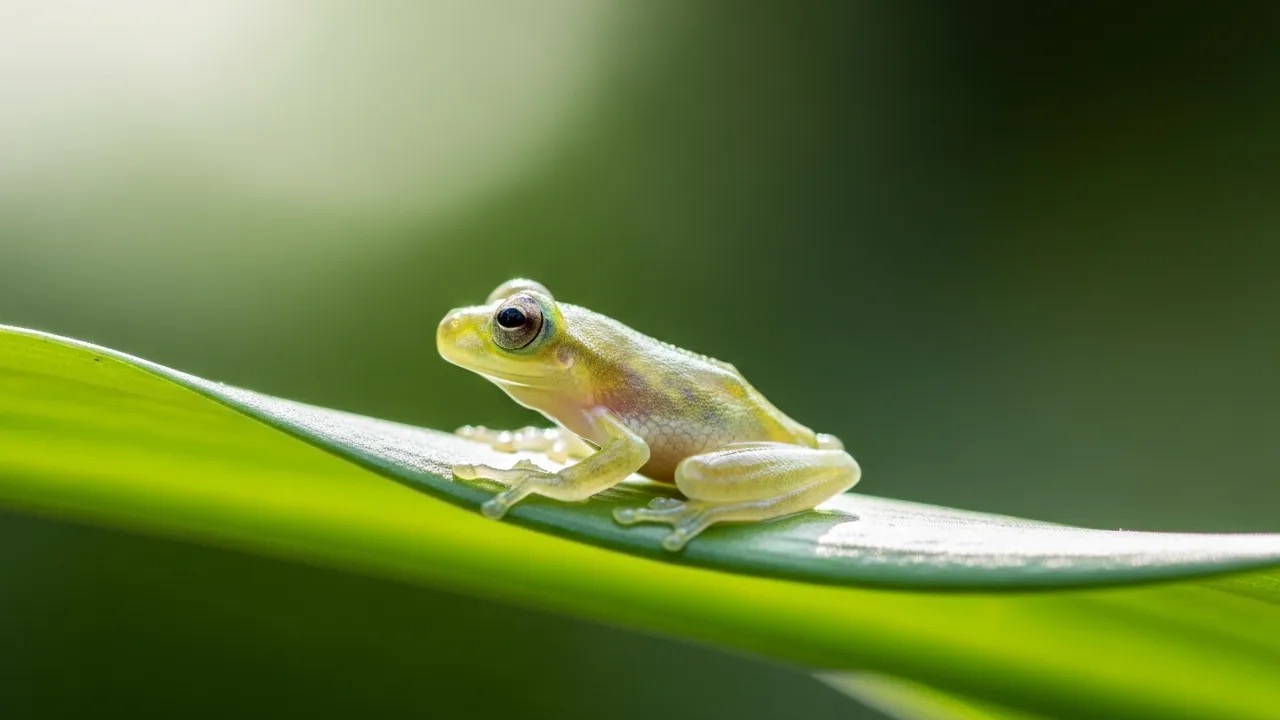
Photo: Mauricio Rivera Correa / Wikimedia Commons (CC BY-SA 2.5)
In brief
Glass frogs are small tree frogs of Central and South American rainforests, famous for the translucent skin on their bellies that reveals their internal organs and beating heart. They are nocturnal, arboreal, and care for their eggs on leaves above streams.
Also in Animals A to Z · Animals that start with G
By WARN Research & Conservation Team Last updated
Glass frogs are small tree frogs of Central and South American rainforests, famous for the translucent skin on their bellies that reveals their internal organs and beating heart. They are nocturnal, arboreal, and care for their eggs on leaves above streams. Most species live around 10 to 14 years.
0.025 m
Typical length
5 g
Typical weight
6 km/h
Top speed
12 yrs
Lifespan
Figures sourced from IUCN Red List — Hyalinobatrachium valerioi, Wikipedia — Glass Frog, Wikidata — Glass Frog .
Glass Frog: Quick Facts
| Scientific name | Hyalinobatrachium valerioi |
|---|---|
| Diet | Insectivore (small insects, spiders) |
| Habitat | Streamside vegetation in humid rainforest |
| Lifespan | About 10–14 years |
| Weight | Around 5 g (0.2 oz) |
| Size | 2–3 cm (0.8–1.2 in) body length |
| Conservation status | Least Concern (IUCN) |
Scientific Classification
| Kingdom | Animalia |
|---|---|
| Phylum | Chordata |
| Class | Amphibia |
| Order | Anura |
| Family | Centrolenidae |
Conservation Status
- IUCN Status
- Least Concern (IUCN Red List category)
- Population
- Global population not compiled for this guide
- Trend
- See the IUCN Red List assessment
- Assessed
- See the IUCN Red List assessment
- CITES
- See CITES appendices
Conservation figures are drawn from the IUCN Red List and CITES; this guide links to the authoritative sources rather than restating population counts.
Key Facts: Glass Frog
- Glass frogs are named for the translucent skin on their undersides, through which the heart, liver, and digestive tract can be seen.
- These tiny frogs are insectivores that hunt at night among leaves near streams.
- Glass frogs live in humid montane and lowland rainforests of Central and South America, almost always near clear, flowing streams.
Behavior and transparency
Glass frogs are named for the translucent skin on their undersides, through which the heart, liver, and digestive tract can be seen. Recent research found that some glass frogs become even more transparent while sleeping by tucking red blood cells into their liver. Their green backs help them blend with leaves by day, while they are active and vocal at night.
Diet and feeding
These tiny frogs are insectivores that hunt at night among leaves near streams. They eat small insects such as flies, crickets, and ants, as well as spiders, snatching them with a quick tongue. Their small size limits them to equally small prey.
Habitat and range
Glass frogs live in humid montane and lowland rainforests of Central and South America, almost always near clear, flowing streams. Males often guard clutches of eggs laid on leaves overhanging the water, so that hatching tadpoles drop into the stream below. They depend on clean water and dense streamside plants.
Conservation
Many glass frog species are listed as Least Concern, but they are highly sensitive to deforestation, water pollution, and the amphibian fungal disease chytridiomycosis. Because they need pristine streams, they are useful indicators of rainforest health. Some narrow-range species are threatened or poorly known.
What WARN Does
WARN does not run a dedicated glass frog programme — this guide is part of the World Animal Rescue Network's free educational library. The glass frog is currently widespread and not globally threatened, and this guide helps readers understand the pressures that can change that. Building public understanding of species like the glass frog supports the broader conservation awareness that underpins WARN's partner-led rescue work across its network.
If clear, science-based wildlife guides like this help you understand and value animals, please consider supporting the World Animal Rescue Network's educational and rescue work so we can keep producing them.
Glass Frog: Frequently Asked Questions
Why are glass frogs transparent?
What do glass frogs eat?
Where do glass frogs live?
How big are glass frogs?
Do glass frogs care for their eggs?
Are glass frogs dangerous?
How long do glass frogs live?
Sources & References
Population figures, conservation status and biological facts on this page are drawn from authoritative scientific and intergovernmental sources.
Terms used on this page
Plain-English definitions, from our wildlife and conservation glossary.
Latest Glass Frog Stories
Quick, fact-checked reads on the glass frog — amazing facts, key questions and the threats it faces.
Species
12 Amazing Facts About the Jaguar, the Americas' Biggest Cat
From a skull-piercing bite to a love of swimming, here are 12 fascinating, fact-checked things that make the jaguar the most powerful cat in the Americas.
Read the storySpecies
11 Amazing Facts About the Pink River Dolphin (the Amazon's Blushing Boto)
From a head that swivels 90 degrees to a blush built from battle scars, here are 11 true facts about the Amazon's pink river dolphin, the largest freshwater dolphin on Earth.
Read the storySpecies
Pink River Dolphin vs Tucuxi: How to Tell the Two Amazon Dolphins Apart
Both swim the same Amazon waters, but the pink boto and the grey tucuxi are only distant cousins. Here is how to tell them apart at a glance.
Read the storyExplore more animals
Discover more animals, their habitats and their conservation status in the WARN wildlife-guide library.
Enjoyed this Glass Frog guide?
Receive appeal updates, animal-welfare news and published funding reports. Unsubscribe any time.
We only use your address for WARN updates. See our privacy policy.