Wildlife Guide · North America
Garter Snake
Thamnophis sirtalis
One of North America's most common and widespread snakes
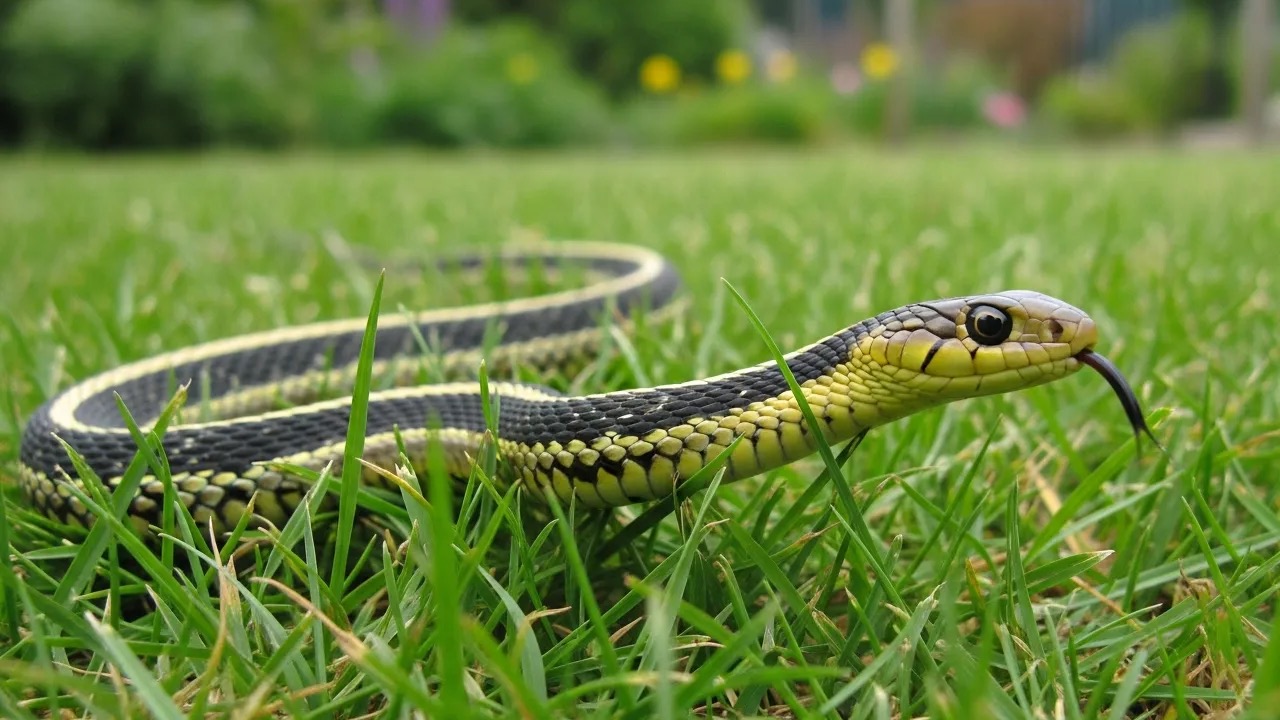
Photo: David Ring / Wikimedia Commons (CC0)
In brief
The garter snake is one of the most common and widespread snakes in North America, found in meadows, marshes, woodlands, and gardens from Canada to Mexico. It is a slender snake, typically 0.5 to 1.3 m long and about 150 g, usually striped in yellow or green along a darker body.
Also in Animals A to Z · Animals that start with G
By WARN Research & Conservation Team Last updated
The garter snake is one of the most common and widespread snakes in North America, found in meadows, marshes, woodlands, and gardens from Canada to Mexico. It is a slender snake, typically 0.5 to 1.3 m long and about 150 g, usually striped in yellow or green along a darker body. Harmless to people, it slithers actively by day hunting worms, amphibians, and fish, and lives around four to ten years.
0.7 m
Typical length
150 g
Typical weight
5 km/h
Top speed
8 yrs
Lifespan
Figures sourced from IUCN Red List — Thamnophis sirtalis, Wikipedia — Garter Snake, Wikidata — Garter Snake .
Garter Snake: Quick Facts
| Scientific name | Thamnophis sirtalis |
|---|---|
| Diet | Carnivore |
| Habitat | Meadows, marshes, woodlands, and gardens |
| Lifespan | 4–10 years in the wild |
| Length | 0.5–1.3 m (1.5–4.3 ft) |
| Weight | About 150 g (5 oz) |
| Conservation status | Least Concern (IUCN) |
Scientific Classification
| Kingdom | Animalia |
|---|---|
| Phylum | Chordata |
| Class | Reptilia |
| Order | Squamata |
| Family | Colubridae |
| Genus | Thamnophis |
Conservation Status
- IUCN Status
- Least Concern (IUCN Red List category)
- Population
- Global population not compiled for this guide
- Trend
- See the IUCN Red List assessment
- Assessed
- See the IUCN Red List assessment
- CITES
- See CITES appendices
Conservation figures are drawn from the IUCN Red List and CITES; this guide links to the authoritative sources rather than restating population counts.
Key Facts: Garter Snake
- Garter snakes are best known for the long stripes that run the length of the body, usually one down the back and one along each side, in yellow, green, or cream against brown, grey, or black.
- The garter snake is a carnivore with a broad appetite, eating earthworms, slugs, amphibians, small fish, and the occasional rodent or nestling.
- Few snakes are as adaptable, and the garter snake ranges from Canada through the United States into Mexico across an enormous variety of habitats.
Appearance and identification
Garter snakes are best known for the long stripes that run the length of the body, usually one down the back and one along each side, in yellow, green, or cream against brown, grey, or black. Adults are slim and typically measure 0.5 to 1.3 m (about 1.5 to 4.3 ft) and weigh around 150 g. There are many regional colour forms, so patterning varies widely across the species' huge range. The keeled scales give the skin a slightly rough, matte look rather than a glossy sheen.
Diet and hunting
The garter snake is a carnivore with a broad appetite, eating earthworms, slugs, amphibians, small fish, and the occasional rodent or nestling. It slithers actively through vegetation and shallow water by day, using sight and a flicking tongue to track prey rather than lying in wait. Some populations tolerate the toxins of newts and toads that would poison other predators. Prey is seized in the jaws and swallowed whole, as the snake has no venom potent enough to subdue large animals.
Habitat and range
Few snakes are as adaptable, and the garter snake ranges from Canada through the United States into Mexico across an enormous variety of habitats. It thrives in damp meadows, marshes, pond edges, woodland, and suburban gardens, rarely far from water. This tolerance of cool climates lets it live farther north than almost any other North American snake. Its willingness to live alongside people makes it one of the reptiles most familiar to gardeners.
Reproduction and hibernation
Garter snakes give birth to live young rather than laying eggs, producing litters that can number from a handful to several dozen. In colder regions they spend winter in communal dens called hibernacula, sometimes gathering by the hundreds or thousands in the same rocky shelter. When they emerge in spring, males may form writhing mating balls around a single female. The newborn snakes are fully independent from birth and receive no parental care.
Defence and predators
When threatened, a garter snake first tries to flee, slithering quickly into cover. If cornered it may flatten its body, strike, or release a foul-smelling musk from glands near the tail to deter a predator. Its saliva contains a mild toxin that helps subdue small prey but is harmless to humans, causing at most minor irritation. Hawks, larger snakes, raccoons, and domestic cats are among its many predators.
Lifespan and conservation
In the wild garter snakes typically live four to ten years, though predation means many do not survive their first year. The species is listed as Least Concern by the IUCN and remains abundant across its range. A few localised subspecies, such as the San Francisco garter snake, are threatened by habitat loss and are protected. For the species as a whole, adaptability and a varied diet keep populations healthy.
What WARN Does
WARN does not run a dedicated garter snake programme — this guide is part of the World Animal Rescue Network's free educational library. The garter snake is currently widespread and not globally threatened, and this guide helps readers understand the pressures that can change that. Building public understanding of species like the garter snake supports the broader conservation awareness that underpins WARN's partner-led rescue work across its network.
If clear, science-based wildlife guides like this help you understand and value animals, please consider supporting the World Animal Rescue Network's educational and rescue work so we can keep producing them.
Garter Snake: Frequently Asked Questions
Are garter snakes dangerous to humans?
What do garter snakes eat?
How big do garter snakes get?
Do garter snakes lay eggs?
How long do garter snakes live?
Where are garter snakes found?
Where do garter snakes live?
Sources & References
Population figures, conservation status and biological facts on this page are drawn from authoritative scientific and intergovernmental sources.
Terms used on this page
Plain-English definitions, from our wildlife and conservation glossary.
Latest Garter Snake Stories
Quick, fact-checked reads on the garter snake — amazing facts, key questions and the threats it faces.
Species
12 Amazing Facts About Grey Wolves (And Why Alpha Wolves Aren't Real)
A howl that carries 16 km, a pack that is really a family, and the debunked study behind the 'alpha wolf' myth. Twelve verified facts.
Read the storySpecies
12 Amazing Facts About Beavers (Iron in Their Teeth, and They Rebuild Rivers)
Orange iron-hardened incisors, transparent eyelids, and a keystone role that reduces flooding and drought. Twelve facts.
Read the storySpecies
12 Amazing Facts About Wolverines (They Take Down Prey Five Times Their Size)
Frost-resistant fur, jaws that crush frozen bone, and territories the size of small countries. Twelve verified facts.
Read the storyExplore more animals
Discover more animals, their habitats and their conservation status in the WARN wildlife-guide library.
Enjoyed this Garter Snake guide?
Receive appeal updates, animal-welfare news and published funding reports. Unsubscribe any time.
We only use your address for WARN updates. See our privacy policy.