Wildlife Guide · South America
Electric Eel
Electrophorus electricus
The fish that generates powerful electric shocks
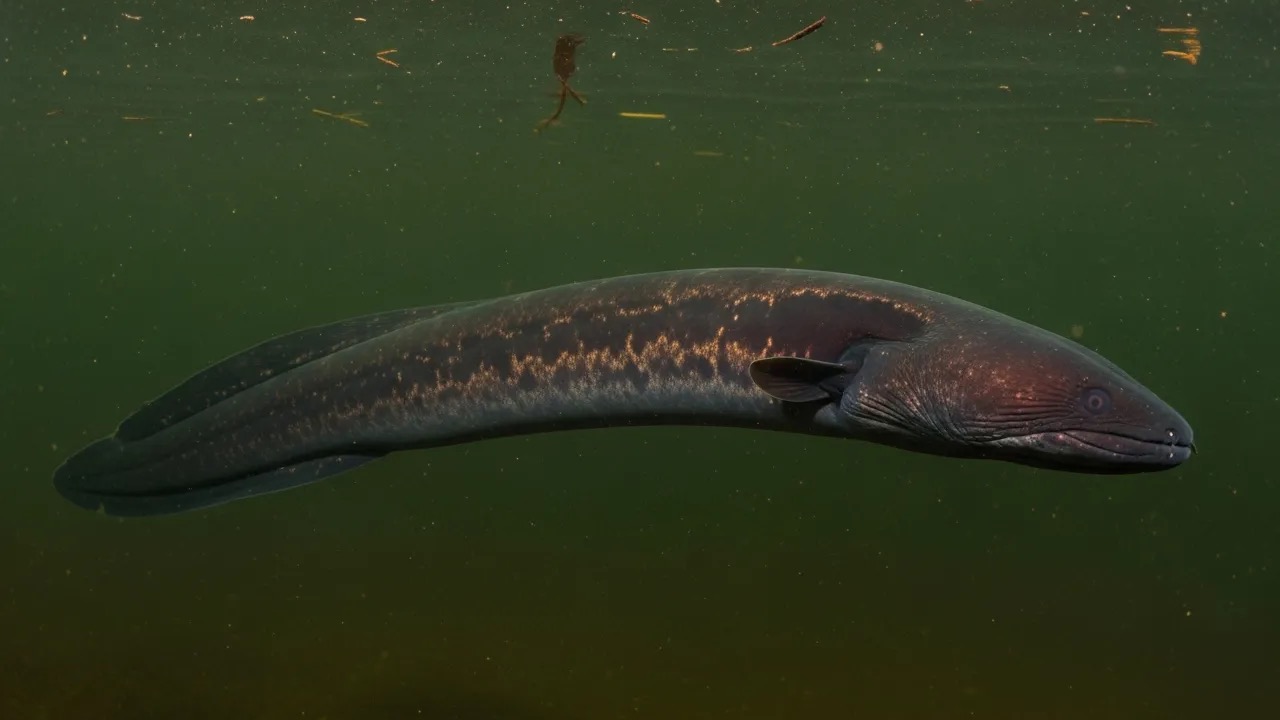
Photo: Steven G. Johnson / Wikimedia Commons (CC BY-SA 3.0)
In brief
The electric eel (Electrophorus electricus) is a freshwater fish of South America famous for generating powerful electric shocks to stun prey and defend itself. Despite the name it is not a true eel but a knifefish, growing up to 2.5 m long and weighing around 20 kg.
Also in Animals A to Z · Animals that start with E
By WARN Research & Conservation Team Last updated
The electric eel (Electrophorus electricus) is a freshwater fish of South America famous for generating powerful electric shocks to stun prey and defend itself. Despite the name it is not a true eel but a knifefish, growing up to 2.5 m long and weighing around 20 kg. It is a slow, undulating swimmer that lives in murky streams and pools and breathes air at the surface. Electric eels live about 15 years and are listed as Least Concern.
2.5 m
Typical length
20 kg
Typical weight
8 km/h
Top speed
15 yrs
Lifespan
Figures sourced from IUCN Red List — Electrophorus electricus, Wikipedia — Electric Eel, Wikidata — Electric Eel .
Electric Eel: Quick Facts
| Scientific name | Electrophorus electricus |
|---|---|
| Diet | Carnivore |
| Habitat | Murky freshwater streams and pools |
| Lifespan | About 15 years in the wild |
| Length | Up to 2.5 m (8 ft) |
| Top speed | Slow, undulating swimmer |
| Conservation status | Least Concern (IUCN) |
Scientific Classification
| Kingdom | Animalia |
|---|---|
| Phylum | Chordata |
| Class | Actinopterygii |
| Order | Gymnotiformes |
| Family | Gymnotidae |
| Genus | Electrophorus |
Conservation Status
- IUCN Status
- Least Concern (IUCN Red List category)
- Population
- Global population not compiled for this guide
- Trend
- See the IUCN Red List assessment
- Assessed
- See the IUCN Red List assessment
- CITES
- See CITES appendices
Conservation figures are drawn from the IUCN Red List and CITES; this guide links to the authoritative sources rather than restating population counts.
Key Facts: Electric Eel
- Despite its name, the electric eel is not a true eel at all but a type of knifefish, more closely related to catfish and carp than to the eels of the sea.
- Most of the electric eel's body is packed with specialised cells called electrocytes, stacked like the cells in a battery.
- The electric eel is a carnivore that preys on fish, amphibians, and invertebrates.
Not a true eel
Despite its name, the electric eel is not a true eel at all but a type of knifefish, more closely related to catfish and carp than to the eels of the sea. It gets its name from its long, cylindrical, eel-like body, which can reach 2.5 m in length. It swims slowly by rippling a long fin that runs along the underside of its body. This undulating motion lets it move forward or backward with equal ease through cluttered water.
How it generates electricity
Most of the electric eel's body is packed with specialised cells called electrocytes, stacked like the cells in a battery. When the eel discharges, thousands of these cells fire at once, producing a jolt strong enough to stun prey or deter a predator. It also emits weaker pulses used for navigation and to sense its surroundings in murky water. This makes electricity central to both hunting and communication.
Hunting and diet
The electric eel is a carnivore that preys on fish, amphibians, and invertebrates. It hunts by releasing high-voltage discharges that stun or immobilise nearby prey, then swallows the helpless animal whole. Weak electric pulses help it locate targets it cannot see in cloudy, sediment-filled water. Because its eyesight is poor, it depends heavily on its electrical sense to find food.
Breathing air
Electric eels live in oxygen-poor waters and cannot rely on their gills alone, so they gulp air at the surface using a specialised, blood-rich lining in the mouth. They must surface every few minutes to breathe, and would drown if unable to reach the surface. This adaptation lets them survive in stagnant, muddy pools where many other fish could not. It also means they spend much of their life near the surface.
Habitat and range
Electric eels are found in the murky freshwater streams, pools, and floodplains of northern South America, including the Amazon and Orinoco basins. They prefer slow-moving, muddy water with plenty of cover. This dim, sediment-rich environment suits an animal that hunts by electricity rather than sight. They spend most of their time near the bottom, rising only to breathe.
Life and conservation
Electric eels live about 15 years in the wild. During the dry season, a male builds a nest of saliva into which the female lays her eggs, and he guards the developing young. The species is widespread across its range and is listed as Least Concern by the IUCN. Its remote, murky habitat has helped keep populations stable.
What WARN Does
WARN does not run a dedicated electric eel programme — this guide is part of the World Animal Rescue Network's free educational library. The electric eel is currently widespread and not globally threatened, and this guide helps readers understand the pressures that can change that. Building public understanding of species like the electric eel supports the broader conservation awareness that underpins WARN's partner-led rescue work across its network.
If clear, science-based wildlife guides like this help you understand and value animals, please consider supporting the World Animal Rescue Network's educational and rescue work so we can keep producing them.
Electric Eel: Frequently Asked Questions
Is an electric eel a real eel?
How does an electric eel produce electricity?
What do electric eels eat?
How big do electric eels get?
Do electric eels breathe air?
How long do electric eels live?
Where do electric eels live?
Are electric eels dangerous?
Sources & References
Population figures, conservation status and biological facts on this page are drawn from authoritative scientific and intergovernmental sources.
Terms used on this page
Plain-English definitions, from our wildlife and conservation glossary.
Latest Electric Eel Stories
Quick, fact-checked reads on the electric eel — amazing facts, key questions and the threats it faces.
Species
12 Amazing Facts About the Jaguar, the Americas' Biggest Cat
From a skull-piercing bite to a love of swimming, here are 12 fascinating, fact-checked things that make the jaguar the most powerful cat in the Americas.
Read the storySpecies
11 Amazing Facts About the Pink River Dolphin (the Amazon's Blushing Boto)
From a head that swivels 90 degrees to a blush built from battle scars, here are 11 true facts about the Amazon's pink river dolphin, the largest freshwater dolphin on Earth.
Read the storySpecies
Pink River Dolphin vs Tucuxi: How to Tell the Two Amazon Dolphins Apart
Both swim the same Amazon waters, but the pink boto and the grey tucuxi are only distant cousins. Here is how to tell them apart at a glance.
Read the storyExplore more animals
Discover more animals, their habitats and their conservation status in the WARN wildlife-guide library.
Enjoyed this Electric Eel guide?
Receive appeal updates, animal-welfare news and published funding reports. Unsubscribe any time.
We only use your address for WARN updates. See our privacy policy.