Wildlife Guide · North America
Corn Snake
Pantherophis guttatus
The gentle, colorful beginner's pet snake
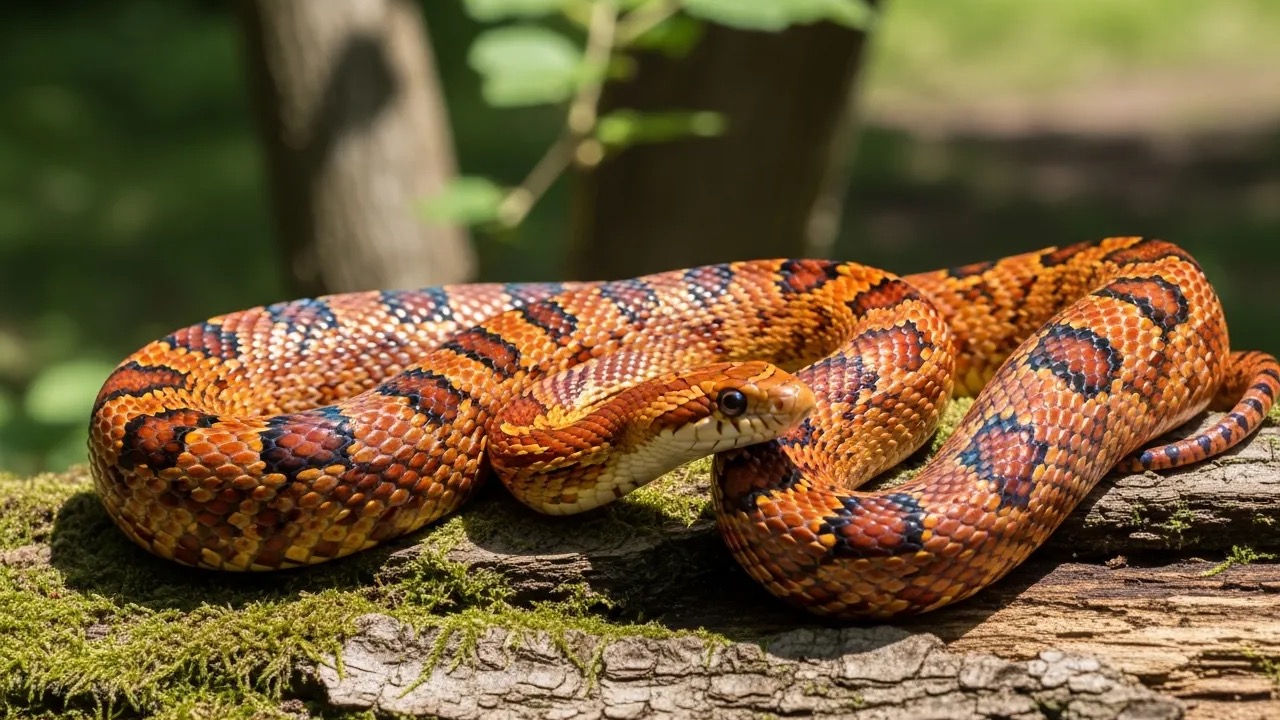
Photo: Ethan Porcaro / Wikimedia Commons (CC0)
In brief
The corn snake (Pantherophis guttatus) is a gentle, colourful North American rat snake and one of the most popular pet snakes in the world. Native to the fields, woodlands and farmland of the southeastern United States, it grows to around 1.4 m (up to about 1.8 m) and is a non-venomous constrictor that hunts rodents.
Also in Animals A to Z · Animals that start with C
By WARN Research & Conservation Team Last updated
The corn snake (Pantherophis guttatus) is a gentle, colourful North American rat snake and one of the most popular pet snakes in the world. Native to the fields, woodlands and farmland of the southeastern United States, it grows to around 1.4 m (up to about 1.8 m) and is a non-venomous constrictor that hunts rodents. Docile and easy to keep, corn snakes can live 15 to 20 years in captivity and are listed as Least Concern.
1.4 m
Typical length
900 g
Typical weight
5 km/h
Top speed
18 yrs
Lifespan
Figures sourced from IUCN Red List — Pantherophis guttatus, Wikipedia — Corn Snake, Wikidata — Corn Snake .
Corn Snake: Quick Facts
| Scientific name | Pantherophis guttatus |
|---|---|
| Diet | Carnivore |
| Habitat | Fields, woodlands, and farmland |
| Lifespan | 15–20 years in captivity |
| Length | 0.6–1.8 m (2–6 ft) |
| Weight | About 0.9 kg (2 lb) |
| Conservation status | Least Concern (IUCN) |
Scientific Classification
| Kingdom | Animalia |
|---|---|
| Phylum | Chordata |
| Class | Reptilia |
| Order | Squamata |
| Family | Colubridae |
| Genus | Pantherophis |
Conservation Status
- IUCN Status
- Least Concern (IUCN Red List category)
- Population
- Global population not compiled for this guide
- Trend
- See the IUCN Red List assessment
- Assessed
- See the IUCN Red List assessment
- CITES
- See CITES appendices
Conservation figures are drawn from the IUCN Red List and CITES; this guide links to the authoritative sources rather than restating population counts.
Key Facts: Corn Snake
- The corn snake is named partly for the maize-like checkerboard pattern on its belly and partly for its habit of hunting around grain stores.
- The corn snake is completely harmless to people, with no venom and only tiny teeth.
- In the wild the corn snake ranges across the southeastern United States, favouring fields, woodlands, farmland and abandoned buildings.
Appearance and colour
The corn snake is named partly for the maize-like checkerboard pattern on its belly and partly for its habit of hunting around grain stores. Wild individuals are typically orange or reddish-brown with bold, black-edged red or orange blotches down the back. Decades of captive breeding have produced a huge range of colour and pattern variations, known as morphs, from snow-white to lavender. A slender adult reaches about 1.4 m long and weighs around 0.9 kg (2 lb).
A non-venomous constrictor
The corn snake is completely harmless to people, with no venom and only tiny teeth. It kills its prey by constriction, coiling around a rodent and tightening its grip until the animal stops breathing before swallowing it whole. Corn snakes are carnivores that feed mainly on mice, rats and other small rodents, along with the occasional bird or egg. This appetite for rodents makes them welcome around farms and barns, where they help control pests.
Habitat and behaviour
In the wild the corn snake ranges across the southeastern United States, favouring fields, woodlands, farmland and abandoned buildings. It slithers across the ground and is a capable climber, scaling trees and rafters in search of prey and shelter. Mostly active at dawn, dusk and night, it spends much of its time hidden under logs, rocks or debris. When alarmed it may vibrate its tail against dry leaves, mimicking a rattlesnake to bluff predators.
Why it is a popular pet
The corn snake is often recommended as an ideal beginner's snake because it is calm, tolerant of handling and simple to care for. It stays a manageable size, feeds readily on frozen-thawed rodents, and rarely bites. Its wide array of colour morphs also makes it a favourite among keepers and breeders. With good care a pet corn snake can live 15 to 20 years.
Reproduction and life cycle
Corn snakes breed in spring, after emerging from a cooler winter dormancy that helps trigger the cycle. The female lays a clutch of around a dozen eggs in a warm, humid, hidden spot such as rotting wood or leaf litter, then leaves them to develop on their own. The eggs hatch after about two months, and the young snakes are independent from birth. In the wild corn snakes generally live several years, but in captivity they commonly reach 15 to 20 years.
Conservation status
The corn snake is listed as Least Concern and remains common across its native range in the southeastern United States. It is one of the most widely bred snakes in the world, so the pet trade draws overwhelmingly on captive-bred animals rather than wild ones. Habitat loss and road deaths affect some local populations, but the species as a whole is secure. Its adaptability to farmland and disturbed land has helped it persist alongside people.
What WARN Does
WARN does not run a dedicated corn snake programme — this guide is part of the World Animal Rescue Network's free educational library. The corn snake is currently widespread and not globally threatened, and this guide helps readers understand the pressures that can change that. Building public understanding of species like the corn snake supports the broader conservation awareness that underpins WARN's partner-led rescue work across its network.
If clear, science-based wildlife guides like this help you understand and value animals, please consider supporting the World Animal Rescue Network's educational and rescue work so we can keep producing them.
Corn Snake: Frequently Asked Questions
Are corn snakes venomous or dangerous?
How big do corn snakes get?
What do corn snakes eat?
How long do corn snakes live?
Why are corn snakes good pets for beginners?
Why is it called a corn snake?
Where do corn snakes live?
Sources & References
Population figures, conservation status and biological facts on this page are drawn from authoritative scientific and intergovernmental sources.
Terms used on this page
Plain-English definitions, from our wildlife and conservation glossary.
Latest Corn Snake Stories
Quick, fact-checked reads on the corn snake — amazing facts, key questions and the threats it faces.
Species
12 Amazing Facts About Grey Wolves (And Why Alpha Wolves Aren't Real)
A howl that carries 16 km, a pack that is really a family, and the debunked study behind the 'alpha wolf' myth. Twelve verified facts.
Read the storySpecies
12 Amazing Facts About Beavers (Iron in Their Teeth, and They Rebuild Rivers)
Orange iron-hardened incisors, transparent eyelids, and a keystone role that reduces flooding and drought. Twelve facts.
Read the storySpecies
12 Amazing Facts About Wolverines (They Take Down Prey Five Times Their Size)
Frost-resistant fur, jaws that crush frozen bone, and territories the size of small countries. Twelve verified facts.
Read the storyExplore more animals
Discover more animals, their habitats and their conservation status in the WARN wildlife-guide library.
Enjoyed this Corn Snake guide?
Receive appeal updates, animal-welfare news and published funding reports. Unsubscribe any time.
We only use your address for WARN updates. See our privacy policy.