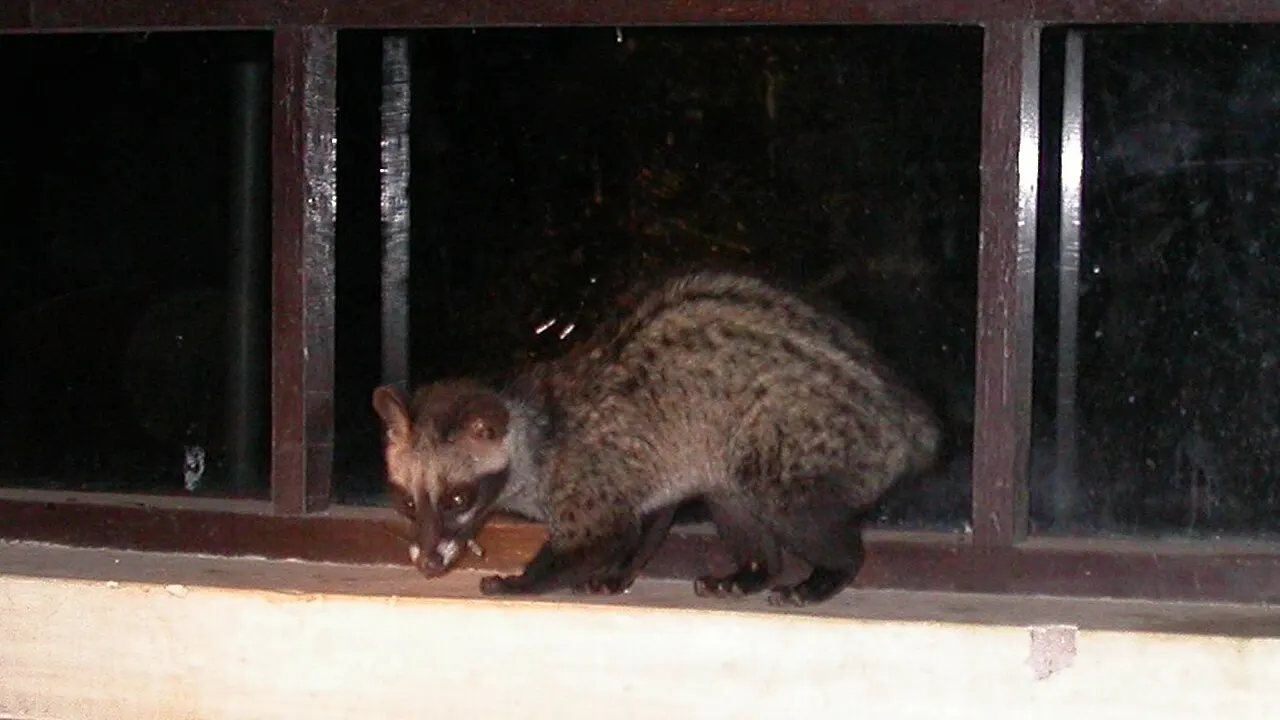
What is kopi luwak?
Kopi luwak is coffee made from cherries that have been eaten, partly digested and excreted by a civet — most often the Asian palm civet (Paradoxurus hermaphroditus), a small nocturnal, tree-dwelling mammal native to South and Southeast Asia. It is not a cat, despite the "civet cat" nickname. Traditionally, farmers collected droppings left by wild civets that had roamed and chosen their own cherries. That method involves no captivity and, as the researchers behind the main welfare study note, raises no animal welfare concerns.
Guide 2
How civets are caged for coffee
The traditional method does not scale, and kopi luwak became a luxury product and a tourist attraction. Researchers from the University of Oxford's Wildlife Conservation Research Unit and World Animal Protection assessed 48 wild-caught palm civets held at 16 tourist-facing coffee plantations in Bali, scoring eight husbandry factors — mobility, hygiene, surfaces, shelter, noise, food, water and social interaction. The conditions they recorded failed to meet basic welfare requirements. Palm civets are nocturnal, highly active and arboreal; a battery cage denies almost everything the species is adapted to do.
Guide 3
Wild-sourced or caged? The labels rarely tell you
A bag labelled "wild-sourced" is not evidence that it is. There is no widely-adopted, independently-audited certification that reliably separates wild-collected kopi luwak from caged production, and caged beans can enter the same supply chains. That is the honest problem with this product: the premium price is exactly what makes caging profitable, and the label is not a reliable guide.
Guide 4
What effective help looks like
The clearest action is on the demand side — the industry exists because the price premium does. Skip kopi luwak, and skip plantation tours that keep civets caged for photographs. World Animal Protection's campaign work saw retailers including Harrods and Selfridges withdraw or review civet coffee, which is what demand-side pressure looks like when it works. If you want a gift to reach animals through WARN today, it funds partner-led wildlife-trade rescue in Indonesia through the slow loris programme at slow loris appeal — a species caged for the same reason.