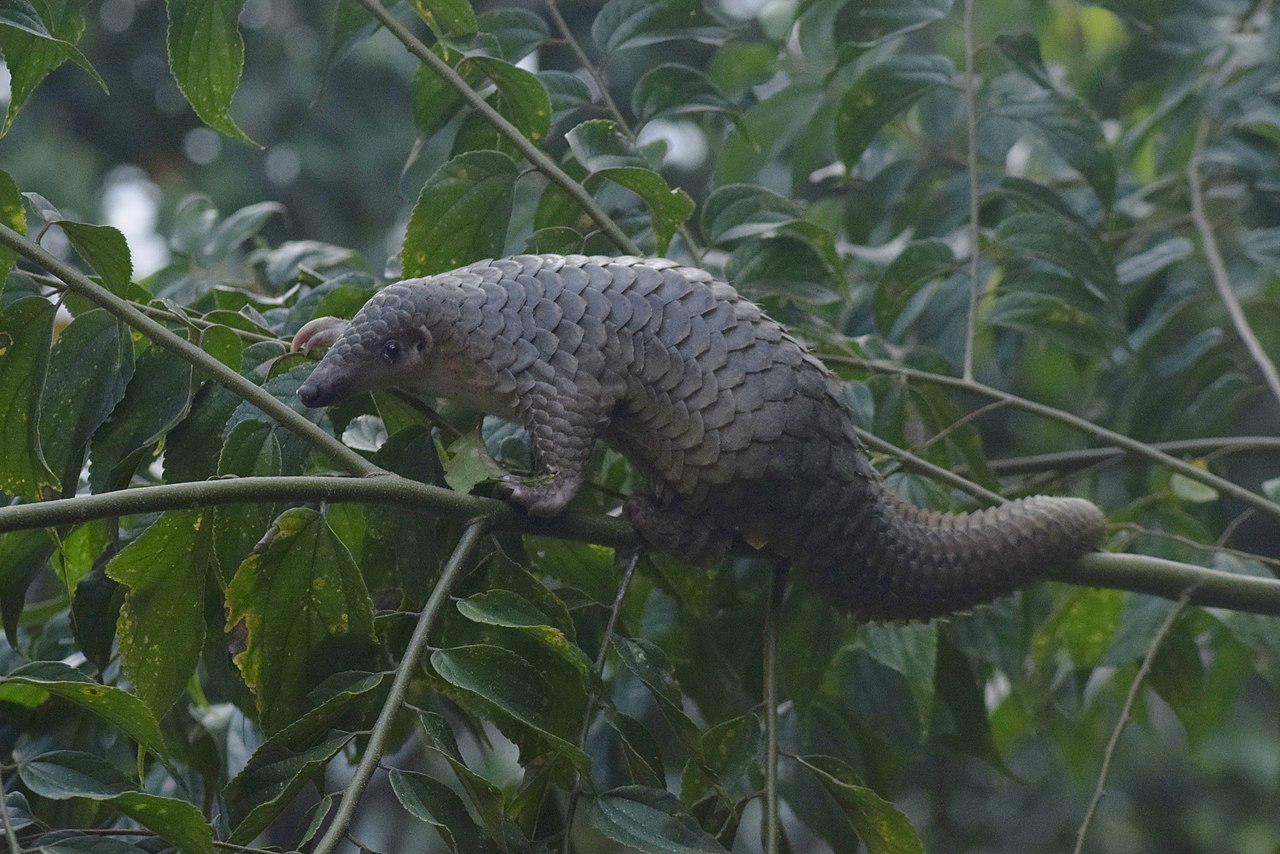
Pangolin curled defensively on forest floor
Briefings

· KUALA LUMPUR, MALAYSIA · 8 min read

Pangolin Rescue: Why the World's Most Trafficked Mammal Needs Help in Malaysia

In brief

Pangolins are widely reported as the most trafficked mammal in the world. All eight species are listed on CITES Appendix I, and the IUCN Red List ranges from Vulnerable to Critically Endangered. Pangolins are the most trafficked mammal on the planet — and Malaysia sits at the heart of the smuggling routes.

What are the key takeaways from this briefing?

  • Pangolins are widely reported as the most trafficked mammal in the world (IUCN).
  • All eight pangolin species are listed on CITES Appendix I.
  • Primary demand is for scales (used in traditional medicine) and for meat.
  • Seized live pangolins have very high mortality without specialist veterinary care.
  • Malaysia is a major transit hub between source forests in Africa and Southeast Asia and demand markets in East Asia.

Pangolin rescue has become one of the defining wildlife crises of our time. All eight pangolin species are listed under CITES Appendix I, the strictest international protection available. Yet pangolins remain the most trafficked mammal in the world. Malaysia, as both a transit point and a destination market for the trade, is a critical place to intervene.

What should you know about the problem?

  • Hundreds of thousands of pangolins are trafficked each year, primarily for their scales.
  • Pangolin scales are made of keratin — the same material as human fingernails — and have no proven medicinal value.
  • Pangolins are solitary, nocturnal, and notoriously difficult to keep in captivity. Most seized pangolins die within weeks unless they are handled by experts.
  • A single pangolin can consume tens of millions of ants and termites a year, playing a critical role in forest insect regulation.

How rescue works?

Pangolin rescue begins with intelligence-led customs interdiction. Once pangolins are confiscated, they need immediate species-specialist veterinary care — most cannot eat anything other than live ants and termites, and many arrive dehydrated and traumatised. Surviving animals are then placed in a soft-release facility within native habitat for a slow return to the wild.

What WARN is preparing to do?

Our Malaysia programme will fund customs-detection training at key transit points, equip a pangolin-specific rehabilitation centre with the right diet and quarantine infrastructure, and work with local rescue partners on safe soft-release into protected reserves. We cannot launch this without supporter funding.

Is it true that pangolins are widely reported as the most trafficked mammal in the world (IUCN)?

Pangolins are widely reported as the most trafficked mammal in the world (IUCN). A fact list is not an IUCN assessment. Pangolin still needs habitat, enforcement and honest funding — see the full species guide rather than stopping at trivia.

Is it true that all eight pangolin species are listed on CITES Appendix I?

All eight pangolin species are listed on CITES Appendix I. All eight pangolin species are listed on CITES Appendix I is one of the details people actually search for about Pangolin. It holds as a field note from KUALA LUMPUR; it is not a care sheet and not a substitute for the species guide.

Is it true that primary demand is for scales (used in traditional medicine) and for meat?

Primary demand is for scales (used in traditional medicine) and for meat. Diet is why Pangolin ranges the way it does in KUALA LUMPUR. Treat feeding ecology as a field fact, not a reason to keep the animal.

Is it true that seized live pangolins have very high mortality without specialist veterinary care?

Seized live pangolins have very high mortality without specialist veterinary care. Slow or specialised life history is why recovery takes years even when a threat eases. That is the conservation maths, not a cute aside.

Is it true that malaysia is a major transit hub between source forests in Africa and Southeast Asia and demand markets in East Asia?

Malaysia is a major transit hub between source forests in Africa and Southeast Asia and demand markets in East Asia. Malaysia is a major transit hub between source forests in Africa and Southeast Asia and demand markets in East Asia is one of the details people actually search for about Pangolin.

Is it true that hundreds of thousands of pangolins are trafficked each year, primarily for their scales?

Hundreds of thousands of pangolins are trafficked each year, primarily for their scales. Hundreds of thousands of pangolins are trafficked each year, primarily for their scales is one of the details people actually search for about Pangolin. It holds as a field note from KUALA LUMPUR; it is not a care sheet and not a substitute for the species guide.

Is it true that pangolin scales are made of keratin — the same material as human fingernails — and have no proven medicinal value?

Pangolin scales are made of keratin — the same material as human fingernails — and have no proven medicinal value. Pangolin scales are made of keratin — the same material as human fingernails — and have no proven medicinal value is one of the details people actually search for about Pangolin.

Is it true that pangolins are solitary, nocturnal, and notoriously difficult to keep in captivity. Most seized pangolins die within weeks unless they are handled by experts?

Pangolins are solitary, nocturnal, and notoriously difficult to keep in captivity. Most seized pangolins die within weeks unless they are handled by experts. This is wild behaviour. People who meet Pangolin in KUALA LUMPUR should give space, not a selfie. You cannot train a briefing into a companion animal.

Is it true that a single pangolin can consume tens of millions of ants and termites a year, playing a critical role in forest insect regulation?

A single pangolin can consume tens of millions of ants and termites a year, playing a critical role in forest insect regulation. Diet is why Pangolin ranges the way it does in KUALA LUMPUR. Treat feeding ecology as a field fact, not a reason to keep the animal.

What is this briefing not?

This briefing is not a substitute for the full Pangolin wildlife guide, not a pet-care manual, and not a first-person field dispatch. It is a desk-researched explainer for people who searched a specific question about Pangolin. The setting is KUALA LUMPUR, MALAYSIA.

Pangolin Rescue: Why the World's Most Trafficked Mammal Needs Help in Malaysia sits in the newsroom as a briefings explainer. It is not a Field notes dispatch from a partner clinic, and it is not a reason to keep Pangolin. Location context: KUALA LUMPUR, MALAYSIA.

Who should skip this page?

Skip this page if you wanted a complete IUCN-style species profile, veterinary advice, or permission to keep Pangolin as a pet. You will not find those here. Read the wildlife guide next if you need status, range and sources in one place.

Skip it if you needed veterinary instructions, a travel itinerary, or a fundraising story dressed up as science. The skip is the point: a page that cannot say no is not a guide.

How does this briefing compare to the full species guide?

This page answers the search in the headline. The wildlife guide answers status, threats, and what is actually known. Use both; do not cite the listicle as if it were the Red List. Pangolins are the most trafficked mammal on the planet — and Malaysia sits at the heart of the smuggling routes.

Claims this briefing actually stands behind
Takeaway
Pangolins are widely reported as the most trafficked mammal in the world (IUCN).
All eight pangolin species are listed on CITES Appendix I.
Primary demand is for scales (used in traditional medicine) and for meat.
Seized live pangolins have very high mortality without specialist veterinary care.

What is the catch with a short wildlife briefing?

The catch with wildlife listicles is that a true fact can still be the wrong takeaway. “Amazing” is not the same as “safe to keep”, and a number without a source is trivia. Every figure on this page should be read against the cited IUCN or zoo pages, not against a screenshot.

Factory “12 facts” pages elsewhere on the web pad the same three sentences. Here each heading is a real question, each answer is meant to stand alone, and the sources at the end are the audit trail. If a number is not on this page or in those sources, we did not invent it.

What should you do after reading this?

Use this briefing to answer the question in the title, then go to the species guide for status and sources. If you want to help Pangolin, fund habitat and enforcement — do not buy the animal. Pangolins are widely reported as the most trafficked mammal in the world.

If you want to support WARN’s partner work, donate knowing we are a community interest company, not a registered charity. If you want the animal itself, you have the wrong page.

Read the verdict on the first screen, the skip-if before you share the page, and the sources at the end before you quote a number. That is the whole contract of this briefing.

What do people ask about this briefing?

Is this Pangolin briefing a complete species guide?
No. It is a newsroom explainer for a specific search. Status, range and the full source list live on the wildlife guide where one exists. The briefing is set in KUALA LUMPUR, MALAYSIA. Pangolins are the most trafficked mammal on the planet — and Malaysia sits at the heart of the smuggling routes.
Should you keep a Pangolin as a pet after reading this?
No. Amazing facts are not a care plan. Wild animals belong in wild habitat; buying one, posing with one, or sharing selling ads all worsen the trade. Location context on this page is KUALA LUMPUR, MALAYSIA. Pangolins are the most trafficked mammal on the planet — and Malaysia sits at the heart of the smuggling routes.
Who should skip this Pangolin page?
Anyone who needed veterinary advice, a full IUCN profile, or permission to handle the animal. This page will tell you to leave if that is you. Pangolins are the most trafficked mammal on the planet — and Malaysia sits at the heart of the smuggling routes.
What is the one-line answer on Pangolin?
Pangolins are widely reported as the most trafficked mammal in the world. All eight species are listed on CITES Appendix I, and the IUCN Red List ranges from Vulnerable to Critically Endangered. This briefing is set in KUALA LUMPUR, MALAYSIA.
Where is this Pangolin briefing set?
The location context is KUALA LUMPUR, MALAYSIA. That is geography for the story, not a claim that WARN runs a programme in every place named. Pangolins are the most trafficked mammal on the planet — and Malaysia sits at the heart of the smuggling routes.
Where does WARN work on Pangolin?
Only claim a programme where this site already names one. This briefing is desk research about Pangolin in KUALA LUMPUR, MALAYSIA; it does not invent a field team to match the headline. Read the species guide and appeals for funded work.
Is it true that pangolins are widely reported as the most trafficked mammal in the world (IUCN)?
Pangolins are widely reported as the most trafficked mammal in the world (IUCN). Pangolins are the most trafficked mammal on the planet — and Malaysia sits at the heart of the smuggling routes. Here is why pangolin rescue is now urgent.
Is it true that all eight pangolin species are listed on CITES Appendix I?
All eight pangolin species are listed on CITES Appendix I. Pangolins are the most trafficked mammal on the planet — and Malaysia sits at the heart of the smuggling routes. Here is why pangolin rescue is now urgent. This is one of the takeaways this Pangolin briefing is willing to stand behind.
W

WARN Research & Conservation Team

World Animal Rescue Network

Published Updated 8 min read · 1,472 words
Share
Support animal rescue