If you have ever stared at a photo and wondered "is that a leopard or a jaguar?" — you are not alone. The three big cats most often mixed up are the leopard, the jaguar and the cheetah. They live on different continents, have different builds, and have completely different ecologies. This is the short version.
Coat pattern
- Leopard. Open ring shapes called rosettes, but with no spot inside the rosette. The rosettes are smaller and closer together than a jaguar's.
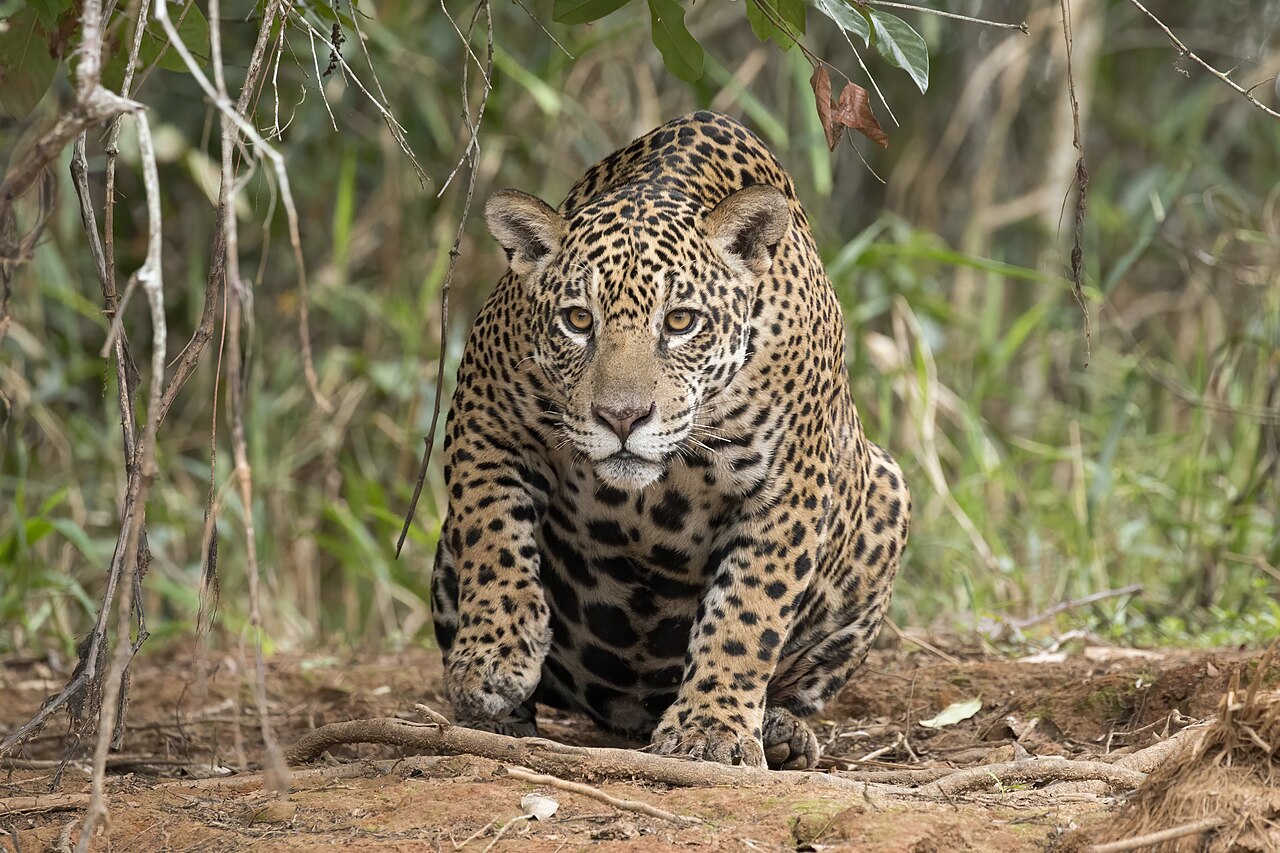
- Jaguar. Open ring shapes — but most rosettes have one or more small spots inside them. Larger and more widely spaced than leopard rosettes.
- Cheetah. Not rosettes at all — solid round black spots. Plus a distinctive black "tear mark" stripe running from each eye down to the mouth.
Build
- Leopard. Athletic and muscular but slim. A leopard can drag a kill three times its own weight up into a tree.
- Jaguar. Stocky, powerful, larger head, the strongest bite force pound-for-pound of any big cat. Specialised for ambush and biting through skulls and shells.
- Cheetah. Slender, long-legged, small head. Built for speed, not power. Cannot retract its claws fully — the only big cat with this trait.
Where they live
- Leopard. Sub-Saharan Africa and across South and Southeast Asia, including the Russian Far East (Amur leopard). One of the most widely distributed big cats.
- Jaguar. The Americas only — Mexico to northern Argentina. Strongest populations in the Amazon basin, including Colombia, a WARN partner-network country, with Peru as wider range and search context.
- Cheetah. Sub-Saharan Africa, with a tiny relict population in Iran (the Asiatic cheetah).
The genus point
Leopards and jaguars are both in the genus Panthera, alongside lions and tigers. Cheetahs are the only species in the genus Acinonyx. The practical consequence: cheetahs cannot roar (they chirp and purr), while leopards and jaguars can.
Conservation status
- Leopard. Vulnerable globally; some subspecies (Amur, Arabian, Javan) are Critically Endangered.
- Jaguar. Near Threatened, declining.
- Cheetah. Vulnerable globally; Asiatic cheetah Critically Endangered.
All three are CITES Appendix I or II depending on subspecies and trafficked for skins, teeth and bones. See our illegal wildlife trade topic hub for the wider picture.
We need your support to make this happen
World Animal Rescue Network is at the launch stage of this work. We do not yet have rescue numbers to share — and that is exactly why your support matters now. Every donation helps us put trained teams on the ground, secure veterinary supplies and equipment, and reach the first animals before they are lost.
Donate today to fund our first deployments, or sponsor an animal to back a specific species through rehabilitation. You can also join the network as a volunteer, fundraiser, or monthly supporter.