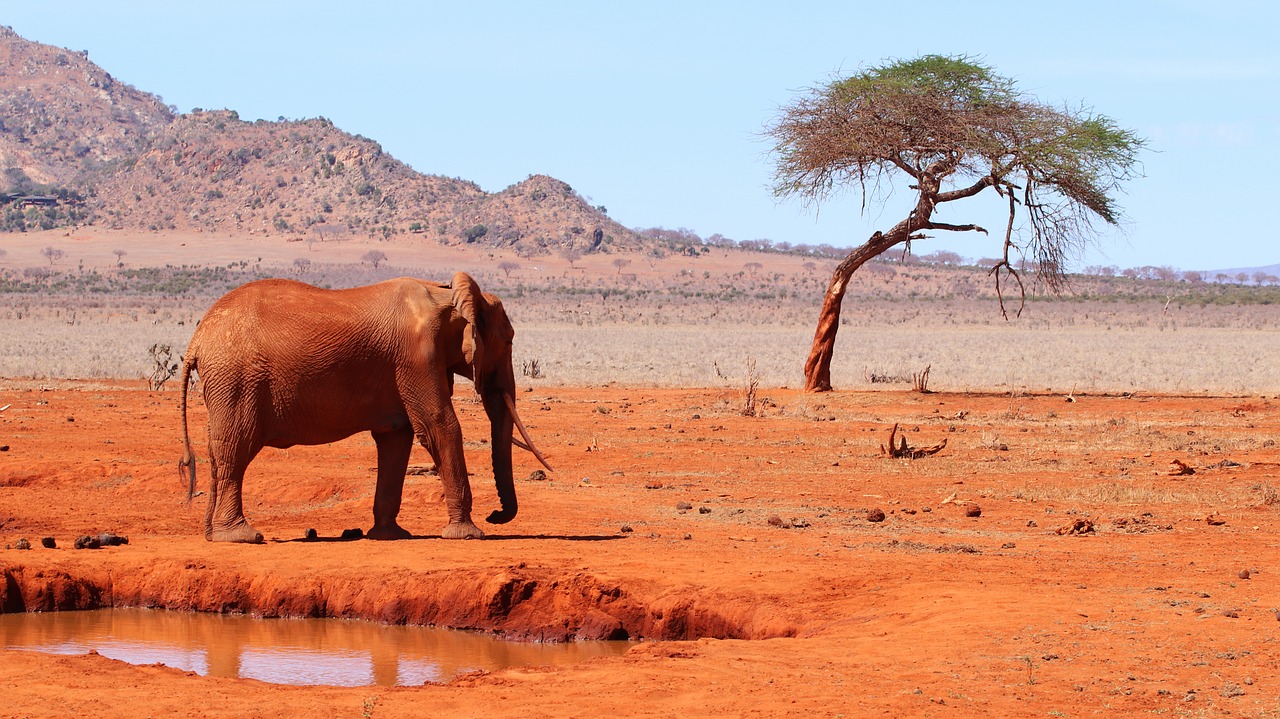
The image most people associate with elephant poaching is an ivory carcass. The reality across much of East Africa is different — and quieter. The most consistent threat to elephants in Kenya's Tsavo ecosystem is wire snaring, set not for elephants but for bushmeat species like impala and buffalo.
What should you know about the problem?
- The Tsavo ecosystem protects around 13,000 elephants — Kenya's largest single elephant population.
- Roughly 2,000 snares are removed from Tsavo each year by ranger patrols, with many more never found.
- Elephants caught in snares typically survive the initial capture and walk on — the wire cuts deeper over weeks until infection sets in.
- Snare wounds are treatable if found early. Field surgery in the wild has a survival rate above 80% with rapid veterinary response.
How rescue works?
Snare wounds on elephants are easiest to spot from the air — a limp visible at distance, a younger animal lagging behind the herd. Aerial surveys give ground teams the location, and the elephant's life then depends on how fast that report becomes a darting operation and a wound debridement in the field.
What WARN is preparing to do?
Our Kenya programme is designed to fund a mobile field-surgery unit, aerial patrol hours over Tsavo, thermal-imaging drones for ranger services, and a separate sea-turtle triage capacity on the Mombasa coast. None of this is possible without supporter funding.
Is it true that we need your support to make this happen?
World Animal Rescue Network is at the launch stage of this work. We do not yet have rescue numbers to share — and that is exactly why your support matters now. Every donation helps us put trained teams on the ground, secure veterinary supplies and equipment, and reach the first animals before they are lost.
Donate today to fund our first deployments, or sponsor an animal to back a specific species through rehabilitation. You can also join the network as a volunteer, fundraiser, or monthly supporter.
Is it true that the Tsavo ecosystem protects around 13,000 elephants — Kenya's largest single elephant population?
The Tsavo ecosystem protects around 13,000 elephants — Kenya's largest single elephant population. That scale is ecology, not a pet-shop talking point. this subject needs room to use a body like that in TSAVO, which is why habitat fragmentation hits so hard.
Is it true that roughly 2,000 snares are removed from Tsavo each year by ranger patrols, with many more never found?
Roughly 2,000 snares are removed from Tsavo each year by ranger patrols, with many more never found. Roughly 2,000 snares are removed from Tsavo each year by ranger patrols, with many more never found is one of the details people actually search for about this subject.
Is it true that elephants caught in snares typically survive the initial capture and walk on — the wire cuts deeper over weeks until infection sets in?
Elephants caught in snares typically survive the initial capture and walk on — the wire cuts deeper over weeks until infection sets in. Elephants caught in snares typically survive the initial capture and walk on — the wire cuts deeper over weeks until infection sets in is one of the details people actually search for about this subject.
Is it true that snare wounds are treatable if found early. Field surgery in the wild has a survival rate above 80% with rapid veterinary response?
Snare wounds are treatable if found early. Field surgery in the wild has a survival rate above 80% with rapid veterinary response. Field surgery in the wild has a survival rate above 80% with rapid veterinary response is one of the details people actually search for about this subject.
What is this briefing not?
This briefing is not a substitute for the full this subject wildlife guide, not a pet-care manual, and not a first-person field dispatch. It is a desk-researched explainer for people who searched a specific question about this subject. The setting is TSAVO, KENYA.
Why Africa's Elephants Are Being Lost to Wire — Not Bullets sits in the newsroom as a briefings explainer. It is not a Field notes dispatch from a partner clinic, and it is not a reason to keep this subject. Location context: TSAVO, KENYA.
Who should skip this page?
Skip this page if you wanted a complete IUCN-style species profile, veterinary advice, or permission to keep this subject as a pet. You will not find those here. Read the wildlife guide next if you need status, range and sources in one place.
Skip it if you needed veterinary instructions, a travel itinerary, or a fundraising story dressed up as science. The skip is the point: a page that cannot say no is not a guide.
How does this briefing compare to the full species guide?
This page answers the search in the headline. The wildlife guide answers status, threats, and what is actually known. Use both; do not cite the listicle as if it were the Red List. Ivory poaching gets the headlines, but across much of East Africa the bigger threat to elephants is cheap snare wire set for bushmeat.
What is the catch with a short wildlife briefing?
The catch with wildlife listicles is that a true fact can still be the wrong takeaway. “Amazing” is not the same as “safe to keep”, and a number without a source is trivia. Every figure on this page should be read against the cited IUCN or zoo pages, not against a screenshot.
Factory “12 facts” pages elsewhere on the web pad the same three sentences. Here each heading is a real question, each answer is meant to stand alone, and the sources at the end are the audit trail. If a number is not on this page or in those sources, we did not invent it.
What should you do after reading this?
Use this briefing to answer the question in the title, then go to the species guide for status and sources. If you want to help this subject, fund habitat and enforcement — do not buy the animal. Ivory poaching gets the headlines, but across much of East Africa the bigger threat to elephants is cheap snare wire set for bushmeat.
If you want to support WARN’s partner work, donate knowing we are a community interest company, not a registered charity. If you want the animal itself, you have the wrong page.
Read the verdict on the first screen, the skip-if before you share the page, and the sources at the end before you quote a number. That is the whole contract of this briefing.