Animal Comparison
Python vs Boa
Pythons are mostly Old World egg-layers; boas are mostly New World and often give live birth. Both are large constrictors.
By WARN Research & Conservation TeamLast updated
In brief — Python vs Boa
Both constrict; pythons usually lay eggs in the Old World, while boas usually bear live young in the New World.
Pythons and boas are both non-venomous constricting snakes, but they are different families with different reproductive patterns. Pythons are chiefly Old World species that lay eggs, often with maternal coiling. Boas are chiefly New World species that typically give birth to live young. Heat-sensing pits occur in both groups in various arrangements.
See the difference
Images are shown at different scales. Read each caption for the species, source and context.
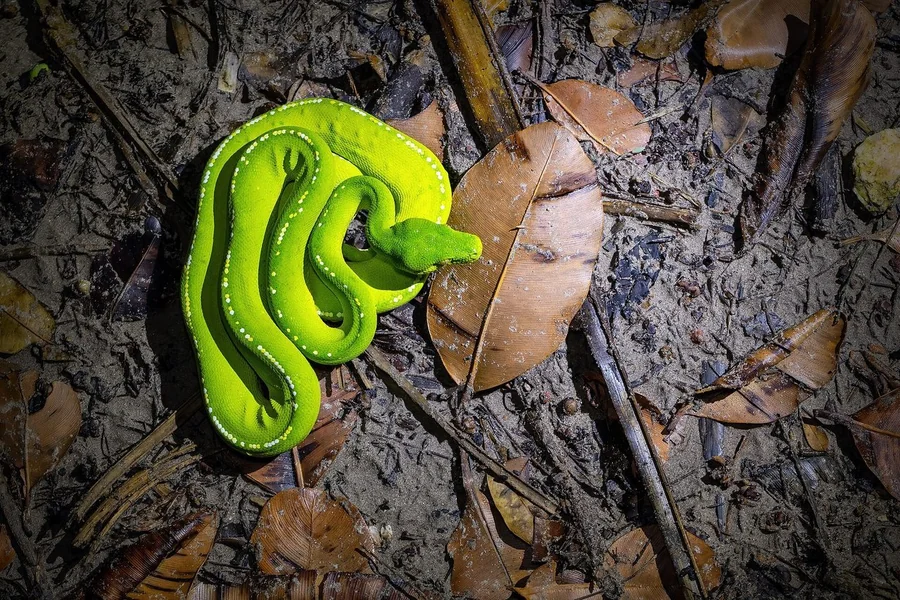
Python — heavy-bodied constrictor
AI-generated educational wildlife portrait — World Animal Rescue Network
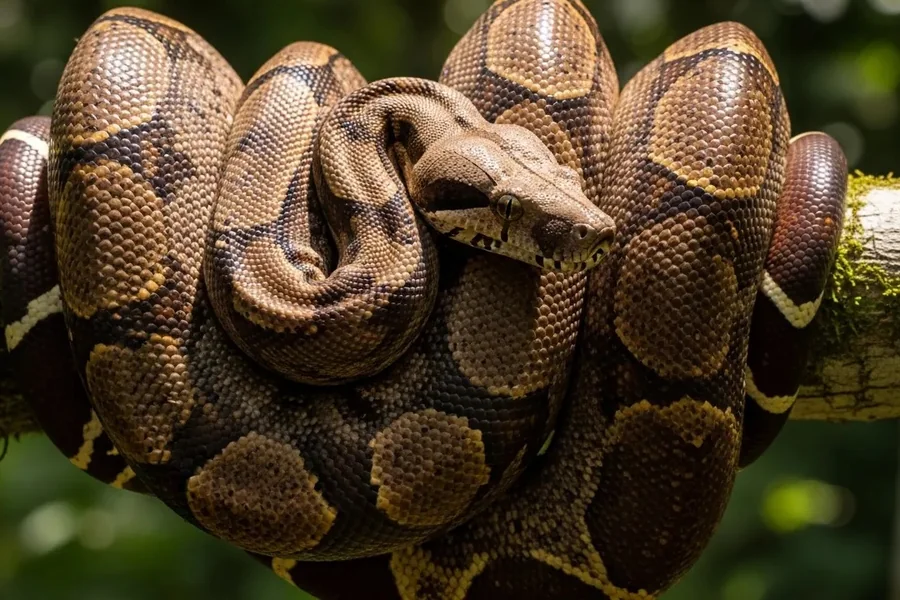
Boa — robust constrictor
AI-generated educational wildlife portrait — World Animal Rescue Network
Python vs Boa: At a Glance
| Feature | Python | Boa |
|---|---|---|
| Typical reproduction | Egg-laying (oviparous) | Live-bearing (viviparous) in most |
| Main geography | Africa, Asia, Australia | Americas (plus some elsewhere in related groups) |
| Venom | None (constrictors) | None (constrictors) |
| Heat pits | Labial pits in many species | Labial pits in many species |
| Pet staples | Ball python, carpet python | Boa constrictor, some sand boas |
| Parental egg care | Many females coil and shiver-warm eggs | No egg clutch to guard |
| Body build | Heavy-bodied constrictor | Heavy-bodied constrictor |
| Anaconda note | Not a python | Anacondas are boas |
| Teeth/fangs | No hollow venom fangs | No hollow venom fangs |
| Taxonomy | Pythonidae | Boidae (everyday boa sense) |
Size and physical differences
Both include giants: reticulated pythons can exceed 6 m, and green anacondas (boas) can rival them in mass; most pet species are far smaller.
Python versus boa is a constrictor comparison with a clean reproductive punchline and a messier set of exceptions. Pythons (Pythonidae) and boas (Boidae, broadly speaking in everyday use) share heavy muscular bodies and prey-subduing coils rather than venom fangs. Geography and birth mode are the practical separators for most species people mean.
Pet-trade names blur the line — "boa" in a shop may mean Boa constrictor specifically, while python covers ball pythons, burmese pythons and more. For wild biology, ask where the snake evolved and whether it lays eggs. That pair of questions outperforms colour pattern arguments.
This comparison sticks to marks you can use without laboratory gear: size, shape, behaviour and the words people actually type into a search box. Scientific names are given where they prevent a regional mix-up. Where published measurements disagree, this page gives the range rather than a single tidy figure that implies more certainty than the sources support.
Eggs versus live young
If you remember one difference, remember reproduction. Pythons typically lay eggs, and many females stay coiled around the clutch, using muscular shivering to raise temperature. Boas typically give birth to live young, so there is no nest of eggs to find. That contrast holds for the familiar species behind most searches. A few related lineages complicate textbook edges, which is why species names beat family folklore when you are identifying a specific snake in the wild or trade. Field observers should combine silhouette, behaviour and habitat before naming what they see. Where published measurements disagree, this page gives the range rather than a single tidy figure. Treat a single trait as supporting evidence rather than a complete identification. Local field guides remain the final check when similar species share a landscape.
Geography as a prior
Classic pythons are Old World; classic boas are New World. An anaconda in South America is a boa, not a python. A carpet python in Australia is a python, not a boa. Invasive burmese pythons in Florida are an ecological crisis precisely because an Old World python was moved into the Americas. Using geography as a prior does not replace looking at the animal, but it prevents the most common television-driven mix-ups. Field observers should combine silhouette, behaviour and habitat before naming what they see. Where published measurements disagree, this page gives the range rather than a single tidy figure. Treat a single trait as supporting evidence rather than a complete identification. Local field guides remain the final check when similar species share a landscape.
Heat pits and hunting
Many pythons and boas have labial heat-sensing pits that help detect warm prey in low light. The presence of pits alone will not separate the families for a beginner, because both groups include pit-bearing species. Hunting style — ambush constriction — is shared. What differs more cleanly is reproductive mode and evolutionary geography. Field guides use pit arrangement alongside head scales and pattern, but everyday readers should not treat pits as a python-only badge. Field observers should combine silhouette, behaviour and habitat before naming what they see. Where published measurements disagree, this page gives the range rather than a single tidy figure. Treat a single trait as supporting evidence rather than a complete identification. Local field guides remain the final check when similar species share a landscape.
Size myths and pets
Both families include very large species and many manageable smaller ones. Ball pythons stay relatively modest; reticulated pythons do not. Boa constrictors vary by locality; green anacondas are massively heavy. Pet suitability is about adult size, temperament, humidity and legal rules, not about which family sounds friendlier. Never release a pet constrictor. Invasive populations begin with that mistake. Field observers should combine silhouette, behaviour and habitat before naming what they see. Where published measurements disagree, this page gives the range rather than a single tidy figure. Treat a single trait as supporting evidence rather than a complete identification. Local field guides remain the final check when similar species share a landscape. When evidence is thin, prefer a broader label over a false precise name.
Why the comparison matters
Rescue calls, customs forms and invasive-species reporting all need the right family and species. A live-bearing boa and an egg-brooding python have different captive-breeding implications. Public fear stories that lump every thick snake as a python erase those facts. Accurate names keep advice attached to the animal present. WARN publishes these comparisons so high-intent questions get a sourced answer instead of an unsourced listicle. Field observers should combine silhouette, behaviour and habitat before naming what they see. Where published measurements disagree, this page gives the range rather than a single tidy figure. Treat a single trait as supporting evidence rather than a complete identification. Local field guides remain the final check when similar species share a landscape. When evidence is thin, prefer a broader label over a false precise name.
Did you know?
Female pythons that shiver while coiled on eggs are generating heat with muscle activity — a rare form of parental warming among snakes.
Python vs Boa: FAQs
What is the difference between a python and a boa?
Is an anaconda a python?
Are pythons venomous?
Which is bigger?
Do boas lay eggs?
Is a ball python a boa?
Help protect animals
Learning about animals can help more people understand their needs. WARN raises funds for eligible animal-welfare organisations. Read the relevant appeal’s purpose, recipient status and fund terms, or share this free guide to raise awareness.