Animal Comparison
Penguin vs Puffin
Penguins are flightless southern-hemisphere seabirds. Puffins are northern auks that fly and dig burrow nests.
By WARN Research & Conservation TeamLast updated
In brief — Penguin vs Puffin
Penguins are flightless southern seabirds; puffins are flying northern auks that nest in burrows.
Penguins are flightless seabirds of the Southern Hemisphere, with the Galápagos penguin on the equator. Puffins are auks of the North Atlantic and North Pacific that fly well and nest in burrows. Both are black-and-white seabirds with upright postures on land, which causes the mix-up, but they are not closely equivalent in lifestyle.
See the difference
Images are shown at different scales. Read each caption for the species, source and context.
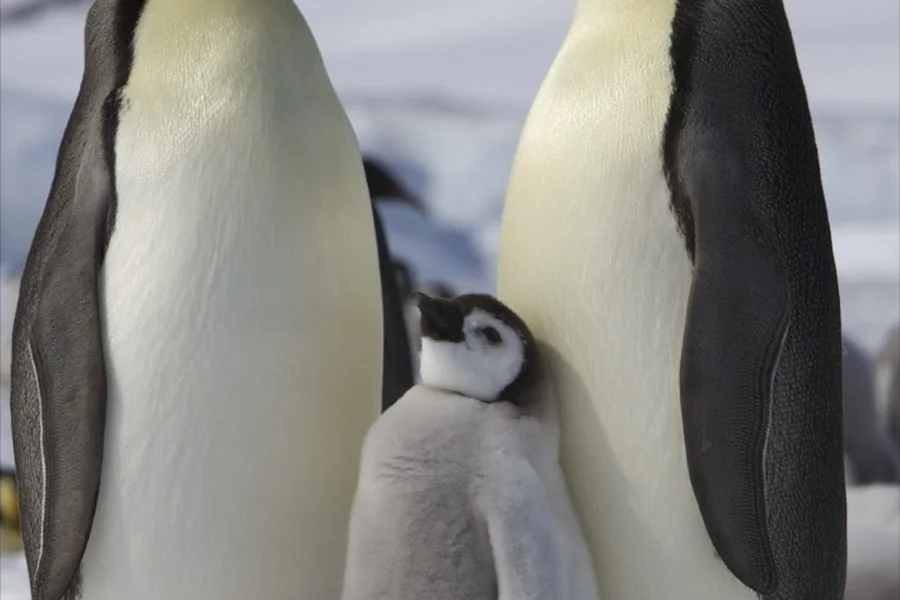
Penguin — flightless southern seabird
AI-generated educational wildlife portrait — World Animal Rescue Network
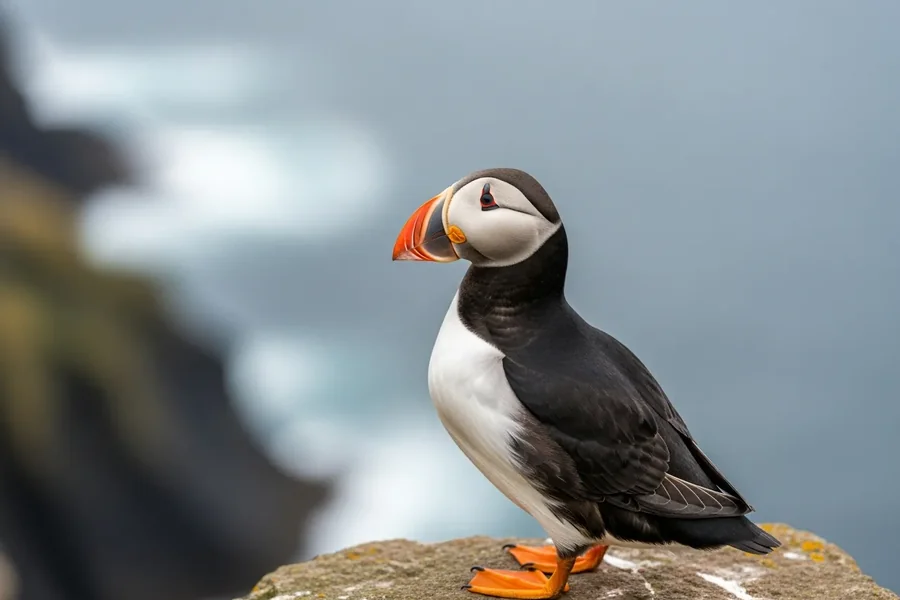
Puffin — flying northern auk
AI-generated educational wildlife portrait — World Animal Rescue Network
Penguin vs Puffin: At a Glance
| Feature | Penguin | Puffin |
|---|---|---|
| Flight | Flightless | Strong flier |
| Hemisphere | Southern (plus Galápagos) | Northern oceans |
| Group | Sphenisciformes | Alcidae (auks) |
| Typical mass | From ~1 kg to >30 kg by species | Atlantic puffin ~0.4 kg |
| Wings | Flippers for swimming | Wings for air and underwater |
| Nest | Varied — burrows, scrapes, ice | Burrows in turf/cliffs |
| Bill | Varies; often dark | Colourful in breeding Atlantic puffin |
| Walk | Upright waddle | Upright on land; awkward |
| Diet | Fish, krill, squid by species | Mainly small fish |
| Conservation | Several species threatened | Atlantic puffin Vulnerable (IUCN) |
Size and physical differences
Many penguins are far larger — a king penguin can exceed 15 kg — while an Atlantic puffin is about 0.4 kg.
Upright, tuxedoed seabirds invite comparison. Penguins and puffins share countershaded plumage and a comic walk, but they live at opposite ends of the planet and solve the ocean differently. Penguins turned their wings into flippers and gave up flight. Puffins kept flight and use wings underwater as well.
Tourism marketing sometimes blurs them. A puffin is not a northern penguin, and a penguin is not a giant puffin. Geography alone almost settles everyday identification: puffins in Iceland or Maine; penguins in Antarctica, South Africa, South America, Australasia — not on North Atlantic cliffs.
This comparison sticks to marks you can use without laboratory gear.
Flight is the decisive split
Penguins cannot fly. Their wing bones and feathers are specialised for propulsion underwater. Puffins fly rapidly on short wings and also swim with their wings underwater when pursuing fish. If the bird takes off from a cliff into the air, it is not a penguin.
That single trait prevents almost all genuine field confusion — the mix-up is in books, cartoons and souvenir shops, not on a mixed colony.
Opposite oceans
Puffins breed on northern coasts. Penguins breed on southern coasts and islands, with the Galápagos penguin as the equatorial outlier living in cold upwelling water. There is no wild penguin colony on the British coast and no wild puffin colony in Antarctica.
Migratory overlap does not create mixed flocks of the two. A traveller who saw penguins in Norway saw puffins or other auks.
Size and ecology
Penguin species span little blue penguins to emperors. Puffins are small auks. Diet overlaps on fish, but krill-specialist penguins have no puffin equivalent. Nesting differs: many puffins dig burrows; penguins use a wide range of strategies by species.
Convergent looks — countershading, upright stance — evolved because both hunt in open water and need camouflage from below and above.
Bills and breeding colours
Atlantic puffins grow bright bill plates in the breeding season that shed later — a seasonal ornament penguins do not share. Penguin bills are more stable in appearance year-round within a species.
Chick rearing, colony density and predation pressures differ by ocean system. Borrowing penguin facts to explain puffins, or the reverse, produces tidy wrong answers.
Conservation
Several penguin species are threatened by climate-driven prey shifts, fisheries and habitat pressure. The Atlantic puffin is listed as Vulnerable on the IUCN Red List, with declines linked to food availability and other factors in parts of its range.
Cute branding does not equal security for either group. Accurate names help people find the right threats and the right conservation context. In practice, people meet these animals in brief glances. Slow down long enough to check the two or three marks in the table above before accepting the first common name that comes to mind. Mislabeling spreads through photos and social posts faster than corrections do, which is why a short, checkable comparison page earns its keep. In practice, people meet these animals in brief glances. Slow down long enough to check the two or three marks in the table above before accepting the first common name that comes to mind. Mislabeling spreads through photos and social posts faster than corrections do, which is why a short, checkable comparison page earns its keep. In practice, people meet these animals in brief glances. Slow down long enough to check the two or three marks in the table above before accepting the first common name that comes to mind. Mislabeling spreads through photos and social posts faster than corrections do, which is why a short, checkable comparison page earns its keep. In practice, people meet these animals in brief glances. Slow down long enough to check the two or three marks in the table above before accepting the first common name that comes to mind. Mislabeling spreads through photos and social posts faster than corrections do, which is why a short, checkable comparison page earns its keep. In practice, people meet these animals in brief glances. Slow down long enough to check the two or three marks in the table above before accepting the first common name that comes to mind. Mislabeling spreads through photos and social posts faster than corrections do, which is why a short, checkable comparison page earns its keep. In practice, people meet these animals in brief glances. Slow down long enough to check the two or three marks in the table above before accepting the first common name that comes to mind. Mislabeling spreads through photos and social posts faster than corrections do, which is why a short, checkable comparison page earns its keep. In practice, people meet these animals in brief glances. Slow down long enough to check the two or three marks in the table above before accepting the first common name that comes to mind. Mislabeling spreads through photos and social posts faster than corrections do, which is why a short, checkable comparison page earns its keep. In practice, people meet these animals in brief glances. Slow down long enough to check the two or three marks in the table above before accepting the first common name that comes to mind. Mislabeling spreads through photos and social posts faster than corrections do, which is why a short, checkable comparison page earns its keep. In practice, people meet these animals in brief glances. Slow down long enough to check the two or three marks in the table above before accepting the first common name that comes to mind. Mislabeling spreads through photos and social posts faster than corrections do, which is why a short, checkable comparison page earns its keep.
Did you know?
The name penguin was used historically for the great auk — a northern flightless bird — before it settled on the southern birds we mean today.
Penguin vs Puffin: FAQs
Are puffins related to penguins?
Can penguins fly?
Do puffins live in Antarctica?
Which is bigger?
Why do they both look black and white?
Is the Atlantic puffin endangered?
Help protect animals
Learning about animals can help more people understand their needs. WARN raises funds for eligible animal-welfare organisations. Read the relevant appeal’s purpose, recipient status and fund terms, or share this free guide to raise awareness.