Animal Comparison
Owl vs Hawk
Owls are mostly nocturnal raptors with forward-facing eyes and silent flight; hawks are typically diurnal with different faces and wing plans.
By WARN Research & Conservation TeamLast updated
In brief — Owl vs Hawk
Owls are specialised night hunters with facial discs; hawks are the broader daytime raptor label people contrast them with.
Owls are birds of prey built for low-light hunting, with forward-facing eyes, facial discs that collect sound, and flight feathers specialised for quiet approach. Hawks, in everyday speech, are typically day-hunting raptors without those owl face adaptations, though hawk remains a broad and inconsistent English label.
See the difference
Images are shown at different scales. Read each caption for the species, source and context.
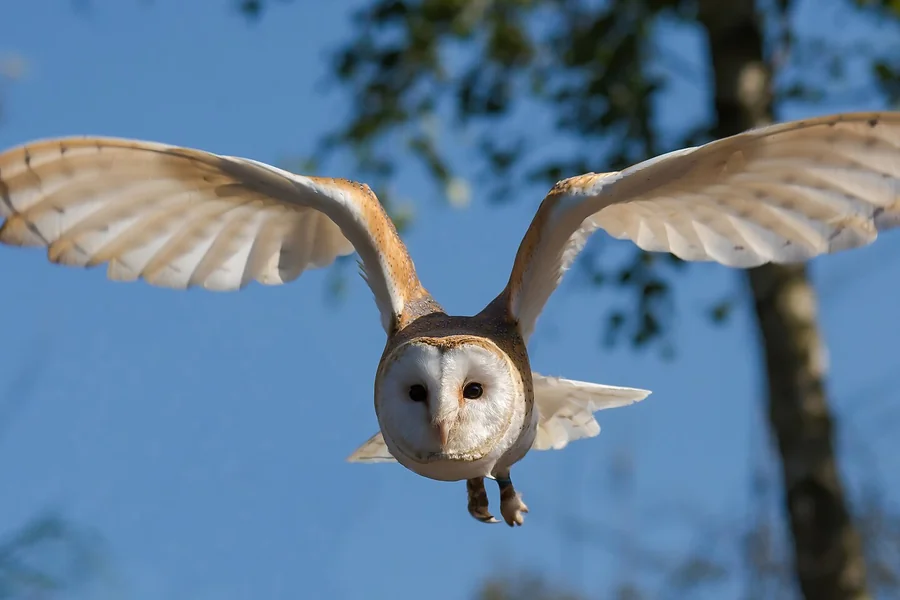
Owl — forward-facing eyes, silent flight plumage
AI-generated educational wildlife portrait — World Animal Rescue Network
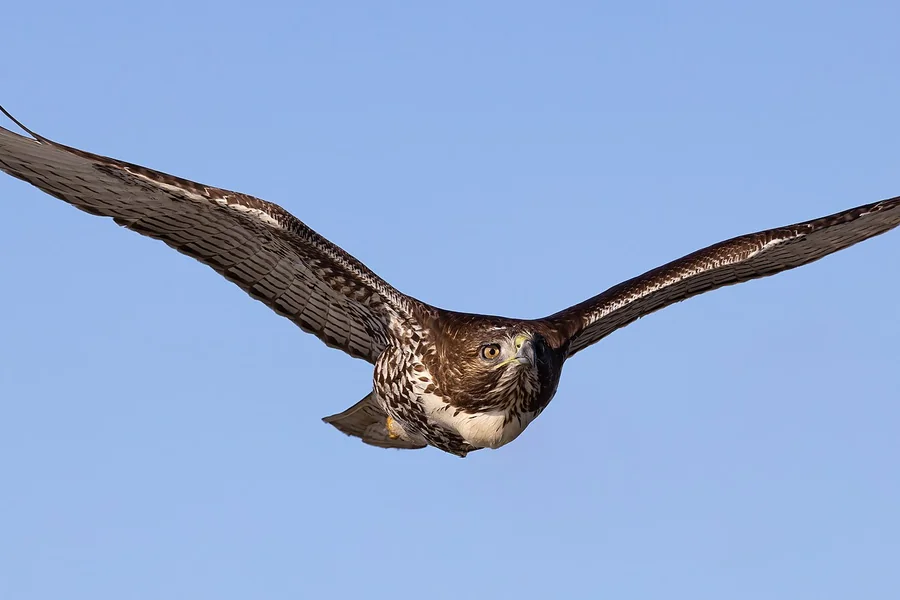
Hawk — broader wings, soaring silhouette
AI-generated educational wildlife portrait — World Animal Rescue Network
Owl vs Hawk: At a Glance
| Feature | Owl | Hawk |
|---|---|---|
| Typical activity | Many nocturnal or crepuscular | Typically diurnal |
| Face | Facial disc; eyes face forward | No owl disc; eyes more lateral |
| Flight sound | Often notably quiet | Ordinary flight noise for a bird |
| Bill and head | Short bill in a broad head | More projecting bill profile |
| Neck mobility | Extreme head turning | Normal bird neck range |
| Ears | Often asymmetrical openings | No owl-style ear asymmetry |
| Feet | Often two toes forward, two back | Typical three-forward raptor foot |
| Nest | Cavities, scrapes, taken nests | Many build stick nests |
| English scope | Owl is relatively stable | Hawk meaning varies by country |
| Order | Strigiformes | Various day-raptor groups |
Size and physical differences
Both groups span small species under 20 cm to large ones over 60 cm; a Eurasian eagle-owl can outweigh many familiar hawks.
Owl versus hawk is less a tidy taxonomic duel than a contrast people reach for when they see a raptor and want to know whether it belongs to the night shift. Owls form their own lineage (Strigiformes) with distinctive skulls, asymmetrical ears in many species, and feather fringes that reduce flight noise. Hawk is the everyday word for several day-active birds of prey, not a single genus, and its meaning shifts by country.
Field separation is usually straightforward once you see the face. An owl's eyes face forward in a broad facial disc; a hawk's eyes sit more laterally on a narrower head. Time of day helps but fails for day-flying owls such as the short-eared owl. Wing beat, perch posture and silence on the wing add supporting clues.
This comparison sticks to marks you can use without laboratory gear: size, shape, behaviour and the words people actually type into a search box. Scientific names are given where they prevent a regional mix-up. Where published measurements disagree, this page gives the range rather than a single tidy figure that implies more certainty than the sources support.
Face and eyes tell you first
If you can see the head, start there. Owls present a broad, flattened face with eyes aimed forward, framed by a facial disc of stiff feathers that funnels sound. Hawks show a more classic bird-of-prey profile: narrower skull, eyes set on the sides, and a bill that projects more clearly. Eye colour myths are unreliable across species. At distance, the owl's big-headed silhouette on a post is often enough. In the hand or a clear photo, the facial disc is decisive. Do not rely on ear tufts alone — those feather tufts are not ears, and many owls lack them entirely. Field observers should combine silhouette, behaviour and habitat before naming what they see. Where published measurements disagree, this page gives the range rather than a single tidy figure.
Silent flight is real, not magic
Many owls have leading-edge comb-like fringes and a velvet upper surface on flight feathers that break up turbulent noise. That adaptation suits listening for rodents under vegetation. Hawks do not need the same acoustic stealth for daylight pursuit and lack that full suite of silencers. Quiet flight is therefore a useful supporting mark when a pale bird passes at dusk, but it is not audible evidence you can certify from a silent video with traffic noise. Combine it with shape and time. Day-hunting owls still carry the feather specialisations even when they fly in daylight. Field observers should combine silhouette, behaviour and habitat before naming what they see. Where published measurements disagree, this page gives the range rather than a single tidy figure.
Day versus night — and the exceptions
Most people meet hawks by day and owls by night, and that rule works often enough to teach children. It fails for short-eared owls hunting in afternoon light, snowy owls on open ground, and northern hawk-owls that behave almost like diurnal raptors. Some hawks hunt at twilight. Activity period is strong supporting evidence, never a sole key. If a bird is soaring on thermals at noon over a field, it is almost certainly not an owl. If a bird is calling with a hoot from a wood at midnight, hawk is the wrong everyday word. Field observers should combine silhouette, behaviour and habitat before naming what they see. Where published measurements disagree, this page gives the range rather than a single tidy figure.
Why hawk is the awkward half of the pair
Owl is a relatively stable English label for Strigiformes. Hawk is not stable. British sparrowhawks, American red-tailed hawks and casual uses of hawk for any daytime raptor all collide in search queries. That is why owl versus hawk pages must explain dialect as well as biology. When you can name the species — barn owl, tawny owl, red kite, buzzard — do so. Reserve hawk for cases where that is truly all you know. The comparison remains useful because it matches how people ask the question after a brief roadside sighting. Field observers should combine silhouette, behaviour and habitat before naming what they see. Where published measurements disagree, this page gives the range rather than a single tidy figure. Treat a single trait as supporting evidence rather than a complete identification.
Why the comparison matters
Misreading an owl as a hawk, or the reverse, scrambles expectations about noise, nest boxes, rodent control and legal protection stories. Owl conservation often turns on nest cavities and quiet roost sites; many hawks depend on different nest structures and hunting habitats. Accurate names keep advice attached to the animal present. Status also diverges: a common town hawk and a scarce owl can share a hedgerow while facing different threats. WARN publishes these comparisons so high-intent questions get a sourced answer instead of an unsourced listicle. Field observers should combine silhouette, behaviour and habitat before naming what they see. Where published measurements disagree, this page gives the range rather than a single tidy figure. Treat a single trait as supporting evidence rather than a complete identification.
Did you know?
Many owls have asymmetrically placed ear openings, which helps them fix a sound's height as well as its direction when hunting in the dark.
Owl vs Hawk: FAQs
What is the difference between an owl and a hawk?
Are owls hawks?
Which has better night vision?
Do owls and hawks compete?
Why do owls turn their heads so far?
Is a hawk-owl a hawk?
Help protect animals
Learning about animals can help more people understand their needs. WARN raises funds for eligible animal-welfare organisations. Read the relevant appeal’s purpose, recipient status and fund terms, or share this free guide to raise awareness.