Animal Comparison
Octopus vs Cuttlefish
Octopuses have eight arms and no internal cuttlebone; cuttlefish have eight arms plus two tentacles and an internal cuttlebone.
By WARN Research & Conservation Team Last updated
In brief — Octopus vs Cuttlefish
Octopuses have eight arms and no cuttlebone; cuttlefish add two tentacles and carry an internal cuttlebone.
Octopuses are soft-bodied cephalopods with eight arms, a highly flexible body and no cuttlebone. Cuttlefish are cephalopods with eight arms plus two longer tentacles for striking prey, and they contain an internal porous cuttlebone used in buoyancy. Both change colour spectacularly; body plan still separates them.
See the difference
Images are shown at different scales. Read each caption for the species, source and context.
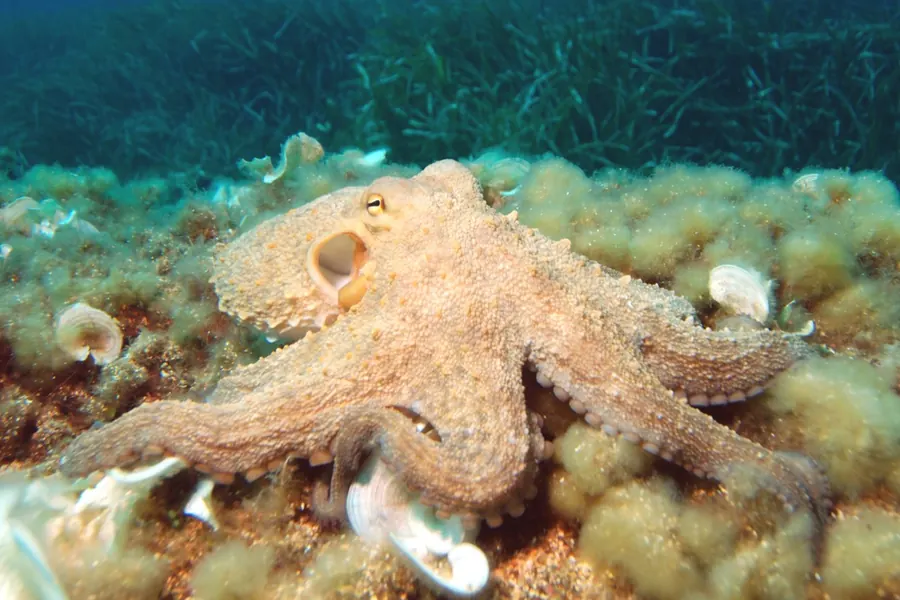
Octopus — eight arms
AI-generated educational wildlife portrait — World Animal Rescue Network
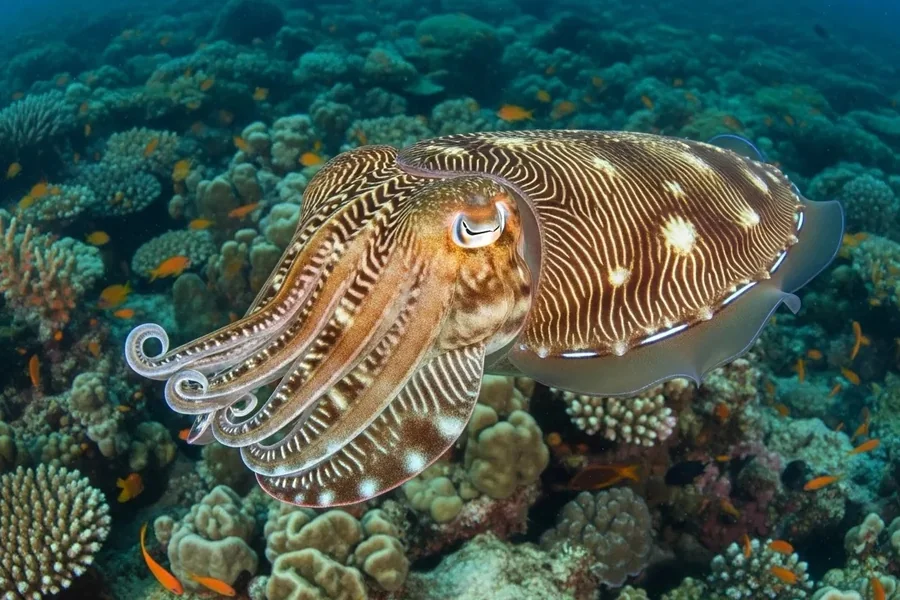
Cuttlefish — W-fin mantle
AI-generated educational wildlife portrait — World Animal Rescue Network
Octopus vs Cuttlefish: At a Glance
| Feature | Octopus | Cuttlefish |
|---|---|---|
| Arms/tentacles | Eight arms | Eight arms + two tentacles |
| Internal shell | None (or vestiges in some) | Cuttlebone present |
| Body shape | Bag-like mantle; very flexible | Broader mantle with undulating fins |
| Camouflage | Excellent skin displays | Excellent; often rapid waves |
| Ink | Present in most | Present |
| Buoyancy tool | Behavioural/physiological | Cuttlebone gas/liquid balance |
| Beach find | No cuttlebone | Cuttlebones common on shores |
| Typical habitat | Dens in rock/sand | Often sand/seagrass plains |
| Pupil shape | Often rectangular | Distinctive W-shaped pupil |
| Intelligence | Famous problem-solving | Complex behaviour; different tests |
Size and physical differences
Giant Pacific octopuses can span several metres arm to arm; common cuttlefish are typically under 50 cm body length, though some species are larger.
Octopus versus cuttlefish compares two intelligent soft-bodied molluscs that share ink, suckers and rapid camouflage. They are both cephalopods, yet they sit in different groups with different body supports. Octopuses (order Octopoda) lack the internal cuttlebone that gives cuttlefish their name. Cuttlefish (order Sepiida) look broader and more finned along the body mantle.
Count the feeding limbs and look for the cuttlebone if you have a washed-up remnant. Octopuses show eight similar arms. Cuttlefish show eight arms and two retractable tentacles that shoot out to seize prey. Beachcombers find cuttlebones on shorelines; they do not find equivalent octopus "bones."
This comparison sticks to marks you can use without laboratory gear: size, shape, behaviour and the words people actually type into a search box. Scientific names are given where they prevent a regional mix-up. Where published measurements disagree, this page gives the range rather than a single tidy figure that implies more certainty than the sources support.
Arms, tentacles and prey capture
An octopus explores and grapples with eight arms lined with suckers. A cuttlefish uses eight arms for handling and two specialised tentacles that launch forward to seize shrimp or fish, then retract. That strike is fast enough to look like a magic trick in video. If you can see only eight limbs and a bag-like body sliding into a den, octopus is the better everyday call. If you see a flattened, fin-edged body hovering over sand, cuttlefish becomes likely. Field observers should combine silhouette, behaviour and habitat before naming what they see. Where published measurements disagree, this page gives the range rather than a single tidy figure. Treat a single trait as supporting evidence rather than a complete identification. Local field guides remain the final check when similar species share a landscape.
The cuttlebone difference
Cuttlefish contain a porous internal shell — the cuttlebone — used to tune buoyancy by adjusting gas and liquid. Pet birds are sometimes sold cuttlebones as calcium sources; those plates are the same structures. Octopuses lack that buoyancy raft and instead rely on a fully soft body that can squeeze through gaps only slightly wider than their beak. Flexibility versus buoyancy hardware is a clean anatomical contrast students remember. Field observers should combine silhouette, behaviour and habitat before naming what they see. Where published measurements disagree, this page gives the range rather than a single tidy figure. Treat a single trait as supporting evidence rather than a complete identification. Local field guides remain the final check when similar species share a landscape.
Skin displays and eyes
Both groups are camouflage masters using chromatophores, iridophores and papillae to change colour and texture. Cuttlefish are famous for dense, rapid pattern waves used in courtship and hunting. Octopuses are famous for matching rock and coral textures while holding still. Eye shape helps in clear photos: cuttlefish often show a W-shaped pupil; many octopuses show a rectangular pupil. Neither animal’s intelligence is a cartoon superpower — both show complex behaviour that researchers test carefully. Field observers should combine silhouette, behaviour and habitat before naming what they see. Where published measurements disagree, this page gives the range rather than a single tidy figure. Treat a single trait as supporting evidence rather than a complete identification. Local field guides remain the final check when similar species share a landscape.
Ecology and lifespan
Many octopuses are relatively solitary den-holders; females of some species guard eggs until death. Cuttlefish often gather for breeding aggregations and also tend toward short adult lives. Fisheries and aquarium trades affect them differently. Squid sit on a third branch of the soft-bodied cephalopod story if your question expands beyond these two. Field observers should combine silhouette, behaviour and habitat before naming what they see. Where published measurements disagree, this page gives the range rather than a single tidy figure. Treat a single trait as supporting evidence rather than a complete identification. Local field guides remain the final check when similar species share a landscape. When evidence is thin, prefer a broader label over a false precise name. Field observers should combine silhouette, behaviour and habitat before naming what they see. Where published measurements disagree, this page gives the range rather than a single tidy figure.
Why the comparison matters
Market names and menu labels sometimes blur cephalopods. Accurate names keep biology education and seafood discussions attached to the animal present. WARN publishes these comparisons so high-intent questions get a sourced answer instead of an unsourced listicle. Field observers should combine silhouette, behaviour and habitat before naming what they see. Where published measurements disagree, this page gives the range rather than a single tidy figure. Treat a single trait as supporting evidence rather than a complete identification. Local field guides remain the final check when similar species share a landscape. When evidence is thin, prefer a broader label over a false precise name. Field observers should combine silhouette, behaviour and habitat before naming what they see. Where published measurements disagree, this page gives the range rather than a single tidy figure.
Did you know?
The white oblong "cuttlefish bone" sold for caged birds is the real internal shell of a cuttlefish — buoyancy hardware recycled as a calcium chew.
Octopus vs Cuttlefish: FAQs
What is the difference between an octopus and a cuttlefish?
Is a cuttlefish a type of octopus?
What is a cuttlebone?
Which is smarter?
Do both spray ink?
Are squid the same as cuttlefish?
Help protect animals
Learning about animals can help more people understand their needs. WARN raises funds for eligible animal-welfare organisations. Read the relevant appeal’s purpose, recipient status and fund terms, or share this free guide to raise awareness.
Stay connected with WARN
Receive appeal updates, animal-welfare news and published funding reports. Unsubscribe any time.
We only use your address for WARN updates. See our privacy policy.