Animal Comparison
Magpie vs Crow
Magpies and crows are both corvids. Magpies are pied with long tails; crows are usually all-black with shorter tails.
By WARN Research & Conservation TeamLast updated
In brief — Magpie vs Crow
Both corvids: magpies are pied with long tails; crows are usually all-black with shorter tails.
Magpies and crows are both members of the crow family (Corvidae). The Eurasian magpie is pied black-and-white with a long graduated tail, while the carrion crow and similar crows are typically all-black with a shorter tail. They share intelligence and opportunism; plumage and silhouette separate them quickly.
See the difference
Images are shown at different scales. Read each caption for the species, source and context.
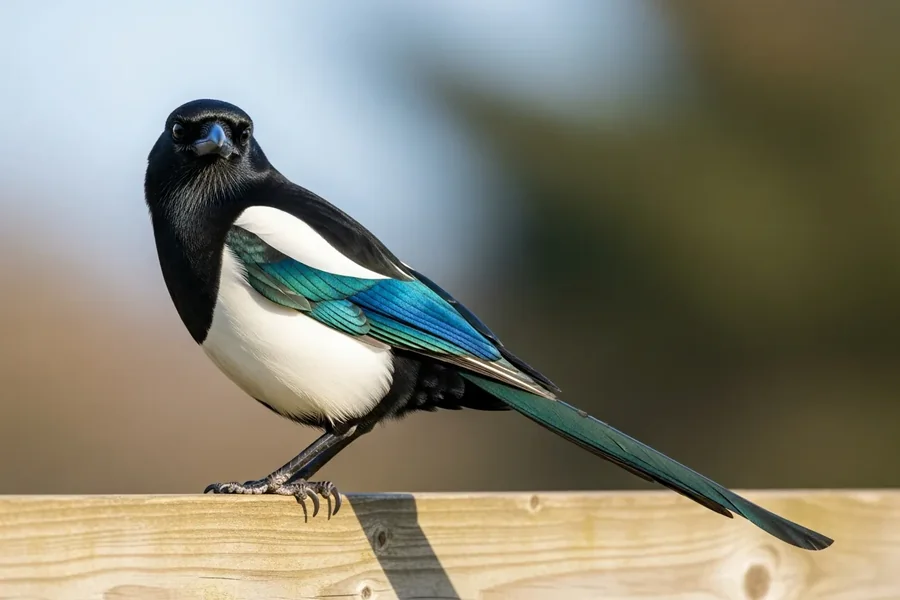
Magpie — pied long tail
AI-generated educational wildlife portrait — World Animal Rescue Network
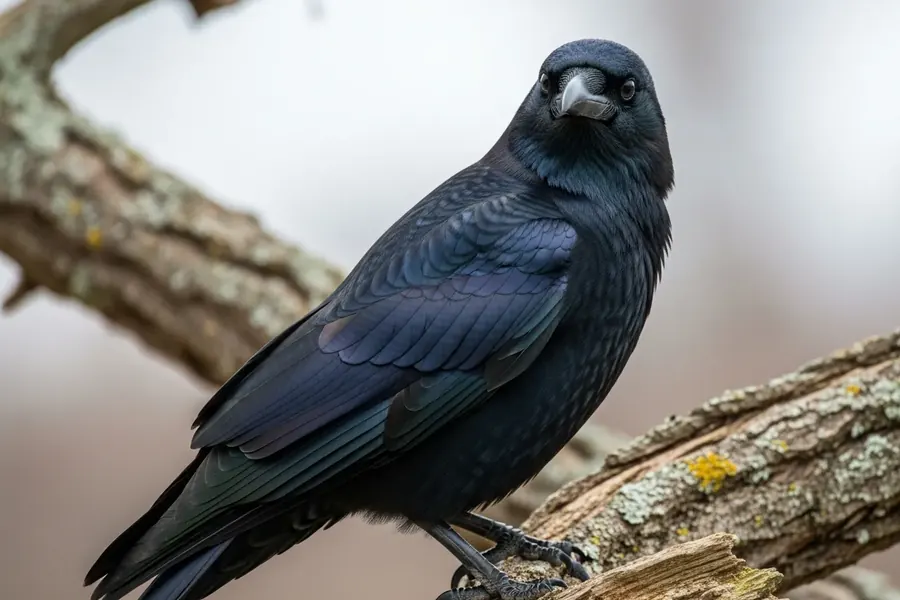
Crow — all-black shorter tail
AI-generated educational wildlife portrait — World Animal Rescue Network
Magpie vs Crow: At a Glance
| Feature | Magpie | Crow |
|---|---|---|
| Family | Corvidae | Corvidae |
| Plumage | Black-and-white pied | Usually all black (carrion crow) |
| Tail | Long, graduated | Shorter, fan-shaped in flight |
| Bill | Stout; black | Stout; black |
| Voice | Chattering rattle | Harsh caw |
| Sociality | Territorial pairs; winter flocks | Pairs/family; roost flocks |
| Diet | Omnivorous opportunist | Omnivorous opportunist |
| Flight | Flappy with long tail trailing | Direct with steady wingbeats |
| UK status | Common and widespread | Carrion crow common; rook/raven different |
| Intelligence | High problem-solving ability | High problem-solving ability |
Size and physical differences
Body lengths overlap around 45 cm, but a magpie's long tail makes it look longer; carrion crows are bulkier in the body.
If it is black, clever and in a garden, people say crow. If it is black and white with a long tail, they say magpie. Both labels sit inside Corvidae, a family that also includes ravens, jays and choughs. The comparison that matters in towns is Eurasian magpie versus carrion crow.
Corvids get blamed for stealing and for songbird declines. The evidence is more nuanced than folklore. Both species take eggs and nestlings at times; both also eat invertebrates, carrion and scraps.
This comparison sticks to marks you can use without laboratory gear. Geography and silhouette settle most everyday sightings.
How to tell them apart
A magpie is unmistakable once you see the white belly and wing patches against black, plus that long tail. A carrion crow is black all over with a green-purple sheen in good light and lacks the white. Hooded crows have a grey body with black head and wings — still not pied like a magpie.
In flight the magpie's tail is a giveaway. Crows look front-heavy and purposeful. Rooks have bare whitish bill bases and often flock in fields; ravens are larger with a wedge tail — different birds again.
Same family, different niches
Both are generalists. Magpies are conspicuous in suburban trees and hedges. Carrion crows use farmland, coasts and towns, often scavenging. Overlap is large; neither is a specialist confined to one habitat.
Corvid intelligence shows in both: memory for food caches, social learning and boldness around humans. That shared cognition is why the family fascinates researchers more than the magpie-versus-crow folk rivalry.
Songbirds and nest predation
Magpies are frequently accused of emptying songbird nests. They do take eggs and chicks, as do crows, jays and many non-corvids. Large-scale studies have not supported simple claims that magpie numbers alone drive songbird declines; habitat and other pressures dominate.
Persecution based on anecdote is poor conservation. If nest predation is a local issue, evidence beats blanket blame of one pied bird.
Calls and behaviour in gardens
Magpies announce themselves with a staccato chatter. Crows caw. Both will take pet food left outside and investigate bright objects — the thief reputation is half observation, half storytelling.
Neither needs feeding. Secure compost and bin lids if scavenging bothers you. Nesting pairs can be noisy in spring without being a problem to solve.
Crow is a slippery word
In everyday English crow may mean carrion crow, or any black corvid. Scientifically, crows are a subset of Corvus. Magpies are in Pica for the Eurasian species. Saying magpies are a type of crow is loosely true at family level and false at genus level.
For clarity: both are corvids; magpies are not carrion crows. Use more than one mark before you decide. In practice, people meet these animals in brief glances. Slow down long enough to check the two or three marks in the table above before accepting the first common name that comes to mind. Mislabeling spreads through photos and social posts faster than corrections do, which is why a short, checkable comparison page earns its keep. In practice, people meet these animals in brief glances. Slow down long enough to check the two or three marks in the table above before accepting the first common name that comes to mind. Mislabeling spreads through photos and social posts faster than corrections do, which is why a short, checkable comparison page earns its keep. In practice, people meet these animals in brief glances. Slow down long enough to check the two or three marks in the table above before accepting the first common name that comes to mind. Mislabeling spreads through photos and social posts faster than corrections do, which is why a short, checkable comparison page earns its keep. In practice, people meet these animals in brief glances. Slow down long enough to check the two or three marks in the table above before accepting the first common name that comes to mind. Mislabeling spreads through photos and social posts faster than corrections do, which is why a short, checkable comparison page earns its keep. In practice, people meet these animals in brief glances. Slow down long enough to check the two or three marks in the table above before accepting the first common name that comes to mind. Mislabeling spreads through photos and social posts faster than corrections do, which is why a short, checkable comparison page earns its keep. In practice, people meet these animals in brief glances. Slow down long enough to check the two or three marks in the table above before accepting the first common name that comes to mind. Mislabeling spreads through photos and social posts faster than corrections do, which is why a short, checkable comparison page earns its keep. In practice, people meet these animals in brief glances. Slow down long enough to check the two or three marks in the table above before accepting the first common name that comes to mind. Mislabeling spreads through photos and social posts faster than corrections do, which is why a short, checkable comparison page earns its keep. In practice, people meet these animals in brief glances. Slow down long enough to check the two or three marks in the table above before accepting the first common name that comes to mind. Mislabeling spreads through photos and social posts faster than corrections do, which is why a short, checkable comparison page earns its keep.
Did you know?
Eurasian magpies have passed mirror self-recognition tests — a rare result among birds.
Magpie vs Crow: FAQs
Is a magpie a crow?
How do I tell a magpie from a crow?
Do magpies kill songbirds?
Which is smarter?
What is the difference between a crow and a rook?
Why do magpies chatter?
Help protect animals
Learning about animals can help more people understand their needs. WARN raises funds for eligible animal-welfare organisations. Read the relevant appeal’s purpose, recipient status and fund terms, or share this free guide to raise awareness.