Animal Comparison
Locust vs Grasshopper
Locusts are grasshoppers that can switch into a swarming phase. The difference is behavioural and density-driven, not a separate order.
By WARN Research & Conservation Team Last updated
In brief — Locust vs Grasshopper
Locusts are swarming-phase grasshoppers; the name marks a density-driven transformation, not an unrelated insect.
Locusts are grasshoppers — specifically certain species that can transform into a gregarious, swarming phase when population density and conditions align. Solitary grasshoppers of the same species look and behave differently from the swarming form. The everyday contrast is real in the field, but locust is not a separate insect order floating beside grasshoppers.
See the difference
Images are shown at different scales. Read each caption for the species, source and context.
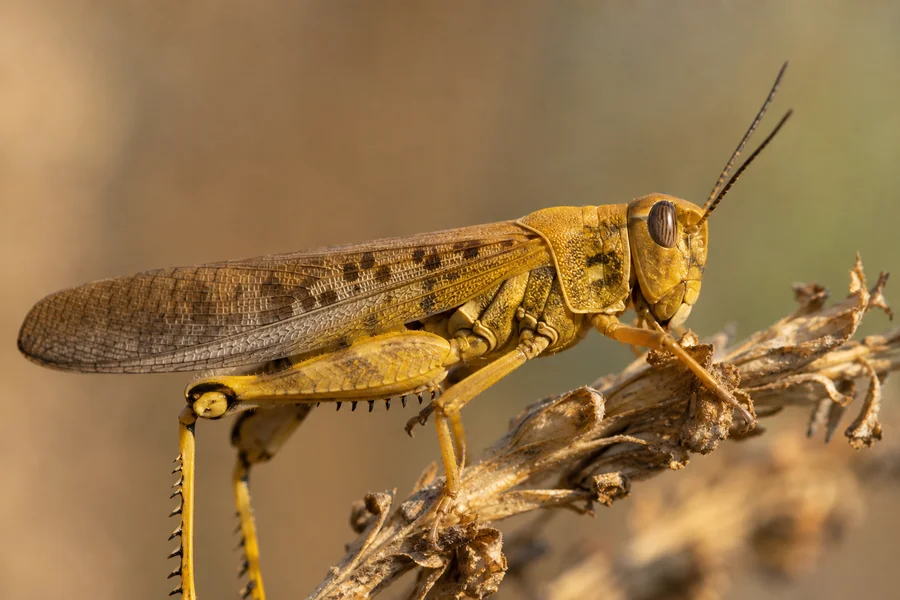
Locust — swarming grasshopper form
AI-generated educational wildlife portrait — World Animal Rescue Network
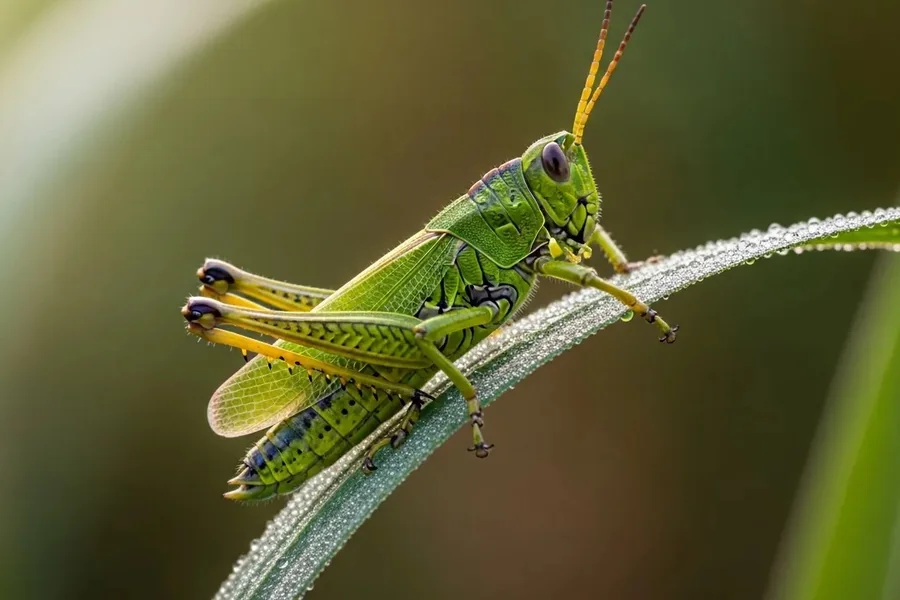
Grasshopper — saltatory hind legs
AI-generated educational wildlife portrait — World Animal Rescue Network
Locust vs Grasshopper: At a Glance
| Feature | Locust | Grasshopper |
|---|---|---|
| Taxonomic relation | Swarming grasshoppers (certain spp.) | Broader everyday/family label |
| Phase change | Solitary vs gregarious forms | Most species lack locust swarms |
| Density trigger | Crowding drives gregarisation | Remain relatively solitary |
| Colour shift | Often changes with phase | Species colours more fixed |
| Movement | Mass migration in swarms/bands | Local hops and flights |
| Agricultural impact | Can devastate crops at scale | Usually local chewing damage |
| Antennae | Short-horned (typical) | Short-horned in true grasshoppers |
| Famous example | Desert locust (Schistocerca gregaria) | Many meadow and field species |
| Nymph bands | Hopper bands march together | Nymphs more independent |
| Control focus | Phase monitoring and swarms | Local pest thresholds |
Size and physical differences
Swarming locusts and large grasshoppers overlap around 3–6 cm in many familiar species; migratory locusts can be larger than small meadow grasshoppers.
Locust versus grasshopper is a correction page. In biology, locusts are species of short-horned grasshoppers (Acrididae) capable of phase polyphenism: crowding triggers changes in colour, behaviour and sometimes morphology that produce cohesive migratory swarms. A solitary desert locust is still a locust species, even when it looks like "just a grasshopper" to a passer-by.
What people mean in conversation is usually solitary hopper versus plague swarm. That practical contrast matters for farming and history. The scientific correction matters because killing every green grasshopper as if it were a swarm locust misunderstands both ecology and control.
This comparison sticks to marks you can use without laboratory gear: size, shape, behaviour and the words people actually type into a search box. Scientific names are given where they prevent a regional mix-up. Where published measurements disagree, this page gives the range rather than a single tidy figure that implies more certainty than the sources support.
Lead with the sameness
A locust is a grasshopper species that can swarm. That sentence prevents the false idea of two distant insect clans. Phase polyphenism means the same genome can produce a cryptic solitary insect or a brightly contrasting gregarious one depending on touch, sight and chemical cues from neighbours. Researchers study how serotonin and other pathways help flip the switch. Farmers experience the outcome as sudden bands of hoppers and sky-filling swarms. Field observers should combine silhouette, behaviour and habitat before naming what they see. Where published measurements disagree, this page gives the range rather than a single tidy figure. Treat a single trait as supporting evidence rather than a complete identification. Local field guides remain the final check when similar species share a landscape.
What changes in the swarming phase
Gregarious locusts often become more contrasting in colour, more attracted to one another, and more likely to move as cohesive groups. Nymphs may march in hopper bands; adults may form flying swarms carried by winds across countries. Solitary individuals avoid crowding and look more like ordinary grasshoppers to casual observers. Not every grasshopper species can make this switch — which is why locust is a functional label for certain acridids, not a synonym for all grasshoppers. Field observers should combine silhouette, behaviour and habitat before naming what they see. Where published measurements disagree, this page gives the range rather than a single tidy figure. Treat a single trait as supporting evidence rather than a complete identification. Local field guides remain the final check when similar species share a landscape.
Why history remembers locusts
Locust plagues reshape harvests and appear in historical records because swarming multiplies impact beyond ordinary grasshopper chewing. Modern monitoring tracks breeding rains and vegetation that precede outbreaks. Climate and land use can alter risk patterns. The grasshopper in a British meadow is not a desert locust swarm, and treating them as identical confuses children and policy alike. Field observers should combine silhouette, behaviour and habitat before naming what they see. Where published measurements disagree, this page gives the range rather than a single tidy figure. Treat a single trait as supporting evidence rather than a complete identification. Local field guides remain the final check when similar species share a landscape. When evidence is thin, prefer a broader label over a false precise name.
Field identification without panic
In regions with locust species, local agricultural guides show solitary and gregarious forms. Elsewhere, large grasshoppers are usually non-swarming species. Antenna length separates short-horned grasshoppers from long-horned katydids and bush-crickets — a different comparison. If you need an official identity during an outbreak, sample photographs with scale and location help experts more than the everyday word fight. Field observers should combine silhouette, behaviour and habitat before naming what they see. Where published measurements disagree, this page gives the range rather than a single tidy figure. Treat a single trait as supporting evidence rather than a complete identification. Local field guides remain the final check when similar species share a landscape. When evidence is thin, prefer a broader label over a false precise name.
Why the comparison matters
Food security programmes and school science both need the phase story. Accurate names keep advice attached to the animal present. WARN publishes these comparisons so high-intent questions get a sourced answer instead of an unsourced listicle. Field observers should combine silhouette, behaviour and habitat before naming what they see. Where published measurements disagree, this page gives the range rather than a single tidy figure. Treat a single trait as supporting evidence rather than a complete identification. Local field guides remain the final check when similar species share a landscape. When evidence is thin, prefer a broader label over a false precise name. Field observers should combine silhouette, behaviour and habitat before naming what they see. Where published measurements disagree, this page gives the range rather than a single tidy figure.
Did you know?
A solitary desert locust and a gregarious one can look so different that early naturalists sometimes treated the forms as separate species.
Locust vs Grasshopper: FAQs
What is the difference between a locust and a grasshopper?
Are locusts a type of grasshopper?
Why do locusts swarm?
Do all grasshoppers become locusts?
Is a cricket a locust?
Are UK grasshoppers locusts?
Help protect animals
Learning about animals can help more people understand their needs. WARN raises funds for eligible animal-welfare organisations. Read the relevant appeal’s purpose, recipient status and fund terms, or share this free guide to raise awareness.
Stay connected with WARN
Receive appeal updates, animal-welfare news and published funding reports. Unsubscribe any time.
We only use your address for WARN updates. See our privacy policy.