Animal Comparison
Elk vs Moose
In North America elk means Cervus canadensis and moose means Alces alces. In Europe elk often means the moose. Size and antler shape separate the animals.
By WARN Research & Conservation TeamLast updated
In brief — Elk vs Moose
Check which continent the speaker means: European elk is usually a moose; North American elk is a wapiti.
In North America, elk means the wapiti (Cervus canadensis) and moose means Alces alces — a taller, heavier deer with palmate antlers. In much of Europe, elk is the everyday name for that same moose. The naming collision, not biology, causes most of the confusion between elk and moose.
See the difference
Images are shown at different scales. Read each caption for the species, source and context.
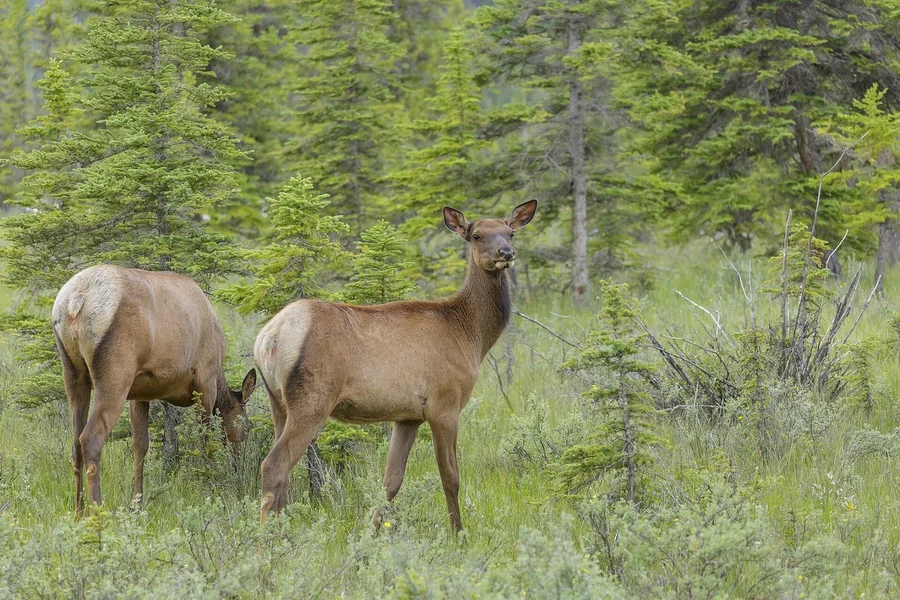
Elk (NA) — wapiti; branching antlers, herd grazer
AI-generated educational wildlife portrait — World Animal Rescue Network
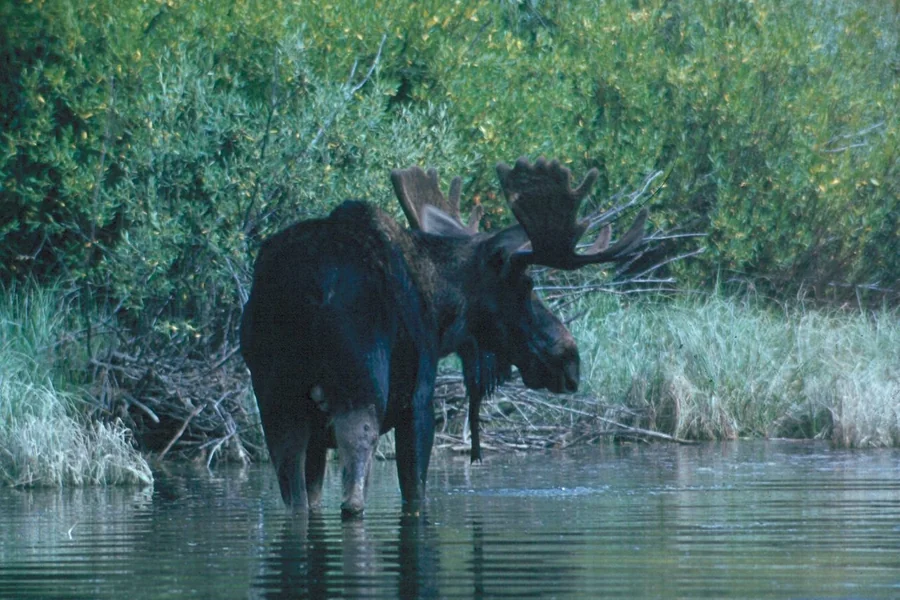
Moose — larger deer; palmate antlers, long snout
AI-generated educational wildlife portrait — World Animal Rescue Network
Elk vs Moose: At a Glance
| Feature | Elk | Moose |
|---|---|---|
| North American meaning | Wapiti (Cervus canadensis) | Alces alces |
| British/European 'elk' | Usually not this animal | Usually Alces alces (the moose) |
| Bull weight (approx.) | Roughly 230–450 kg | Often 380–700 kg; largest deer alive |
| Shoulder height | Around 1.2–1.5 m | Often 1.4–2.1 m |
| Antlers (mature males) | Branching tines | Broad palmate (shovel-like) plates |
| Snout | Ordinary deer muzzle | Long, overhanging nose; dewlap (bell) |
| Typical habitat | Open forest, meadows, mountains | Boreal forest, wetlands, lakeshores |
| Social tendency | Often herds | More solitary outside rut/mother-calf |
| Diet emphasis | Grazer/browser on grasses and forbs | Browser; aquatic plants in season |
| IUCN (species level) | Least Concern (wapiti complex varies) | Least Concern overall; local declines occur |
Size and physical differences
The moose is larger: bulls often 380–700 kg, versus roughly 230–450 kg for a large North American elk bull.
Elk versus moose is less a biology puzzle than a dictionary collision. The animal North Americans call a moose is Alces alces, the largest living deer. In British and much of European usage, that same animal is called an elk. Separately, North Americans use elk for the wapiti, Cervus canadensis, a different large deer with branching antlers rather than moose-like palms.
Once the names are pinned to species, the field differences are clear. Moose are longer-legged, heavier, and carry broad palmate antlers in mature bulls. Wapiti are more horse-like in outline, gather in larger herds, and grow tined antlers. This page keeps both naming systems visible so a British reader and a Canadian reader are not arguing past each other.
This comparison sticks to marks you can use without laboratory gear: size, shape, behaviour and the words people actually type into a search box. Scientific names are given where they prevent a regional mix-up.
Start with the name problem
If someone in Scotland says elk, they may mean Alces alces — the animal a Canadian calls a moose. If someone in Colorado says elk, they mean wapiti. Ask which species or which country before comparing size charts. Many online arguments are two correct descriptions attached to different animals. Field observers should treat colour alone as weak evidence and combine it with shape, behaviour and habitat before naming what they see. Where published measurements disagree, this page gives the range rather than a single tidy figure that implies more certainty than the sources support. Field observers should treat colour alone as weak evidence and combine it with shape, behaviour and habitat before naming what they see. Where published measurements disagree, this page gives the range rather than a single tidy figure that implies more certainty than the sources support.
Which is bigger
The moose is the largest deer in the world. Large bulls outweigh and out-shoulder North American elk. Wapiti are still very large deer — much bigger than red deer does in many comparisons — but they are not moose-sized. Shoulder height and that heavy, dark shoulder hump help when photographs lack a scale object. Field observers should treat colour alone as weak evidence and combine it with shape, behaviour and habitat before naming what they see. Where published measurements disagree, this page gives the range rather than a single tidy figure that implies more certainty than the sources support. Field observers should treat colour alone as weak evidence and combine it with shape, behaviour and habitat before naming what they see. Where published measurements disagree, this page gives the range rather than a single tidy figure that implies more certainty than the sources support.
Antlers and head shape
Mature moose bulls grow palmate antlers — broad, shovel-like plates with points on the edges. Elk grow multi-tined branching antlers closer to a classic red-deer plan. Moose also show a long nose and often a dewlap hanging from the throat. Elk heads look more like oversized red deer. Field observers should treat colour alone as weak evidence and combine it with shape, behaviour and habitat before naming what they see. Where published measurements disagree, this page gives the range rather than a single tidy figure that implies more certainty than the sources support. Field observers should treat colour alone as weak evidence and combine it with shape, behaviour and habitat before naming what they see. Where published measurements disagree, this page gives the range rather than a single tidy figure that implies more certainty than the sources support.
Habitat and behaviour
Moose favour wetlands, lakeshores and boreal forest, and they are often seen alone or as a cow with calf. Elk use meadows and open woodland and can form large herds, especially outside the densest forests. Summer moose may feed heavily on aquatic plants; elk are more often seen grazing in open parks. Field observers should treat colour alone as weak evidence and combine it with shape, behaviour and habitat before naming what they see. Where published measurements disagree, this page gives the range rather than a single tidy figure that implies more certainty than the sources support. Field observers should treat colour alone as weak evidence and combine it with shape, behaviour and habitat before naming what they see. Where published measurements disagree, this page gives the range rather than a single tidy figure that implies more certainty than the sources support.
Related species and red deer
Wapiti are closely related to red deer (Cervus elaphus), and taxonomy of the Cervus group has been revised repeatedly. Moose sit in their own genus, Alces. That is why treating elk and moose as regional nicknames for one animal only works in Europe — and why it fails in North America. Field observers should treat colour alone as weak evidence and combine it with shape, behaviour and habitat before naming what they see. Where published measurements disagree, this page gives the range rather than a single tidy figure that implies more certainty than the sources support. Field observers should treat colour alone as weak evidence and combine it with shape, behaviour and habitat before naming what they see. Where published measurements disagree, this page gives the range rather than a single tidy figure that implies more certainty than the sources support.
Why the comparison matters
People search for elk versus moose because a wrong name leads to the wrong expectation — about danger, about care, about what lives in a local habitat. Getting the distinction right is how accurate advice and conservation reporting stay attached to the animal that is actually present. Field observers should treat colour alone as weak evidence and combine it with shape, behaviour and habitat before naming what they see. Conservation status also diverges inside everyday labels: a common garden species and a rare relative can share a common name while facing completely different pressures. Where published measurements disagree, this page gives the range rather than a single tidy figure that implies more certainty than the sources support. WARN publishes these comparisons so high-intent questions get a sourced answer instead of an unsourced listicle.
Did you know?
The word elk travelled with settlers and stuck to different animals on different continents — a linguistic fossil that still generates wildlife arguments.
Elk vs Moose: FAQs
Is an elk the same as a moose?
Which is bigger, elk or moose?
What do Americans call a European elk?
Do moose and elk both have antlers?
Are elk related to red deer?
Can elk and moose be found in the same place?
Help protect animals
Learning about animals can help more people understand their needs. WARN raises funds for eligible animal-welfare organisations. Read the relevant appeal’s purpose, recipient status and fund terms, or share this free guide to raise awareness.