Animal Comparison
Duck vs Goose
Geese are typically larger waterfowl with longer necks and graze on land more; ducks are smaller with broader bills for dabbling or diving. Both are Anatidae.
By WARN Research & Conservation TeamLast updated
In brief — Duck vs Goose
Longer neck and larger grazing body usually means goose; smaller dabbling or diving waterfowl usually means duck.
Geese are usually larger than ducks, with longer necks and a stronger habit of grazing on land. Ducks are typically smaller waterfowl with broader bills adapted for dabbling or diving. Both belong to the family Anatidae; swans are the third familiar group in the same family.
See the difference
Images are shown at different scales. Read each caption for the species, source and context.
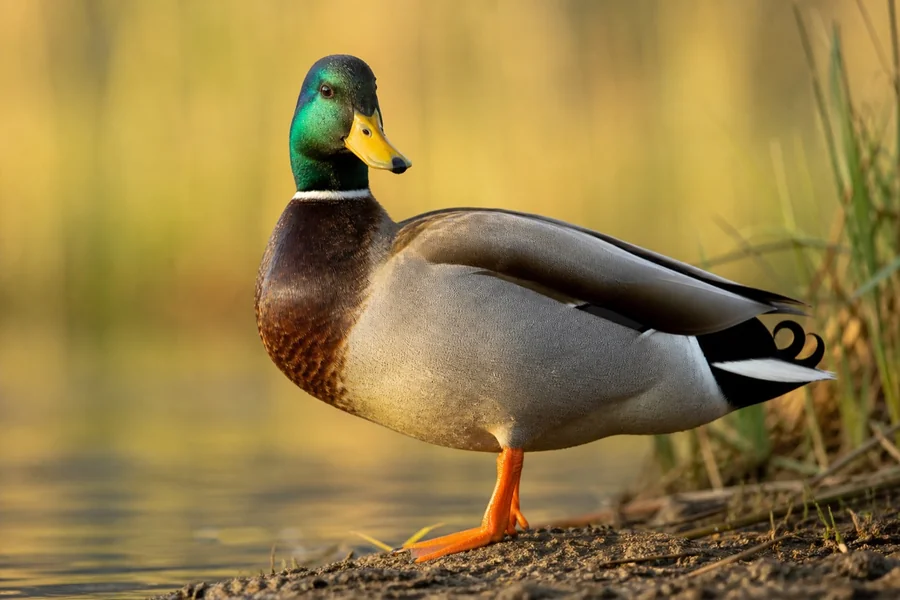
Duck — typically smaller; often dabbling or diving
AI-generated educational wildlife portrait — World Animal Rescue Network
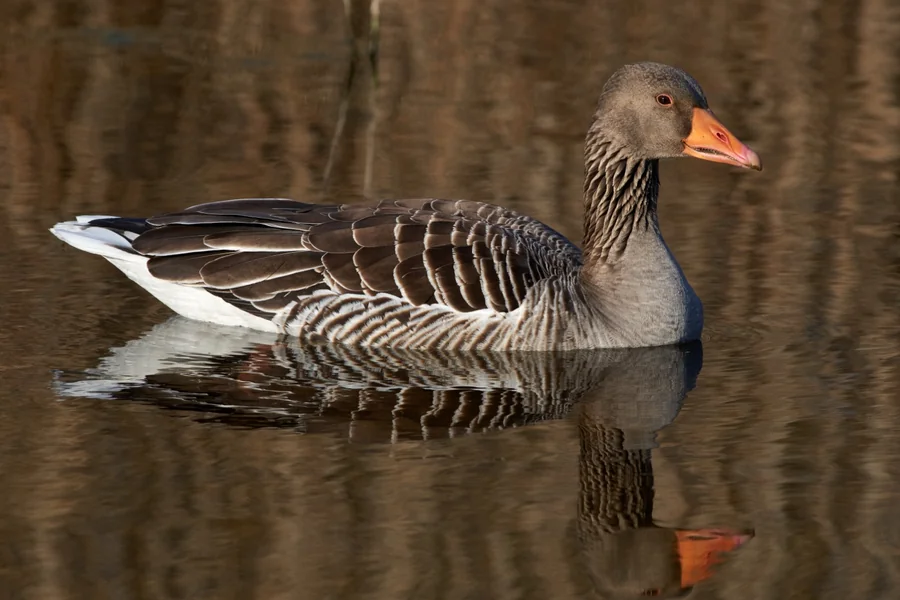
Goose — typically larger and longer-necked; grazes
AI-generated educational wildlife portrait — World Animal Rescue Network
Duck vs Goose: At a Glance
| Feature | Duck | Goose |
|---|---|---|
| Family | Anatidae | Anatidae |
| Typical size | Smaller | Larger |
| Neck | Shorter relative to body | Longer relative to body |
| Bill | Often broader; dabbling/diving shapes | Stouter grazing bill |
| Feeding | Dabble, dive, or graze by species | Primarily graze on land; some aquatic plants |
| Voice stereotype | Quack (not universal) | Honk (not universal) |
| Migration formations | Varies | Famous V-formations in many species |
| Pair bonds | Varies by species | Often strong seasonal/longer bonds |
| Domestic forms | Many breeds (e.g. Pekin) | Many breeds (e.g. Embden, Chinese) |
| Swan comparison | Smaller than swans | Usually smaller than swans |
Size and physical differences
Geese are larger: many familiar geese weigh 3–6 kg or more, while mallards are around 1–1.5 kg — breed and species vary.
Duck versus goose is a comparison inside one waterfowl family, Anatidae, rather than a meeting of strangers. Ducks are a loose everyday set of smaller waterfowl; geese are generally larger, longer-necked species more committed to grazing. Swans sit alongside both as the largest familiar group. The words are useful in parks and on menus, even though taxonomy carves the family into many genera.
Bills and behaviour finish the job. Dabbling ducks tip forward in shallow water; diving ducks disappear under the surface. Geese walk and graze on grass with a more upright neck and often announce themselves louder and in V-formations on migration. Size alone almost works — until someone meets a small goose breed or a large Muscovy.
This comparison sticks to marks you can use without laboratory gear: size, shape, behaviour and the words people actually type into a search box. Scientific names are given where they prevent a regional mix-up.
Size and neck
Geese usually look like they have more neck than duck. That silhouette holds for greylags versus mallards in a park. Domestic breeds blur edges: a heavy meat duck can outweigh a small goose. When unsure, combine neck length with bill shape and behaviour. Field observers should treat colour alone as weak evidence and combine it with shape, behaviour and habitat before naming what they see. Where published measurements disagree, this page gives the range rather than a single tidy figure that implies more certainty than the sources support. Field observers should treat colour alone as weak evidence and combine it with shape, behaviour and habitat before naming what they see. Where published measurements disagree, this page gives the range rather than a single tidy figure that implies more certainty than the sources support.
Feeding ecology
Many ducks are aquatic feeders — dabbling at the surface or diving. Geese are classic grazers of grass and winter cereals, which is why flocks on football pitches and farmland draw attention. Bills match the job: broader filtering or seizing shapes in ducks; stouter cropping bills in geese. Field observers should treat colour alone as weak evidence and combine it with shape, behaviour and habitat before naming what they see. Where published measurements disagree, this page gives the range rather than a single tidy figure that implies more certainty than the sources support. Field observers should treat colour alone as weak evidence and combine it with shape, behaviour and habitat before naming what they see. Where published measurements disagree, this page gives the range rather than a single tidy figure that implies more certainty than the sources support.
Sound and social behaviour
Honking geese and quacking mallard hens are stereotypes with holes — many ducks do not quack like a cartoon — but flock noise and V-migrations are fair goose expectations. Geese can be territorial near nests; so can swans; ducks vary. Field observers should treat colour alone as weak evidence and combine it with shape, behaviour and habitat before naming what they see. Where published measurements disagree, this page gives the range rather than a single tidy figure that implies more certainty than the sources support. Field observers should treat colour alone as weak evidence and combine it with shape, behaviour and habitat before naming what they see. Where published measurements disagree, this page gives the range rather than a single tidy figure that implies more certainty than the sources support.
Domestication paths
Both were domesticated for meat, eggs and down, producing shapes that barely resemble wild ancestors. Identification advice for wild birds should not be copied blindly onto farm breeds. Field observers should treat colour alone as weak evidence and combine it with shape, behaviour and habitat before naming what they see. Where published measurements disagree, this page gives the range rather than a single tidy figure that implies more certainty than the sources support. Field observers should treat colour alone as weak evidence and combine it with shape, behaviour and habitat before naming what they see. Where published measurements disagree, this page gives the range rather than a single tidy figure that implies more certainty than the sources support. Field observers should treat colour alone as weak evidence and combine it with shape, behaviour and habitat before naming what they see. Where published measurements disagree, this page gives the range rather than a single tidy figure that implies more certainty than the sources support.
Where swans fit
Swans are also Anatidae, usually larger again, with the longest necks in the park pond trio. A comparison that stops at duck versus goose without mentioning swans leaves the third silhouette unexplained. Field observers should treat colour alone as weak evidence and combine it with shape, behaviour and habitat before naming what they see. Where published measurements disagree, this page gives the range rather than a single tidy figure that implies more certainty than the sources support. Field observers should treat colour alone as weak evidence and combine it with shape, behaviour and habitat before naming what they see. Where published measurements disagree, this page gives the range rather than a single tidy figure that implies more certainty than the sources support. Field observers should treat colour alone as weak evidence and combine it with shape, behaviour and habitat before naming what they see. Where published measurements disagree, this page gives the range rather than a single tidy figure that implies more certainty than the sources support.
Why the comparison matters
People search for duck versus goose because a wrong name leads to the wrong expectation — about danger, about care, about what lives in a local habitat. Getting the distinction right is how accurate advice and conservation reporting stay attached to the animal that is actually present. Field observers should treat colour alone as weak evidence and combine it with shape, behaviour and habitat before naming what they see. Conservation status also diverges inside everyday labels: a common garden species and a rare relative can share a common name while facing completely different pressures. Where published measurements disagree, this page gives the range rather than a single tidy figure that implies more certainty than the sources support. WARN publishes these comparisons so high-intent questions get a sourced answer instead of an unsourced listicle.
Did you know?
A Canada goose grazing a lawn is doing classic goose ecology — the pond is optional; the grass is the point.
Duck vs Goose: FAQs
What is the difference between a duck and a goose?
Is a swan a type of goose?
Which is bigger?
Do all ducks quack?
Why do geese fly in a V?
Can ducks and geese breed?
Help protect animals
Learning about animals can help more people understand their needs. WARN raises funds for eligible animal-welfare organisations. Read the relevant appeal’s purpose, recipient status and fund terms, or share this free guide to raise awareness.