Animal Comparison
Crocodile vs Komodo dragon
Crocodiles are aquatic archosaurs with armour and powerful jaws; Komodo dragons are giant monitor lizards of Indonesian islands.
By WARN Research & Conservation TeamLast updated
In brief — Crocodile vs Komodo dragon
Crocodiles are aquatic armoured archosaurs; Komodo dragons are terrestrial giant monitor lizards.
Crocodiles are large aquatic reptiles in the crocodilian lineage, with armoured skin, valvular nostrils and a life built around water. Komodo dragons are giant monitor lizards (Varanus komodoensis) confined to a handful of Indonesian islands. Both are formidable predators, but they belong to different reptile branches and hunt in different landscapes.
See the difference
Images are shown at different scales. Read each caption for the species, source and context.
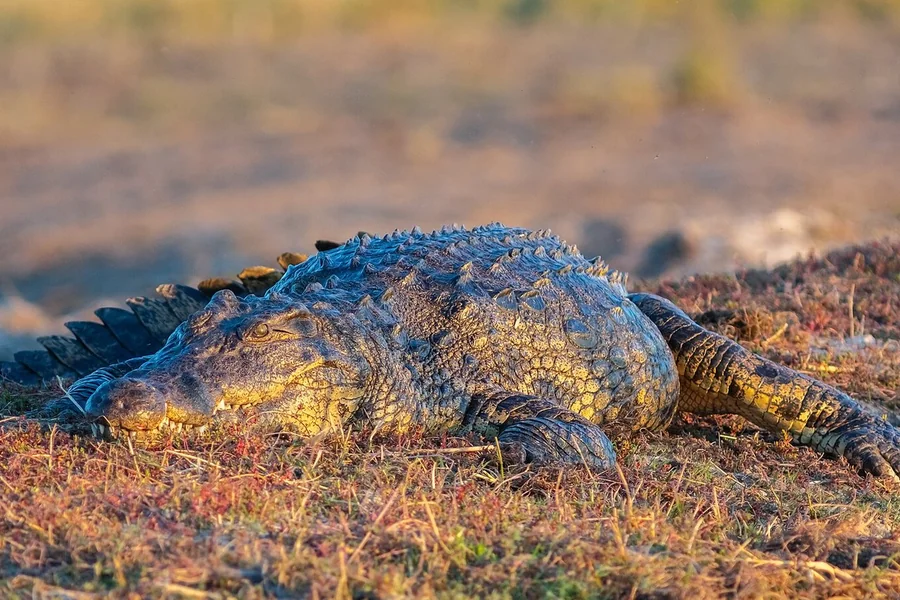
Crocodile — V-shaped snout, visible teeth
AI-generated educational wildlife portrait — World Animal Rescue Network
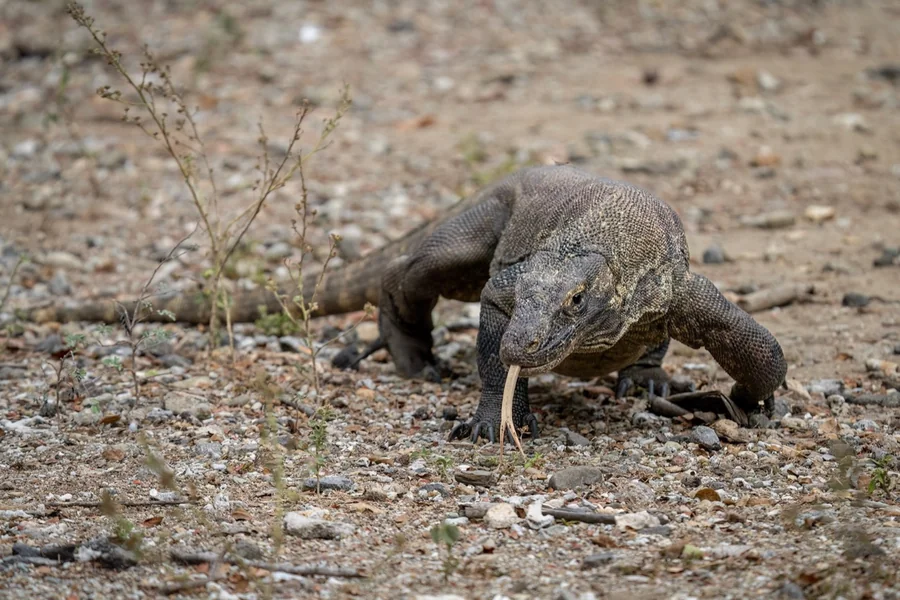
Komodo dragon — massive monitor lizard
AI-generated educational wildlife portrait — World Animal Rescue Network
Crocodile vs Komodo dragon: At a Glance
| Feature | Crocodile | Komodo dragon |
|---|---|---|
| Lineage | Crocodilian archosaur | Monitor lizard (squamate) |
| Wild range | Tropics worldwide (by species) | Few Indonesian islands |
| Typical large size | Saltwater croc 5 m+ / very heavy | About 2–3 m / under 100 kg typically |
| Skin | Osteoderm armour | Scaly lizard skin; osteoderms present but different |
| Tongue | Not a forked monitor tongue | Long forked tongue |
| Habitat focus | Rivers, estuaries, coasts | Dry forests and savanna islands |
| Swim specialisation | Highly aquatic | Can swim; primarily terrestrial |
| Bite toolkit | Crushing jaw force | Serrated teeth; venom components reported |
| Conservation | Varies by species | Vulnerable; island-restricted |
| Parental care | Nest guarding common | Limited; cannibalism risk to young |
Size and physical differences
Large saltwater crocodiles can exceed 5 m and a tonne; Komodo dragons typically reach about 2–3 m and roughly 70–90 kg for large males.
Crocodile versus Komodo dragon compares two apex reptiles that meet mainly in documentaries rather than the same riverbank. Crocodilians are archosaurs more closely related to birds than to lizards, with a suite of aquatic specialisations. Komodo dragons are squamates — monitors — that dominate island food webs using size, stealth and a septic, venom-assisted bite discussed in modern research.
Body plan settles identification instantly in real life. A crocodile is low-slung with a broad head, heavy osteoderm armour and a swimming tail. A Komodo dragon has the longer neck and forked tongue of a monitor, walking with a more lizard gait on land. They do not share a habitat range in the wild.
This comparison sticks to marks you can use without laboratory gear: size, shape, behaviour and the words people actually type into a search box. Scientific names are given where they prevent a regional mix-up. Where published measurements disagree, this page gives the range rather than a single tidy figure that implies more certainty than the sources support.
Different branches of the reptile tree
Crocodiles sit with alligators and gharials among living archosaurs. Komodo dragons sit with other monitors among lizards. That split is deeper than "big reptile versus big reptile." Skull openings, ankle joints and heart anatomy differ in ways textbooks use to teach reptile diversity. For everyday readers, the takeaway is simpler: a crocodile is not a giant lizard in the Komodo sense, and a Komodo dragon is not a land crocodile. Field observers should combine silhouette, behaviour and habitat before naming what they see. Where published measurements disagree, this page gives the range rather than a single tidy figure. Treat a single trait as supporting evidence rather than a complete identification. Local field guides remain the final check when similar species share a landscape.
Water specialist versus island hunter
Crocodiles are built to wait at the water’s edge, with eyes and nostrils on top of the head and a tail that drives sudden aquatic bursts. Komodo dragons patrol terrestrial habitats, scavenging carcasses and ambushing deer and pigs. They can swim between nearby islands, which matters for their tiny geographic range, but they are not riverine sit-and-wait predators in the crocodilian mould. Landscape predicts which animal you are talking about long before tooth counts do. Field observers should combine silhouette, behaviour and habitat before naming what they see. Where published measurements disagree, this page gives the range rather than a single tidy figure. Treat a single trait as supporting evidence rather than a complete identification. Local field guides remain the final check when similar species share a landscape.
Size and bite narratives
Large crocodiles outmass Komodo dragons by a wide margin and deliver bone-crushing bite forces studied in biomechanics labs. Komodo dragons rely on a different toolkit: sharp teeth, repeated biting, and venom components that affect bleeding and blood pressure, alongside bacteria historically over-emphasised in older popular accounts. Both can kill people in rare circumstances. Risk is local and behavioural — swimming in croc habitat at dusk is not the same problem as hiking unprotected on Komodo. Field observers should combine silhouette, behaviour and habitat before naming what they see. Where published measurements disagree, this page gives the range rather than a single tidy figure. Treat a single trait as supporting evidence rather than a complete identification. Local field guides remain the final check when similar species share a landscape.
Conservation is not interchangeable
Komodo dragons are island endemics with a small global footprint; tourism management and prey-base protection matter intensely. Crocodilians include species that are common and species that are critically depleted. Treating them as a single charismatic "giant reptile" category erases those differences in funding and law. Species pages and Red List accounts are the right resolution for action. Field observers should combine silhouette, behaviour and habitat before naming what they see. Where published measurements disagree, this page gives the range rather than a single tidy figure. Treat a single trait as supporting evidence rather than a complete identification. Local field guides remain the final check when similar species share a landscape. When evidence is thin, prefer a broader label over a false precise name.
Why the comparison matters
Documentary editing places these animals in the same mental folder. Biology does not. Accurate names keep travel advice, zoo education and conservation stories attached to the animal present. WARN publishes these comparisons so high-intent questions get a sourced answer instead of an unsourced listicle. Field observers should combine silhouette, behaviour and habitat before naming what they see. Where published measurements disagree, this page gives the range rather than a single tidy figure. Treat a single trait as supporting evidence rather than a complete identification. Local field guides remain the final check when similar species share a landscape. When evidence is thin, prefer a broader label over a false precise name. Field observers should combine silhouette, behaviour and habitat before naming what they see. Where published measurements disagree, this page gives the range rather than a single tidy figure.
Did you know?
Komodo dragons are the largest living lizards, yet even a big male is lightweight next to a large saltwater crocodile.
Crocodile vs Komodo dragon: FAQs
Is a Komodo dragon a crocodile?
Which is bigger?
Where do Komodo dragons live?
Are Komodo dragons venomous?
Do they meet in the wild?
Which is more dangerous to people?
Help protect animals
Learning about animals can help more people understand their needs. WARN raises funds for eligible animal-welfare organisations. Read the relevant appeal’s purpose, recipient status and fund terms, or share this free guide to raise awareness.