Wildlife · Animal myth busters
What is the difference between a wolf and a coyote?
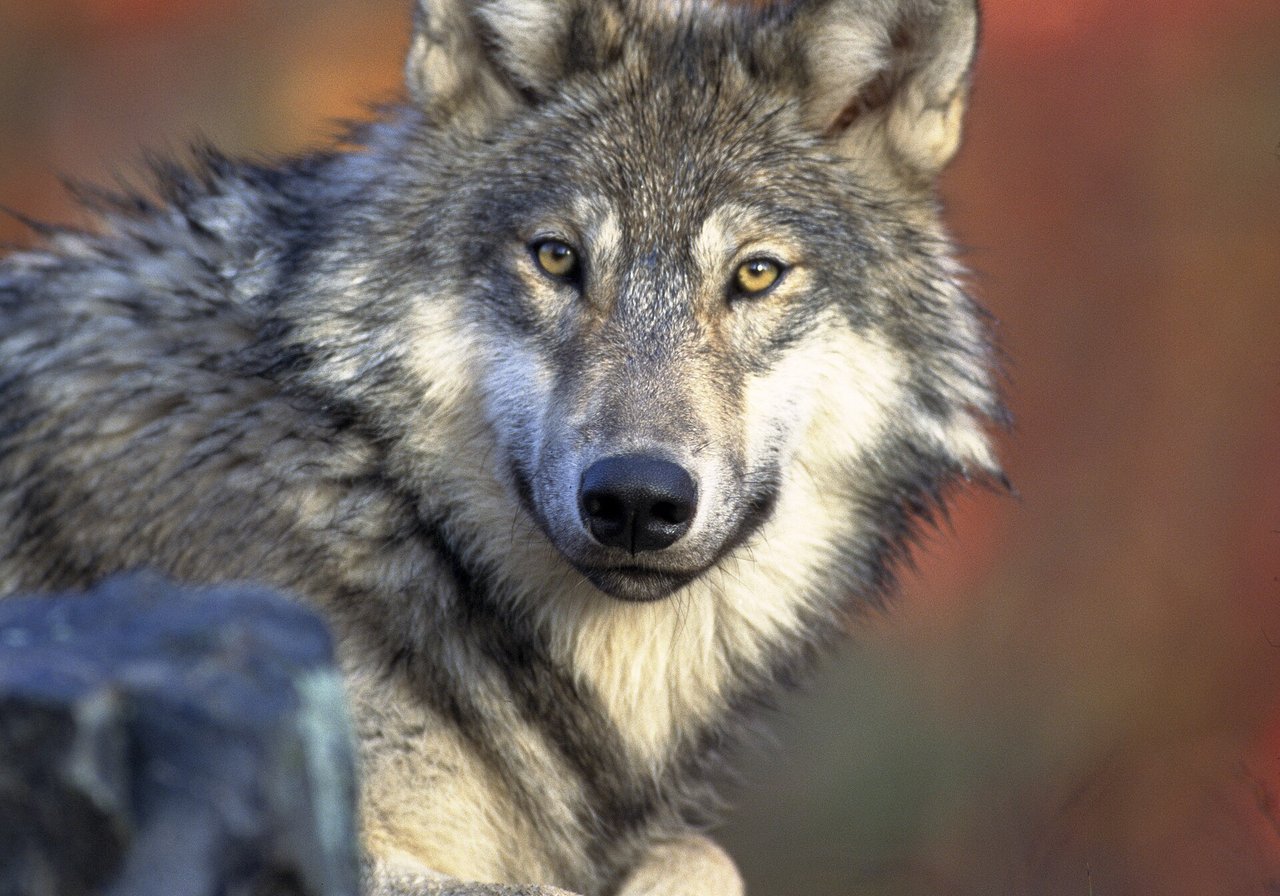
Wolves are large pack hunters with rounded ears; coyotes are smaller, pointy-faced survivors of fragmented habitat.
In brief
Wolves are much larger (up to 60+ kg), with broader snouts and rounded ears. Coyotes are smaller (typically 9–23 kg), with pointed snouts and larger ears relative to the head. Coyotes adapt readily to urban edges; wolves need large territories.
By the WARN Research & Conservation TeamChecked against IUCN Red List & CITES sourcesLast updated
Gray wolves can exceed 60 kg with broad snouts and relatively small ears. Coyotes typically weigh 9–23 kg with pointed snouts and large ears relative to the head. Wolves hunt in packs for deer and elk across large territories; coyotes often hunt alone or in pairs, taking rodents and rabbits — and adapting to suburban edges. Wolf recovery in Yellowstone and Europe followed legal protection; coyotes expanded when wolves were removed from much of North America — an ecological shift still studied today.
60 kg+
Large gray wolf weight
9–23 kg
Typical coyote weight range
Pack
Wolf social unit — cooperative hunters
LC
Coyote — Least Concern globally (IUCN)
Quick facts
| Size | Wolves much larger — twice coyote weight or more |
|---|---|
| Ears | Coyotes — large pointed ears; wolves — smaller, rounded |
| Snout | Wolf — broad; coyote — narrow and pointed |
| Sociality | Wolves — packs; coyotes — pairs or small groups |
| Habitat | Wolves need large wild territories; coyotes tolerate urban edges |
| Howl | Both vocal — wolf howls longer; coyote yips and yodels |
Key takeaways
- Size, ear shape and snout width are reliable wolf vs coyote field marks.
- Wolves — pack hunters needing large territories.
- Coyotes — adaptable mesopredators thriving in fragmented and urban habitat.
- Wolf removal in North America helped coyote range expansion.
- Both native — coexistence tools beat indiscriminate killing for livestock conflict.
- Misidentification leads to wrong legal protections and management.
Field marks at a distance
Size is the first clue when both canids appear in open country: wolves dominate — taller at shoulder, heavier chest, bigger feet. Coyotes look leggy but light, with a sharp muzzle and oversized ears that scream “coyote” to experienced observers. Wolf fur is often gray-brown with uniform bulk; coyotes show reddish legs and a bushy tail carried low. At dusk, gait differs: wolves trot powerfully in line when travelling; coyotes bounce with a lighter stride. Trail cameras on WARN partner rangelands use these marks to separate wolf recovery from coyote control programmes — misidentification leads to wrong management.
Ecology and hunting
Wolves are apex predators wherever they persist — regulating deer and elk behaviour through predation and “landscape of fear” effects documented in Yellowstone after reintroduction. Packs coordinate to bring down prey larger than any individual wolf could kill alone. Coyotes fill a mesopredator niche — rodents, rabbits, fruit and carrion — and can surge when larger predators disappear, a phenomenon called mesopredator release. Both suffer road mortality and persecution; wolves additionally face livestock conflict where grazing overlaps range. Non-lethal tools — fladry, guard dogs, timing of calving — reduce conflict where communities invest in them.
Range history in North America
Government eradication campaigns removed wolves from most of the lower 48 United States by the mid-twentieth century. Coyotes expanded eastward into vacated territory — today they live in every US state including urban Chicago and New York green spaces. Wolf reintroduction to Yellowstone and Idaho restored some ecological balance — fewer coyotes in core wolf territories, changed elk browsing patterns. Europe sees similar debates as wolves return to Germany, France and Scandinavia from Italian and eastern refuges. Coyote success is a case study in adaptability; wolf recovery is a case study in policy reversal after extirpation.
Conservation and coexistence
Wolves are Least Concern globally but locally extirpated or protected by law in many regions — status is political as much as biological. Coyotes are abundant and often subject to control programmes of debatable effectiveness — killing can increase reproduction rates in some studies. Ethical coexistence programmes emphasise secure livestock husbandry over indiscriminate shooting. Both species are native — neither is “invasive” in North America despite popular confusion. Accurate ID supports science and fair policy: wolves trigger Endangered Species Act protections in the US; coyotes generally do not.