Animal Comparison
Wolf vs Coyote
The grey wolf is roughly twice the size of a coyote, with a broad, blocky snout versus the coyote's narrow, pointed one. Full size, range and behaviour guide.
By the WARN Research & Conservation TeamChecked against IUCN Red List & CITES sourcesLast updated
In brief — Wolf vs Coyote
A wolf is a heavier, pack-hunting apex predator with a blocky muzzle; a coyote is a smaller, lone-foraging generalist with a narrow, pointed face.
The single clearest difference is size and build: a grey wolf (Canis lupus) stands 66–81cm (26–32in) at the shoulder and weighs 30–45kg (66–99lb), roughly twice the mass of a coyote (Canis latrans), which stands 58–66cm (23–26in) tall and weighs 9–23kg (20–50lb). Wolves also have a broad, blocky snout and rounded ears, while coyotes have a narrow, pointed snout and large, pointed, fox-like ears.
See the difference
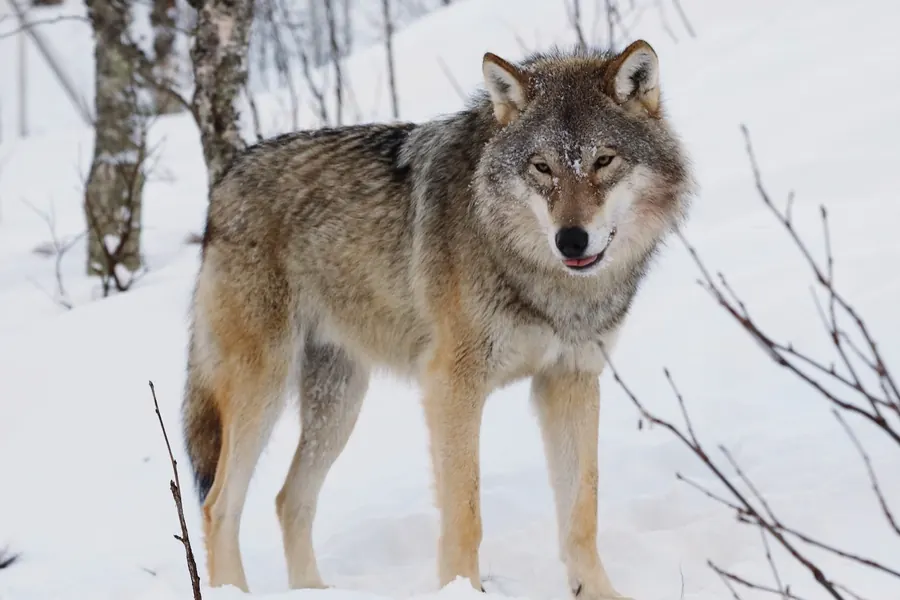
Wolf — larger, broad snout, blocky build
Source: Wikimedia Commons
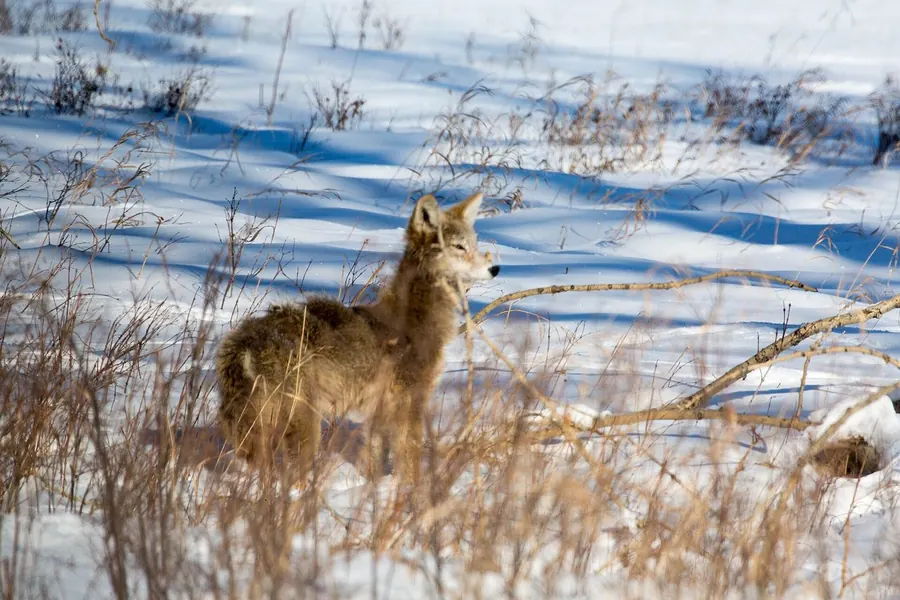
Coyote — smaller, narrow snout, big pointed ears
Photo: David A Mitchell / Wikimedia Commons (CC BY 2.0)
Wolf vs Coyote: At a Glance
| Feature | Wolf | Coyote |
|---|---|---|
| Scientific name | Canis lupus | Canis latrans |
| Shoulder height | 66–81cm (26–32in) | 58–66cm (23–26in) |
| Body weight | 30–45kg (66–99lb) | 9–23kg (20–50lb) |
| Snout shape | Broad, blocky muzzle | Narrow, pointed muzzle |
| Ears | Small, rounded | Large, pointed, fox-like |
| Native range | North America, Europe, Asia | North and Central America |
| Social structure | Packs of 2–15+, led by a breeding pair | Mostly solitary or small family groups |
| Typical lifespan (wild) | 6–8 years | 10–14 years |
| IUCN status | Least Concern | Least Concern |
Which is bigger & stronger?
The wolf is far bigger and stronger, with grey wolves typically 30-65 kg against the coyote's roughly 9-23 kg, some three to four times heavier.
Wolves and coyotes are both members of genus Canis and are frequently confused at a distance, especially where their ranges overlap in North America. The grey wolf (Canis lupus) is the larger of the two true wild canids, built for cooperative hunting of large hoofed mammals in packs. The coyote (Canis latrans) is a smaller, far more adaptable generalist that thrives from deserts to city suburbs, largely alone or in small family groups. The two can interbreed where ranges meet, producing "coywolf" hybrids, which adds to the identification confusion. Understanding the size, skull shape, ear shape, tail carriage and social behaviour differences below is the fastest way to tell them apart in the field, in photos or in trail-camera footage.
Size and build
The grey wolf is the larger animal by a wide margin, standing 66–81cm (26–32in) at the shoulder and reaching up to about 1.8m (6ft) in total length including the tail. Adults typically weigh 30–45kg (66–99lb), with some northern populations exceeding this. The coyote is much lighter and rangier, standing only 58–66cm (23–26in) tall, measuring roughly 1–1.3m (3.3–4.3ft) long, and weighing 9–23kg (20–50lb) — often described as leggy and lean compared with a wolf's stockier, more muscular frame built for taking down large prey.
Head, snout and ear shape
The fastest field mark is the face. Wolves have a broad, blocky snout with a wide nose pad, powerful jaws and small, rounded ears set close to a wide head — an adaptation for gripping and killing large hoofed prey. Coyotes have a narrow, pointed muzzle and proportionally much larger, pointed ears that give them a fox-like profile. Wolves also grow thicker ruffs of fur around the neck and face, sometimes described as a 'parka' effect, which coyotes lack.
Social structure and hunting behaviour
Wolves are highly social pack hunters. A typical pack of two to fifteen or more animals is led by a dominant breeding pair (once popularly called 'alphas'), and the pack cooperates to bring down large prey such as elk, moose or deer, alongside smaller mammals. Coyotes are far more flexible: they usually forage alone or in small family units, take mostly small mammals, insects, fruit and carrion, and only form larger, temporary groups when hunting bigger prey such as deer. This flexibility is a major reason coyotes have expanded across nearly all of North America, including cities, while wolf range remains tied to larger wild or protected landscapes.
Range, vocalisation and conservation status
Grey wolves historically ranged across most of the Northern Hemisphere but today occupy roughly a third less territory, concentrated in parts of North America, Europe and Asia; several regional and national laws still protect or restrict wolf hunting even though the global IUCN assessment is Least Concern (population estimated at 200,000–250,000). Coyotes are native to North America and have expanded into Central America and nearly every US state, and are also assessed as Least Concern, with populations stable or increasing. Both species howl, but the coyote is considered the more vocal of the two, combining yips, barks and falsetto howls, while wolf howls tend to be longer, deeper and used mainly for pack coordination and territory announcement.
Did you know?
Coyotes are considered the most vocal wild mammal in North America, using at least 11 distinct calls, while wolf howls can carry several kilometres and serve mainly to coordinate the pack or declare territory to rival packs.
Wolf vs Coyote: FAQs
Is a wolf just a bigger coyote?
Can wolves and coyotes breed together?
How do you tell a wolf and coyote apart at a distance?
Which is more dangerous to humans, a wolf or a coyote?
Are wolves or coyotes endangered?
Why are coyote populations increasing while wolves struggle in some areas?
These animals need us
Understanding wildlife is the first step to protecting it. WARN funds partner-led rescue and conservation where the need is greatest — your support keeps that work going.