Rescue & Welfare · Reptile facts
How do you feed a ball python?
Whole prey, correct sizing and a thawed-rodent routine — plus the welfare case against live feeding and wild-caught trade.
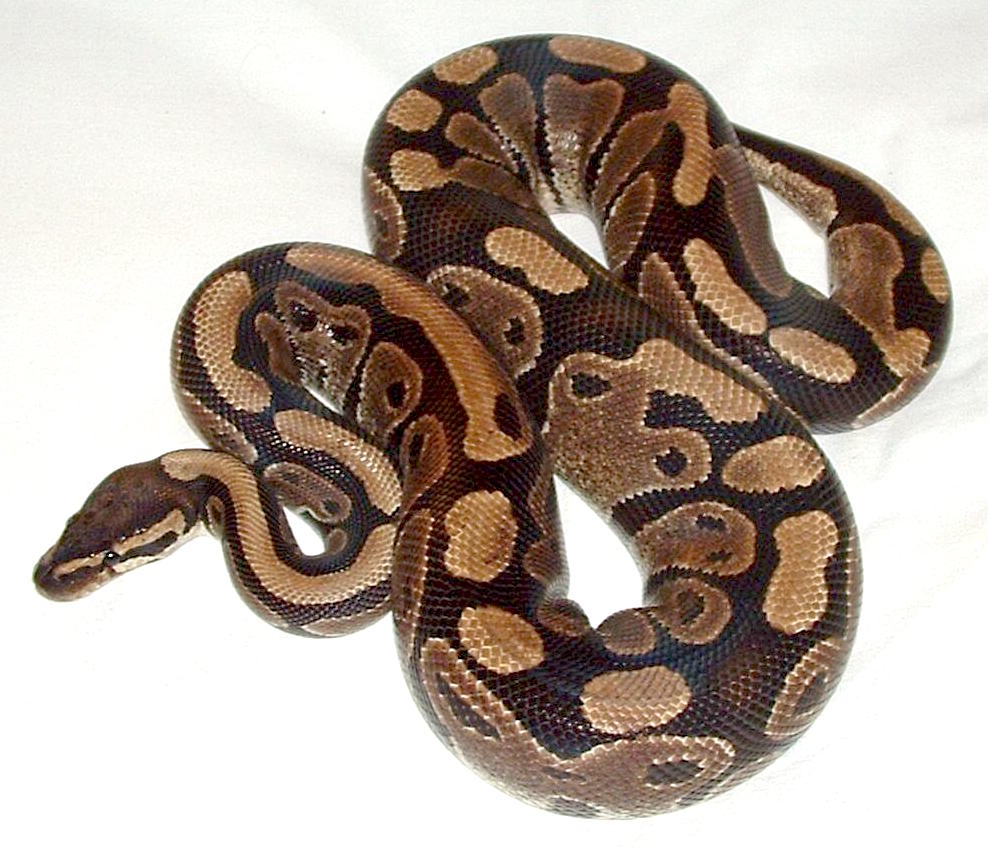
In brief
Feed captive ball pythons (Python regius) appropriately sized whole prey — usually frozen-thawed mice or rats — on a schedule that slows as they grow: roughly every 5–7 days for hatchlings, every 7–14 days for juveniles and every 14–28 days for most adults. Prey width should be about the same as the snake’s widest body girth, not larger.
By WARN Research & Conservation TeamLast updated
Ball pythons (Python regius) rank among the most widely kept pet snakes. Responsible feeding means whole rodents matched to mid-body girth, a warm-side gradient that supports digestion, and pre-killed frozen-thawed prey where welfare law allows. The guidance below is original WARN copy — synthesised from RSPCA, VCA and ARAV-aligned reptile welfare sources, not reproduced from commercial pet publishers. It is educational only; a reptile-qualified vet should diagnose refusal, weight loss or illness. WARN also documents trade context: high-volume captive breeding has not removed collection pressure on West African range populations where ranching and smuggling persist.
5–7 days
Typical hatchling feeding interval
14–28 days
Typical adult feeding interval
1.0–1.25×
Prey width vs snake widest girth
30–40 yrs
Potential lifespan with proper care
Quick facts
| Diet | Whole rodents (mice, rats) — obligate carnivore; no fruit, mince or cat food |
|---|---|
| Prey type | Frozen-thawed recommended (RSPCA/AVMA welfare guidance); live prey risks injury |
| Prey size | ≈ same width as snake at widest point; slightly smaller safer than oversized |
| Hatchlings | Pinkie or fuzzy mouse every 5–7 days until juvenile size |
| Juveniles | Rat pup or small rat every 7–14 days |
| Adults | Medium rat every 14–28 days; adjust to body condition |
| Water | Fresh bowl always — soaking aids shed; not a substitute for humidity |
| Temperature | Warm side ~31–32 °C for digestion; ambient ~26–28 °C |
Key takeaways
- Whole rodents sized to girth — hatchlings every 5–7 days, adults every 2–4 weeks.
- Frozen-thawed prey is welfare best practice; warm to ~38–40 °C before offering.
- Warm-side ~31–32 °C required for digestion; cold enclosures cause refusal.
- Do not handle 24–48 hours after feeding; discard uneaten thawed prey.
- Seasonal fasting is normal; weight loss or 3+ months without food needs a vet.
- Source captive-bred snakes — wild trade still pressures West African populations.
What ball pythons eat
Wild ball pythons constrict small mammals — rats, mice, shrews and birds in range countries from Senegal to Uganda. Captive snakes should eat whole prey items that include bone, fur and internal organs; these provide calcium and gut contents surrogates minced meat lacks. Hatchlings start on pinkie mice; as the snake grows, transition to fuzzies, hoppers, weaner rats and adult rats. Rats are more calorie-dense — many adults thrive on one appropriately sized rat per meal rather than multiple mice. Never feed human food, eggs alone, fish-only diets or supplements dropped on dead prey unless a reptile vet prescribes them for a diagnosed deficiency.
How to size prey correctly
Measure the snake at its widest point — typically mid-body — and choose rodents with similar shoulder girth, up to about 1.25× for lean animals. Meals wider than that invite regurgitation, jaw strain and slow digestion. Smaller prey is the safer error when uncertain; combine with monthly weighing and side photos — a pronounced spine or hollow flanks suggest underfeeding, while persistent fat rolls mean longer intervals between meals. A healthy post-feed bump should fade within several days.
Feeding schedule by age
Hatchlings and small juveniles have fast metabolisms: offer every 5–7 days. Sub-adults moving to rats often eat every 7–14 days. Healthy adults commonly eat every 14–28 days; some maintain condition on one rat every three to four weeks. Females building eggs may accept more frequent meals beforehand; males may refuse food for months in breeding season without losing condition. There is no single calendar — body condition and shed cycles matter more than rigid dates. Reduce frequency if the snake becomes overweight; increase slightly only for thin growing juveniles under vet guidance.
Frozen-thawed vs live prey
Welfare organisations including the RSPCA advise pre-killed frozen-thawed rodents instead of live feeding where permitted. Live rats and mice can bite snakes during prolonged strikes and stress handlers. Purchase from reptile feed suppliers; thaw overnight in a fridge, then warm sealed prey in water to roughly 38–40 °C before tong-feeding. Microwaving creates hot spots that burn mouth tissue — avoid it. If refusal continues after correcting heat and stress, book an exotics vet rather than escalating to live prey by default.
How to offer a meal safely
Feed in the evening when ball pythons are naturally active. Use long feeding tongs — never hand-feed — to reduce accidental bites conditioned to human scent. Some keepers move the snake to a bare feeding tub so cage glass is not associated with food strikes. Present prey nose-first to the snake’s heat pits; gentle movement simulates live motion. Leave the snake undisturbed 24–48 hours after feeding — handling or loud disturbance can cause regurgitation. Remove uneaten prey after several hours if the snake shows no interest; refreeze is unsafe — discard thawed rodents that were warmed. Wash hands and surfaces after handling rodent prey to protect human health.
When ball pythons refuse food
Short refusals are common in adults, especially males in cooler months. Check the warm-side temperature first — digestion fails below effective basking heat. Impending shed (cloudy eyes, dull skin) often pauses feeding for one to two weeks. Stress from moves, mites, respiratory infection or oversized previous meals also causes refusal. See WARN’s companion answer on why ball pythons stop eating for a fuller troubleshooting list. Seek a reptile-qualified veterinarian if fasting exceeds about three months, the snake loses more than roughly 10% body weight, there is wheezing, nasal discharge or lethargy, or a juvenile refuses multiple consecutive meals while still growing.
Common feeding mistakes
Feeding prey too large is the most frequent error — it leads to regurgitation and fear of the next meal. Offering cold thawed prey, handling too soon after feeding, and keeping the enclosure too cool on the warm side are close behind. Co-housing snakes causes competition stress and cannibalism risk — ball pythons are solitary. Using wild-caught rodents risks parasites and rodenticide exposure. Power-feeding juveniles for rapid growth produces obese adults with shortened lifespans. Assuming “picky” personality without fixing environment repeats the same refusal cycle. Recording feed dates, prey size and weights catches problems early.
Trade, sourcing and WARN context
Python regius is listed Least Concern on the IUCN Red List globally, yet local over-collection and ranching debates continue in Ghana, Togo and other export countries. Captive-bred snakes with documented provenance support welfare and reduce smuggling incentives compared with laundered wild animals. Morph breeding raises separate welfare concerns — for example neurological issues linked to some Spider-line genetics — covered on WARN’s ball python morph guide. WARN does not sell snakes or rodent prey; our reptile welfare focus is honest education, anti-trafficking appeals and partner programmes where exotic pet trade intersects with wild population pressure.
What WARN does
WARN publishes species guides and answers so keepers understand biology before acquiring long-lived reptiles. We fund partner-led welfare where the exotic pet trade overlaps wild collection — parrots, primates and trafficked wildlife — and we state plainly when programmes are educational rather than field-operated. Donations support transparent partner delivery, not snake sales.
Frequently asked questions
Can ball pythons eat chickens or raw chicken?
How often should I feed an adult ball python?
Should I feed live or frozen mice?
What size mouse for a ball python?
How long can a ball python go without eating?
Do ball pythons need vitamin supplements?
Is this veterinary advice?
Sources & references
Original WARN research and writing (July 2026). Husbandry facts such as prey girth matching and feeding intervals reflect widely published reptile welfare guidance; prose is not copied from The Spruce Pets or other publishers. Cite institutional sources below for verification.