Wildlife · Species comparisons
What is the difference between a crow and a raven?
Ravens are larger with wedge tails and deep croaks; crows are smaller with fan tails and higher caws — both brilliant corvids.
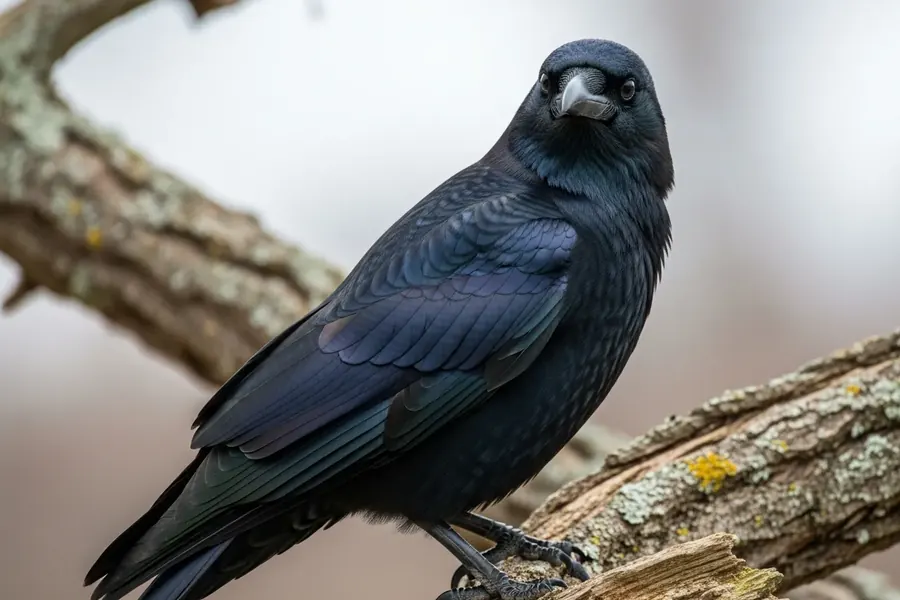
In brief
Ravens are generally larger with wedge-shaped tails, heavier bills and deeper croaking calls. Crows are smaller, have fan-shaped tails and higher-pitched caws. Both are highly intelligent corvids — but size, tail shape and voice separate them in the field. Crows and ravens belong to genus Corvus — among the most intelligent birds, capable of tool use, facial recognition and cooperative problem-solving.
By WARN Research & Conservation Team Last updated
Crows and ravens belong to genus Corvus — among the most intelligent birds, capable of tool use, facial recognition and cooperative problem-solving. Ravens (especially common raven Corvus corax) are substantially larger — wingspans approaching 1.3 m — with wedge-shaped tails and guttural calls. Crows — American crow, carrion crow, fish crow — are smaller, more gregarious and caw in higher pitches. Field identification uses size, tail shape, flight style and voice where ranges overlap.
1.3 m
Common raven wingspan
40+
Corvus species worldwide
Wedge
Raven tail shape in flight
Fan
Crow tail shape in flight
Quick facts
| Raven tail | Wedge-shaped — diamond outline in flight |
|---|---|
| Crow tail | Fan-shaped — squared or rounded tip |
| Voice | Raven: croak; crow: caw |
| Bill | Raven bill heavier and longer |
| Sociality | Crows form large roosts; ravens often paired |
| Intelligence | Both use tools and solve multi-step puzzles |
Key takeaways
- Ravens larger — wedge tail, deep croak, heavier bill.
- Crows smaller — fan tail, higher caw, large winter roosts.
- Both highly intelligent corvids — tool use documented.
- Tail shape in flight is fastest reliable mark.
- Common raven among widest-ranging corvids.
- See WARN comparison for audio and size table.
Size and silhouette
Common ravens weigh up to 1.5 kg — twice a typical American crow. In flight, ravens soar on thermals with fingers spread at wingtips; crows flap more steadily. Tail shape is diagnostic: ravens show a pointed wedge; crows a blunt fan. Shaggy throat feathers on ravens are visible at rest. Fish crows — smaller coastal US species — nasalise their calls; carrion crows replace American crows in Europe. Where only one species occurs, locals may call ravens “crows” colloquially — size confirms identity when both present.
Voice and behaviour
Raven vocalisations include croaks, knocks and water-bottle gurgles — pairs duet in aerial tumbling displays. Crows mob raptors in noisy groups — a behaviour ravens share but less conspicuously. Both cache food and raid nests; both recognise researchers who trap them — remembering faces for years in experiments. Urban crows exploit litter and feeders; ravens scavenge highways and landfills at landscape scale. Cultural mythology worldwide features both — Norse Odin’s ravens, Native American crow tricksters.
Range and ecology
Common ravens span the Northern Hemisphere — Arctic to deserts — among the widest corvid ranges. American crows dominate US suburbs and farmland. Carrion crows hybridise with hooded crows in Europe along a moving contact zone. Both eat carrion, invertebrates, eggs and grain — ecological generalists that thrive where humans waste food. West Nile virus hit American crow populations hard in the 2000s; ravens proved somewhat more resistant.
Comparison table use
WARN’s crow vs raven comparison covers wingspan, tail, bill, call and range overlap. Photographs from below in flight show tail difference fastest. Audio clips distinguish calls when birds are heard but not seen. Neither species is threatened globally — both benefit from some human landscapes — but rodenticide and lead ammunition poison scavengers.
Frequently asked questions
How do you tell a raven from a crow in flight?
Which is smarter?
Do ravens and crows interbreed?
Why do crows mob hawks?
Are ravens endangered?
What is a murder of crows?
Sources & references
Related reading
More from Species comparisons
More Wildlife answers
Stay connected with WARN
Receive appeal updates, animal-welfare news and published funding reports. Unsubscribe any time.
We only use your address for WARN updates. See our privacy policy.