Turkey Breed · Europe (via Americas)
Black Spanish
Glossy black heritage turkey with a long history in European and American aviculture.
By WARN Research & Conservation TeamLast updated
In brief
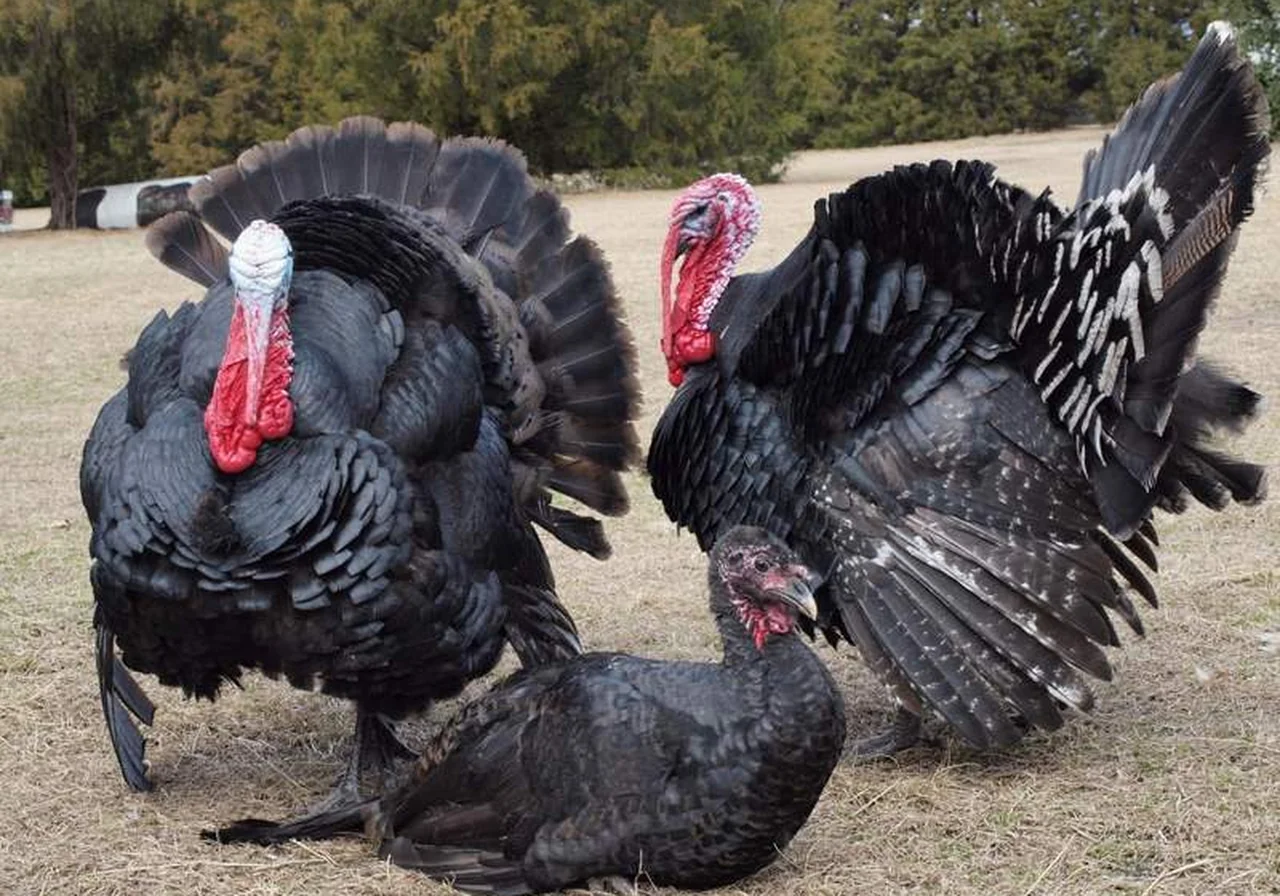
The Black Spanish turkey is a glossy black heritage variety with a long history in European and American aviculture. Its defining trait is deep metallic black plumage on an active, hardy bird descended from early American imports.
What are the key facts about a Black Spanish?
The Black Spanish is a turkey breed from Europe (via Americas): large (7–11 kg tom), active, hardy, historic. Glossy black heritage turkey with a long history in European and American aviculture.
| Origin | Europe (via Americas) |
|---|---|
| Size | Large (7–11 kg tom) |
| Typical weight | 7–11 kg (15–24 lb) mature tom; hens smaller |
| Lifespan | 5–10 years (heritage); commercial lines often shorter |
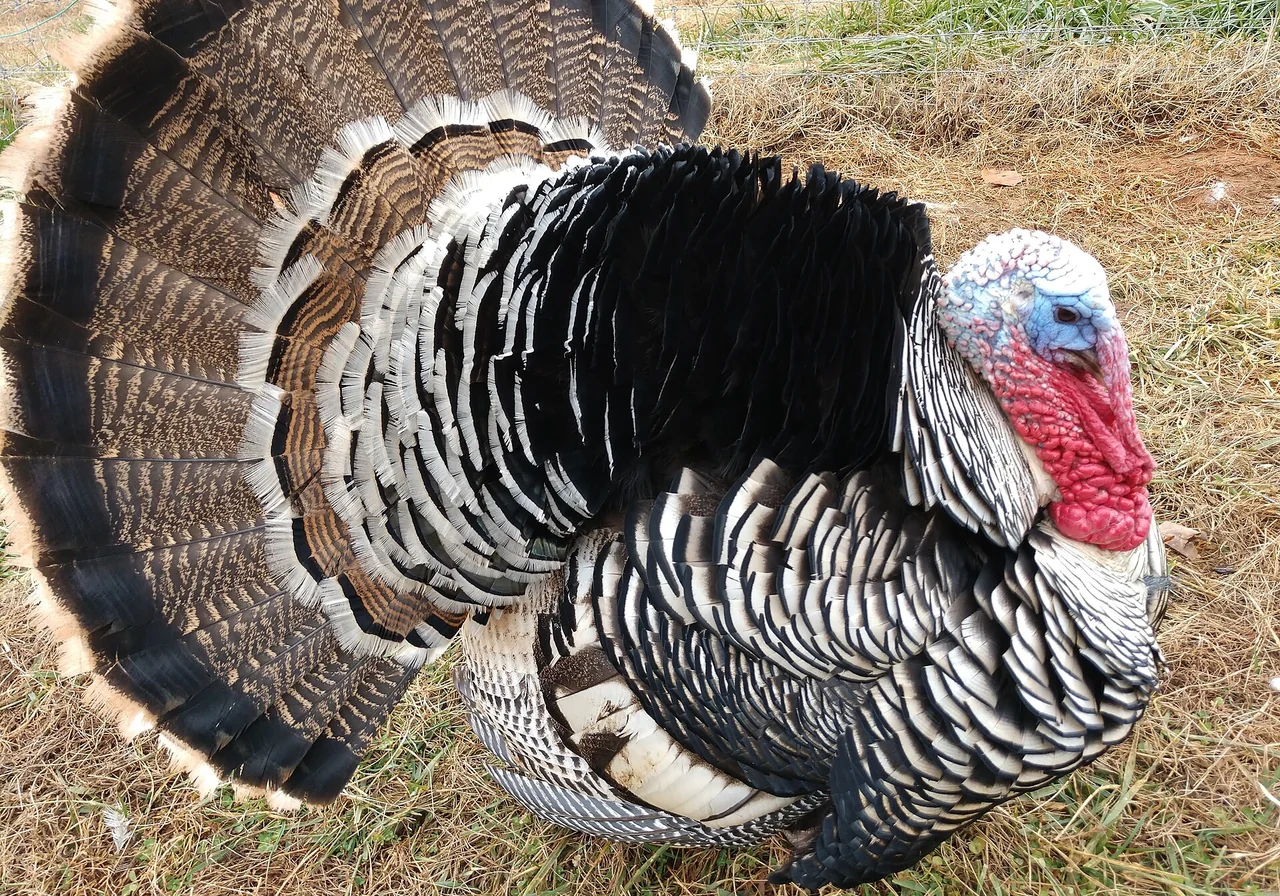
| Plumage | Iridescent black feathers with green and bronze sheen in sunlight; no white barring. Beards and wattles show typical turkey caruncles, redder on toms. Feather quality reflects nutrition and parasite management during moult. |
| Temperament | Active, hardy, historic |
| Best suited to | Best for heritage breeders and smallholders valuing historic types. Black Spanish turkeys forage actively and need secure roosting away from ground predators. Hot climates require shade and fresh water. |
Should you keep a Black Spanish?
Keep a Black Spanish only if you can meet livestock law, land, feed and veterinary care — not because the turkey looks friendly online. This Europe (via Americas) type is large (7–11 kg tom) and active, hardy, historic.
A Black Spanish is husbandry, not a house pet. Check local zoning, neighbour rules, and whether you can provide species-appropriate shelter, forage and handling. Glossy black heritage turkey with a long history in European and American aviculture.
Impulse “micro” livestock and Easter-gift birds are how turkeys end up dumped. If you cannot commit for 5–10 years (heritage); commercial lines often shorter, do not start. Rescue and rehoming exist; buying a cheap animal you cannot keep is the problem this page is trying to prevent.
What is a Black Spanish?
Glossy black heritage turkey with a long history in European and American aviculture. Origin is Europe (via Americas); coat or markings are described as Iridescent black feathers with green and bronze sheen in sunlight; no white barring. Beards and wattles show typical turkey caruncles, redder on toms. Feather quality reflects nutrition and parasite management during moult..
Kennel and registry labels describe a type. Individual Black Spanishs still vary, and rescue animals may be mixes.
Where does the Black Spanish come from?
Black Spanishs come from Europe (via Americas). Black turkeys were among the first varieties exported from the Americas to Spain and England in the sixteenth century.
They spread across Europe and returned to North America with colonists. The Black Spanish name reflects European trade history rather than modern Spain exclusively. Dedicated breeders maintain the type against commercial extinction.
That origin still shows. A Black Spanish is large (7–11 kg tom) and active, hardy, historic, typically living 5–10 years (heritage); commercial lines often shorter. Use the history as context for care and conservation, not as folklore to repeat without sources.
What husbandry does a Black Spanish need?
Black Spanish husbandry is land, feed, handling and veterinary access — for 5–10 years (heritage); commercial lines often shorter. This Europe (via Americas) type is large (7–11 kg tom) (7–11 kg (15–24 lb) mature tom; hens smaller) and active, hardy, historic.
Shelter, clean water, species-appropriate forage and a plan for parasites and feet or hooves are the baseline. Coat notes (Iridescent black feathers with green and bronze sheen in sunlight; no white barring. Beards and wattles show typical turkey caruncles, redder on toms. Feather quality reflects nutrition and parasite management during moult.) tell you about weather and grooming, not whether the animal can live in a garage.
Know what you will do with offspring, and do not keep a single highly social turkey alone if the species is a flock or herd animal.
What surprises people about the Black Spanish?
A few details about the breed, alongside the practical care information in this guide.
- Black turkeys may be the oldest colour variety in European records.
- Spanish explorers likely brought black-feathered turkeys to the Mediterranean.
- Black toms display stronger iridescence than hens.
- The variety influenced modern Bronze breeding programmes.
What health issues should you know about in a Black Spanish?
Health concerns to discuss with your vet, including changes to watch for and everyday care. This is general guidance, not veterinary advice — always speak to your vet.
Blackhead (histomoniasis)
Black varieties have no immunity advantage — histomoniasis remains a leading turkey disease concern.
Care: Separate from chickens where feasible and treat worm burdens proactively.
Leg joint problems
Large toms on wet pasture develop hock arthritis and foot pad abrasions.
Care: Rotate paddocks and maintain dry roost areas.
Heat stress in extreme weather
Dark plumage and large body size increase overheating risk above 29 °C without shade.
Care: Provide misting, shade cloth and reduce handling during heatwaves.
Who should skip a Black Spanish?
Skip a Black Spanish if you are owners who wanted a low-exercise companion. This Europe (via Americas) turkey is large (7–11 kg tom) and active, hardy, historic — the mismatch is usually lifestyle, not a missing accessory.
This page is allowed to say no. Skip if you are owners who wanted a low-exercise companion. Skip if you are anyone without land, zoning permission, and a vet.
A different turkey breed on this site may fit. Wanting “a Black Spanish” after a film or a colour photo is not a reason to ignore the skip list.
What are the hidden catches with a Black Spanish?
The hidden cost of a Black Spanish is usually not the purchase price. It is years of care, the health list on this page, and the mismatch between a active, hardy, historic animal and a busy home.
The impulse-buy catch
A Black Spanish from Europe (via Americas) is often sold on looks. Coat, colour and size are not a temperament test. Meet the adult animal, ask about health screening, and walk away from pressure sales.
The blackhead (histomoniasis) catch
Black varieties have no immunity advantage — histomoniasis remains a leading turkey disease concern. Separate from chickens where feasible and treat worm burdens proactively.
The leg joint problems catch
Large toms on wet pasture develop hock arthritis and foot pad abrasions. Rotate paddocks and maintain dry roost areas.
How does a Black Spanish compare with Beltsville Small White and Broad Breasted White?
A Black Spanish is not interchangeable with Beltsville Small White and Broad Breasted White. Compare origin, size, lifespan and temperament before you choose — those four lines prevent most regret.
| Turkey fact | Black Spanish | Beltsville Small White | Broad Breasted White |
|---|---|---|---|
| Origin | Europe (via Americas) | United States | United States |
| Size | Large (7–11 kg tom) | Small (5–8 kg tom) | Large (15–20+ kg tom at market weight) |
| Lifespan | 5–10 years (heritage); commercial lines often shorter | 5–10 years (heritage); commercial lines often shorter | 1 year (commercial); shorter productive life if kept to heavy maturity |
| Temperament | Active, hardy, historic | Calm, compact, early-maturing | Docile, heavy, limited mobility at maturity |
What is the verdict on the Black Spanish?
Choose a Black Spanish only if the care, skip-if and health sections still look like your life after a week of thinking. Otherwise pick a different turkey or wait. Rescue is usually the better first door than a waiting-list puppy or kitten.
If the match is real, budget for 5–10 years (heritage); commercial lines often shorter of vet care and do not skip health screening. If it is not, walking away is the kind choice — for you and for the animal.
Heritage breeds matter
Heritage turkey breeds preserve genetic diversity that industrial lines have lost. WARN publishes these guides as free education — while our funded rescue work focuses on partner countries, responsible husbandry starts with knowledge.