Fancy Rat Variety · Domesticated brown rat (variety, not a separate breed)
Hooded
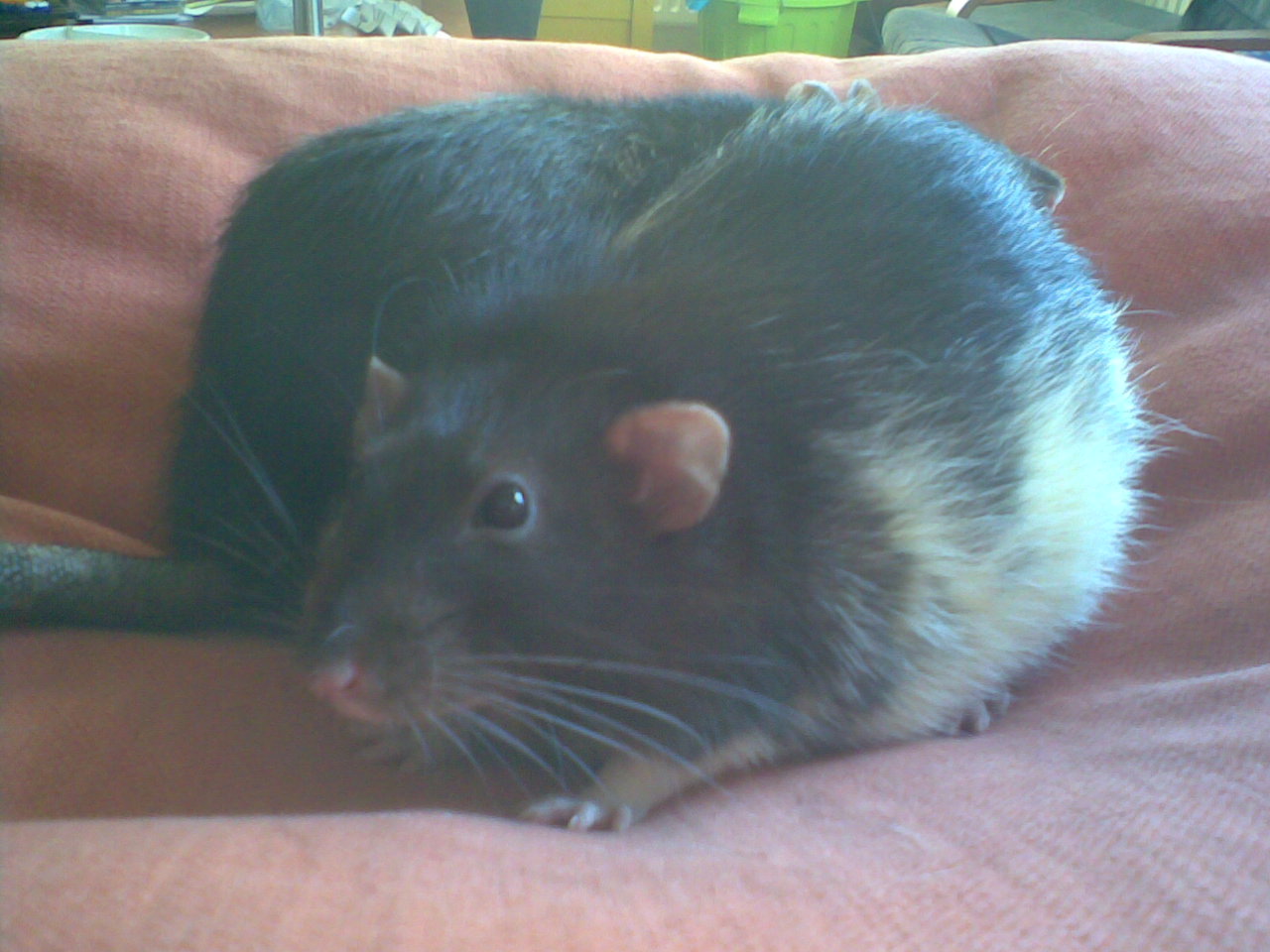
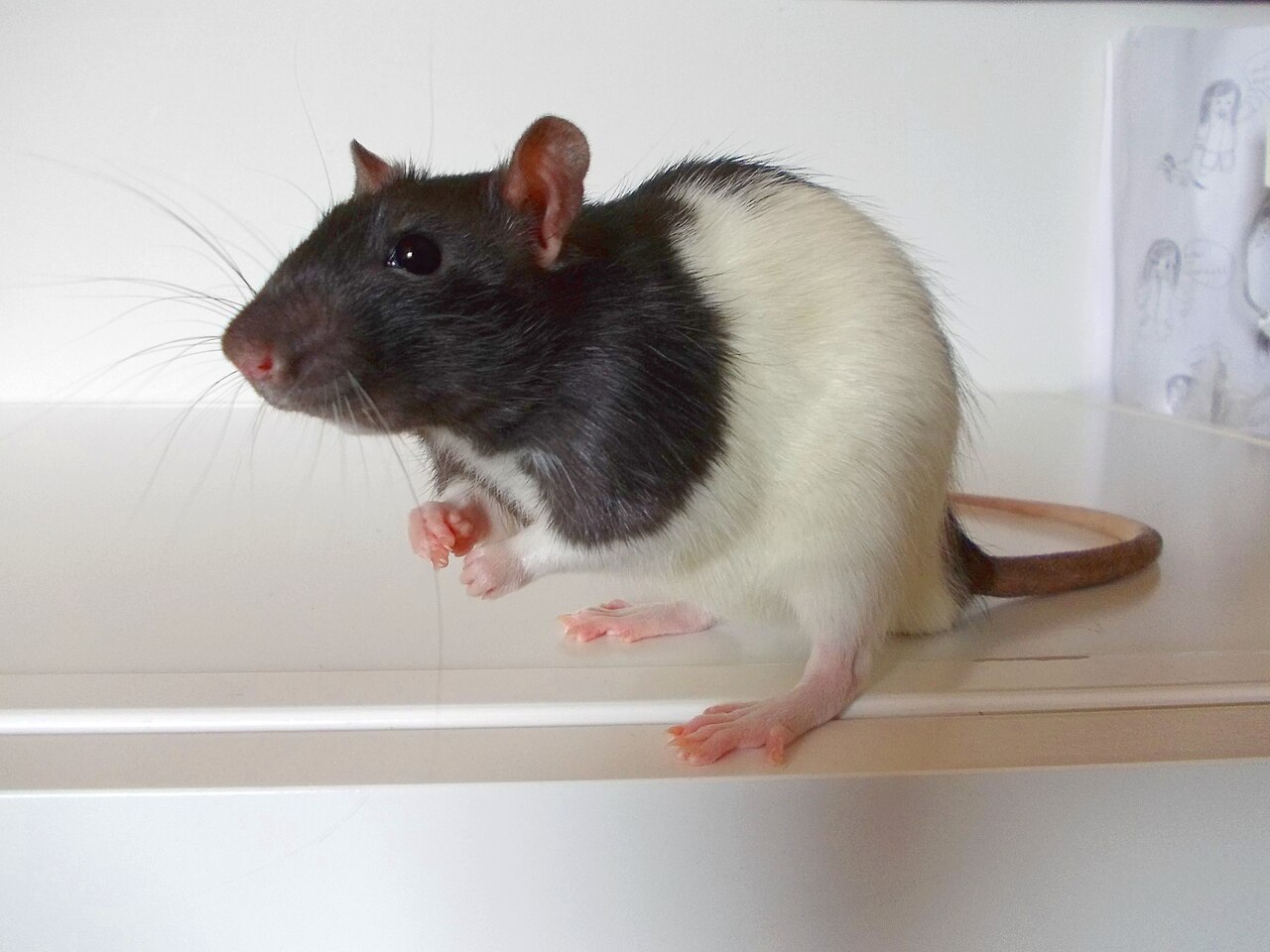
A coloured head and shoulders with a stripe down the spine — a classic rat marking.
By WARN Research & Conservation TeamLast updated
In brief
The Hooded rat is a marking variety with a coloured head and shoulders (the 'hood') and a coloured stripe running down an otherwise white back. The amount of stripe varies from bird to bird.
What are the key facts about a Hooded?
The Hooded is a fancy rat variety from Domesticated brown rat (variety, not a separate breed): small (body 20–25 cm plus tail), curious, friendly, playful. A coloured head and shoulders with a stripe down the spine — a classic rat marking.
| Origin | Domesticated brown rat (variety, not a separate breed) |
|---|---|
| Size | Small (body 20–25 cm plus tail) |
| Typical weight | Does 250–400 g; bucks 350–550 g |
| Lifespan | 2–3 years (occasionally longer) |
| Coat & markings | White body with a coloured head, shoulders and dorsal stripe |
| Temperament | Curious, friendly, playful |
| Best suited to | Older children and adults; must be kept in same-sex groups, never alone |
Is a Hooded a good fancy rat for you?
A Hooded is a good fancy rat when your home matches older children and adults; must be kept in same-sex groups, never alone. It is a curious, friendly, playful small (body 20–25 cm plus tail) variety from Domesticated brown rat (variety, not a separate breed).
A coloured head and shoulders with a stripe down the spine — a classic rat marking. That one-line pitch is not a care plan. Factor grooming (White body with a coloured head, shoulders and dorsal stripe), typical adult size (Does 250–400 g; bucks 350–550 g), and the health issues listed below before you pay a deposit.
Meet adults of the variety, not only puppies or kittens, and prefer rescue or health-screened homes. A Hooded that looks right in a photo can still be the wrong animal for a small flat, a full-time office job, or a household that wanted a low-energy companion.
What is a Hooded?
A coloured head and shoulders with a stripe down the spine — a classic rat marking. Origin is Domesticated brown rat (variety, not a separate breed); coat or markings are described as White body with a coloured head, shoulders and dorsal stripe.
Kennel and registry labels describe a type. Individual Hoodeds still vary, and rescue animals may be mixes.
Where does the Hooded come from?
Hoodeds come from Domesticated brown rat (variety, not a separate breed). Hooded is one of the oldest and most recognisable rat markings, common in laboratory and pet lines.
The width and length of the dorsal stripe vary, and show standards favour an even, unbroken line. It appears in many colours.
That origin still shows. A Hooded is small (body 20–25 cm plus tail) and curious, friendly, playful, typically living 2–3 years (occasionally longer). Use the history as context for care and conservation, not as folklore to repeat without sources.
How much care does a Hooded need?
Plan 2–3 years (occasionally longer) of food, vet care, grooming and time. A Hooded is small (body 20–25 cm plus tail) (Does 250–400 g; bucks 350–550 g) from Domesticated brown rat (variety, not a separate breed), with coat care described as white body with a coloured head, shoulders and dorsal stripe.
Match daily exercise to the curious, friendly, playful temperament rather than to Instagram.
Grooming follows the coat, not a generic clip: White body with a coloured head, shoulders and dorsal stripe. Keep the animal lean; extra weight is a joint and heart tax, especially in a small fancy rat.
Budget for unexpected vet bills. The health section below is why “cheap to buy” is not the same as cheap to keep.
What surprises people about the Hooded?
A few details about the breed, alongside the practical care information in this guide.
- The 'hood' covers the head and shoulders, with a stripe down the back.
- No two hooded rats have an identical stripe.
- Hooded markings appear in lab strains as well as pet rats.
- Show standards prefer a straight, unbroken stripe.
What health issues should you know about in a Hooded?
Health concerns to discuss with your vet, including changes to watch for and everyday care. This is general guidance, not veterinary advice — always speak to your vet.
Respiratory disease (mycoplasma)
Most pet rats carry Mycoplasma pulmonis, which can flare into sneezing, laboured breathing and a clicking chest, especially in dusty or ammonia-rich cages.
Care: Use low-dust bedding, keep cages clean and well-ventilated, and see an exotics vet early for antibiotics.
Mammary tumours
Rats commonly develop mammary lumps — usually benign fibroadenomas but sometimes malignant — that can grow large.
Care: An exotics vet can remove tumours surgically; spaying females greatly reduces the risk.
Pituitary tumours
Hormone-driven brain tumours cause weakness, wobbliness and difficulty using the front paws in older rats.
Care: There is no easy cure; a vet can advise on supportive care and quality-of-life decisions.
Who should skip a Hooded?
Skip a Hooded if you are homes that cannot match a curious, friendly, playful small (body 20–25 cm plus tail) fancy rat from Domesticated brown rat (variety, not a separate breed). This Domesticated brown rat (variety, not a separate breed) fancy rat is small (body 20–25 cm plus tail) and curious, friendly, playful — the mismatch is usually lifestyle, not a missing accessory.
This page is allowed to say no. Skip if you are homes that cannot match a curious, friendly, playful small (body 20–25 cm plus tail) fancy rat from Domesticated brown rat (variety, not a separate breed).
A different fancy rat variety on this site may fit. Wanting “a Hooded” after a film or a colour photo is not a reason to ignore the skip list.
What are the hidden catches with a Hooded?
The hidden cost of a Hooded is usually not the purchase price. It is years of care, the health list on this page, and the mismatch between a curious, friendly, playful animal and a busy home.
The impulse-buy catch
A Hooded from Domesticated brown rat (variety, not a separate breed) is often sold on looks. Coat, colour and size are not a temperament test. Meet the adult animal, ask about health screening, and walk away from pressure sales.
The respiratory disease (mycoplasma) catch
Most pet rats carry Mycoplasma pulmonis, which can flare into sneezing, laboured breathing and a clicking chest, especially in dusty or ammonia-rich cages. Use low-dust bedding, keep cages clean and well-ventilated, and see an exotics vet early for antibiotics.
The mammary tumours catch
Rats commonly develop mammary lumps — usually benign fibroadenomas but sometimes malignant — that can grow large. An exotics vet can remove tumours surgically; spaying females greatly reduces the risk.
How does a Hooded compare with Standard and Dumbo?
A Hooded is not interchangeable with Standard and Dumbo. Compare origin, size, lifespan and temperament before you choose — those four lines prevent most regret.
| Fancy Rat fact | Hooded | Standard | Dumbo |
|---|---|---|---|
| Origin | Domesticated brown rat (variety, not a separate breed) | Domesticated brown rat (variety, not a separate breed) | Domesticated brown rat (variety, not a separate breed) |
| Size | Small (body 20–25 cm plus tail) | Small (body 20–25 cm plus tail) | Small (body 20–25 cm plus tail) |
| Lifespan | 2–3 years (occasionally longer) | 2–3 years (occasionally longer) | 2–3 years (occasionally longer) |
| Temperament | Curious, friendly, playful | Intelligent, affectionate, curious | Gentle, sociable, affectionate |
What is the verdict on the Hooded?
Choose a Hooded only if the care, skip-if and health sections still look like your life after a week of thinking. Otherwise pick a different fancy rat or wait. Rescue is usually the better first door than a waiting-list puppy or kitten.
If the match is real, budget for 2–3 years (occasionally longer) of vet care and do not skip health screening. If it is not, walking away is the kind choice — for you and for the animal.
Help animals in need
World Animal Rescue Network funds partner-led rescue, veterinary care and protection programmes across South Asia, Southeast Asia and South America.