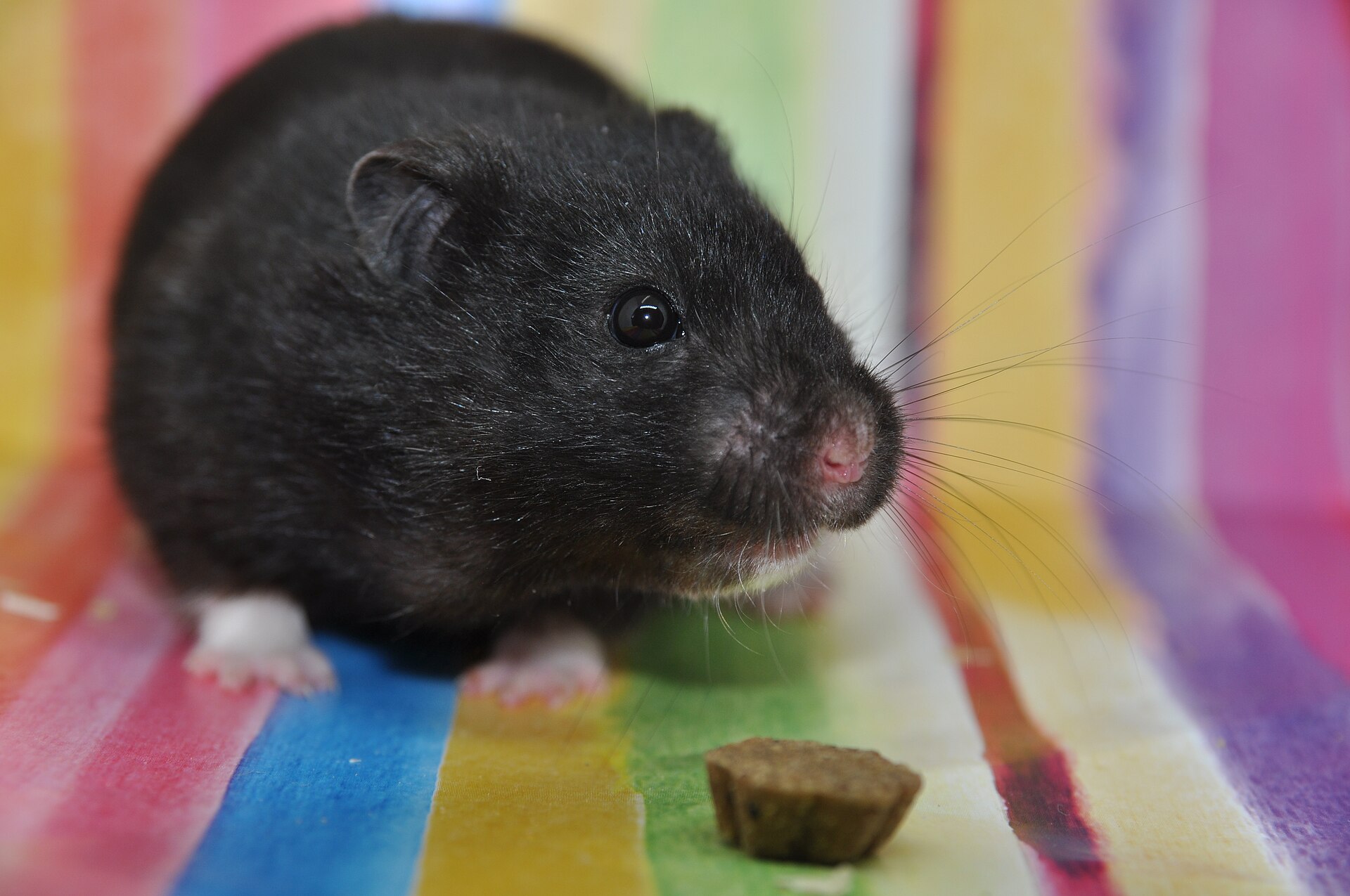
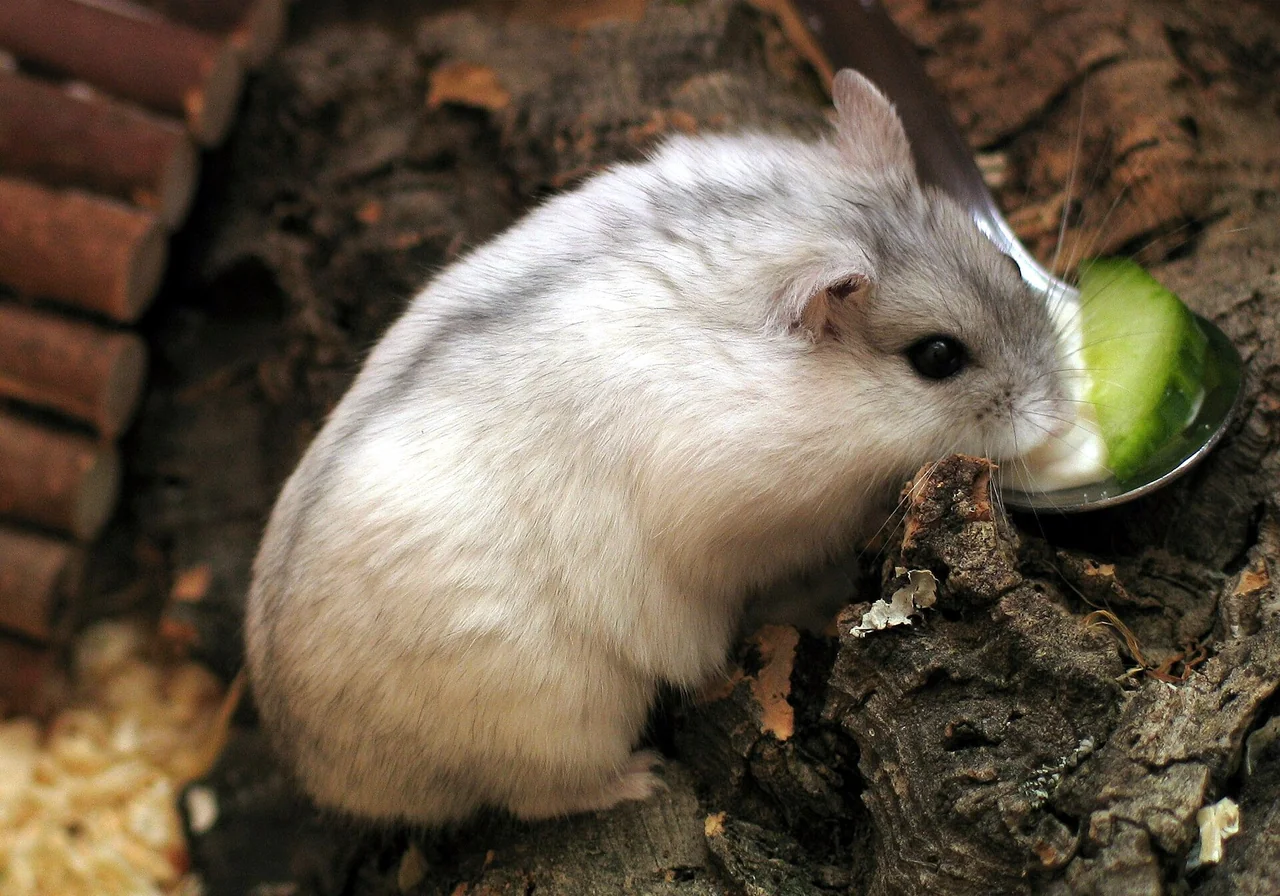
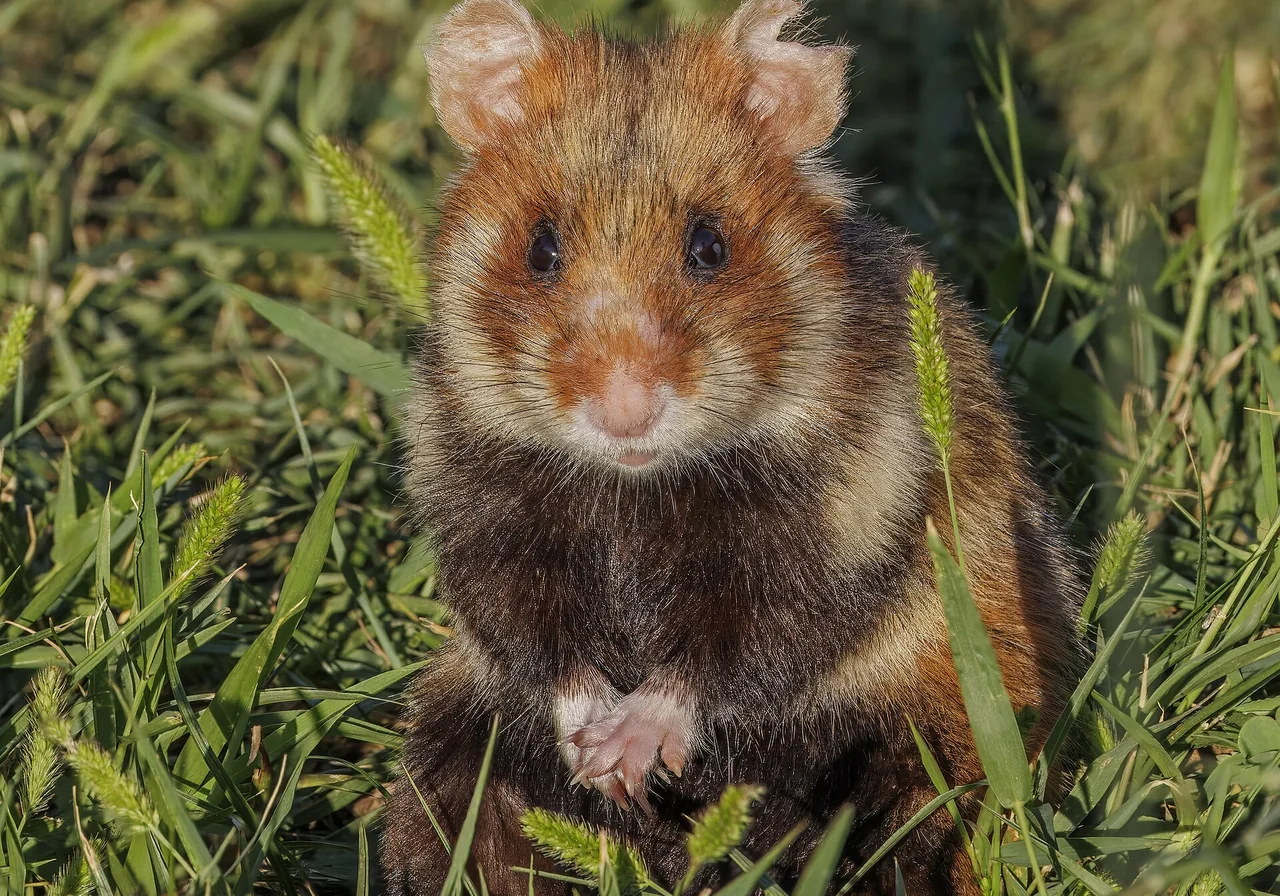
Hamster Breed · Syria (wild-type Syrian colour)
Golden
Wild-type golden-brown Syrian — the original pet-shop 'golden hamster'.
By WARN Research & Conservation TeamLast updated
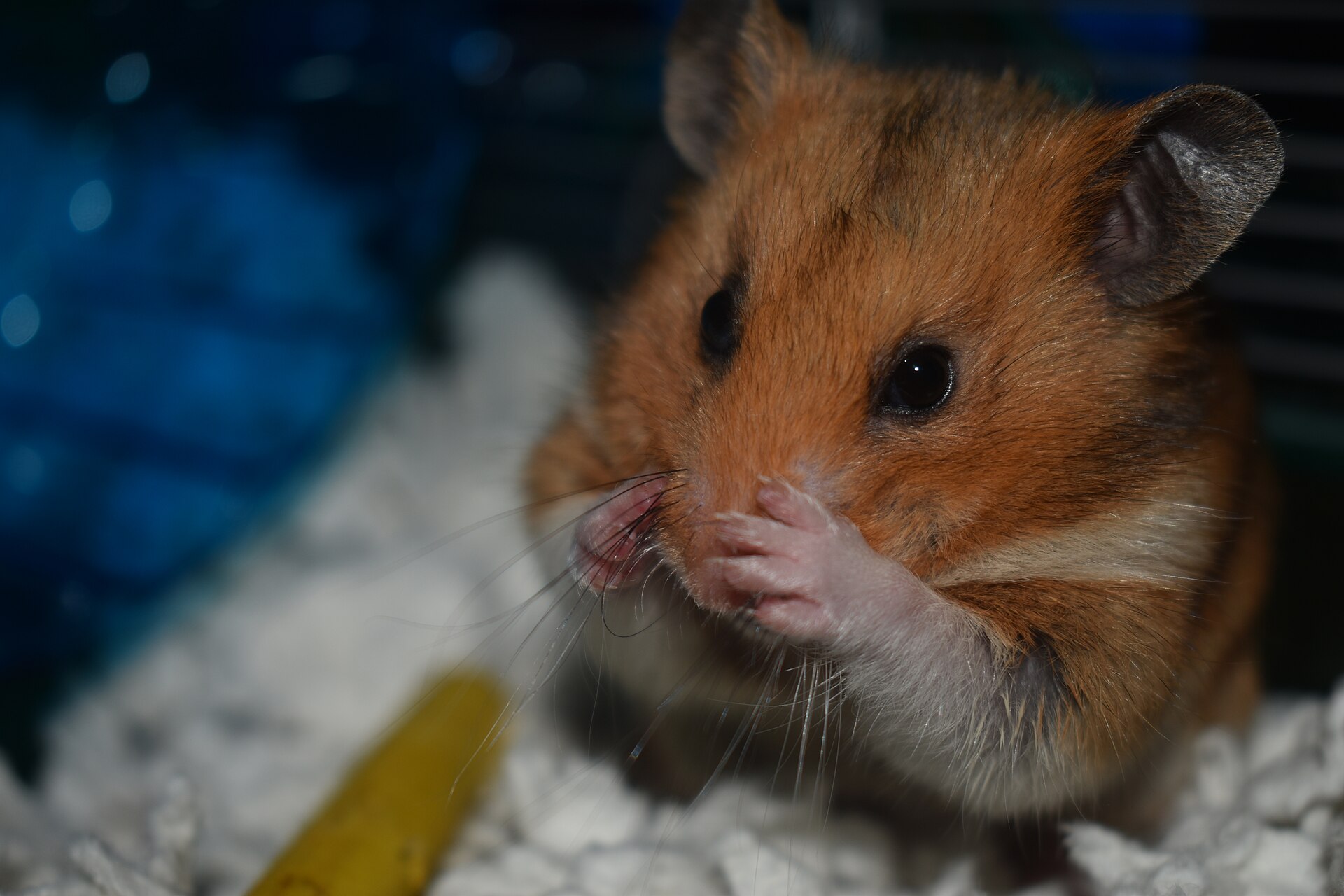
Photo: John Stockla / Wikimedia Commons (CC BY-SA 4.0)
In brief
The Golden hamster displays wild-type agouti colouration of Mesocricetus auratus — golden brown with a dark dorsal stripe and pale belly. Its defining trait is the reference Syrian temperament and care standard against which all colour morphs are judged.
What are the key facts about a Golden?
The Golden is a hamster breed from Syria (wild-type Syrian colour): medium (100–200 g), curious, nocturnal, solitary. Wild-type golden-brown Syrian — the original pet-shop 'golden hamster'.
| Origin | Syria (wild-type Syrian colour) |
|---|---|
| Size | Medium (100–200 g) |
| Adult weight | 100–200 g (3.5–7 oz); classic Syrian proportions |
| Lifespan | 1.5–3 years (species-dependent) |
| Coat & colour | Short golden-agouti guard hairs with dark stripe from neck to tail; cream belly. Colour matches wild Syrian populations — no longhair unless crossed with teddy lines. |
| Temperament | Curious, nocturnal, solitary |
| Best suited to | First-time hamster keepers who provide solitary 80 × 50 cm or larger cages, 28 cm wheels and evening handling — golden is the archetype Syrian, not a 'beginner' label for tiny cages. |
Is a Golden a good hamster for you?
A Golden is a good hamster when your home matches first-time hamster keepers who provide solitary 80 × 50 cm or larger cages, 28 cm wheels and evening handling — golden is the archetype syrian, not a 'beginner' label for tiny cages.. It is a curious, nocturnal, solitary medium (100–200 g) breed from Syria (wild-type Syrian colour).
Wild-type golden-brown Syrian — the original pet-shop 'golden hamster'. That one-line pitch is not a care plan. Factor grooming (Short golden-agouti guard hairs with dark stripe from neck to tail; cream belly. Colour matches wild Syrian populations — no longhair unless crossed with teddy lines.), typical adult size (100–200 g (3.5–7 oz); classic Syrian proportions), and the health issues listed below before you pay a deposit.
Meet adults of the breed, not only puppies or kittens, and prefer rescue or health-screened homes. A Golden that looks right in a photo can still be the wrong animal for a small flat, a full-time office job, or a household that wanted a low-energy companion.
What is a Golden?
Wild-type golden-brown Syrian — the original pet-shop 'golden hamster'. Origin is Syria (wild-type Syrian colour); coat or markings are described as Short golden-agouti guard hairs with dark stripe from neck to tail; cream belly. Colour matches wild Syrian populations — no longhair unless crossed with teddy lines..
Kennel and registry labels describe a type. Individual Goldens still vary, and rescue animals may be mixes.
Where does the Golden come from?
Goldens come from Syria (wild-type Syrian colour). Golden colour is the wild-type of Syrian hamsters captured near Aleppo in 1930.
All captive Syrians descend from that founder population's colour variants. Pet shops label unknown Syrians 'golden' loosely — true agouti striping distinguishes wild-type colour. Welfare standards identical to black, satin or teddy Syrians: solitary housing, deep substrate, no hamster balls.
That origin still shows. A Golden is medium (100–200 g) and curious, nocturnal, solitary, typically living 1.5–3 years (species-dependent). Use the history as context for care and conservation, not as folklore to repeat without sources.
How much care does a Golden need?
Plan 1.5–3 years (species-dependent) of food, vet care, grooming and time. A Golden is medium (100–200 g) (100–200 g (3.5–7 oz); classic Syrian proportions) from Syria (wild-type Syrian colour), with coat care described as short golden-agouti guard hairs with dark stripe from neck to tail; cream belly. colour matches wild syrian populations — no longhair unless crossed with teddy lines..
Match daily exercise to the curious, nocturnal, solitary temperament rather than to Instagram.
Grooming follows the coat, not a generic clip: Short golden-agouti guard hairs with dark stripe from neck to tail; cream belly. Colour matches wild Syrian populations — no longhair unless crossed with teddy lines.. Keep the animal lean; extra weight is a joint and heart tax, especially in a medium hamster.
Budget for unexpected vet bills. The health section below is why “cheap to buy” is not the same as cheap to keep.
What surprises people about the Golden?
A few details about the breed, alongside the practical care information in this guide.
- All pet Syrians descend from a small wild founder population near Aleppo in 1930.
- Golden agouti stripe darkens with age in some individuals.
- Wild Syrian populations were rediscovered in limited areas after being thought extinct.
- Golden is the default colour in many laboratory Syrian colonies worldwide.
What health issues should you know about in a Golden?
Health concerns to discuss with your vet, including changes to watch for and everyday care. This is general guidance, not veterinary advice — always speak to your vet.
Wet tail
Stress-associated diarrhoea common after pet-shop purchase.
Care: Emergency exotics vet care within hours of symptom onset.
Obesity
Overfeeding sunflower-heavy mixes without exercise.
Care: Measured portions, large wheel and scatter feeding for foraging enrichment.
Respiratory infections
Dusty bedding and ammonia in undersized cages.
Care: Paper bedding, frequent cleaning and veterinary antibiotics.
Who should skip a Golden?
Skip a Golden if you are homes that cannot match a curious, nocturnal, solitary medium (100–200 g) hamster from Syria (wild-type Syrian colour). This Syria (wild-type Syrian colour) hamster is medium (100–200 g) and curious, nocturnal, solitary — the mismatch is usually lifestyle, not a missing accessory.
This page is allowed to say no. Skip if you are homes that cannot match a curious, nocturnal, solitary medium (100–200 g) hamster from Syria (wild-type Syrian colour).
A different hamster breed on this site may fit. Wanting “a Golden” after a film or a colour photo is not a reason to ignore the skip list.
What are the hidden catches with a Golden?
The hidden cost of a Golden is usually not the purchase price. It is years of care, the health list on this page, and the mismatch between a curious, nocturnal, solitary animal and a busy home.
The impulse-buy catch
A Golden from Syria (wild-type Syrian colour) is often sold on looks. Coat, colour and size are not a temperament test. Meet the adult animal, ask about health screening, and walk away from pressure sales.
The wet tail catch
Stress-associated diarrhoea common after pet-shop purchase. Emergency exotics vet care within hours of symptom onset.
The obesity catch
Overfeeding sunflower-heavy mixes without exercise. Measured portions, large wheel and scatter feeding for foraging enrichment.
How does a Golden compare with Black Bear and Satin?
A Golden is not interchangeable with Black Bear and Satin. Compare origin, size, lifespan and temperament before you choose — those four lines prevent most regret.
| Hamster fact | Golden | Black Bear | Satin |
|---|---|---|---|
| Origin | Syria (wild-type Syrian colour) | Domestic (Syrian colour morph) | Domestic (Syrian coat mutation) |
| Size | Medium (100–200 g) | Medium (100–200 g) | Medium (100–200 g) |
| Lifespan | 1.5–3 years (species-dependent) | 1.5–3 years (species-dependent) | 1.5–3 years (species-dependent) |
| Temperament | Curious, nocturnal, solitary | Calm, solitary, nocturnal | Active, solitary, glossy-coated |
What is the verdict on the Golden?
Choose a Golden only if the care, skip-if and health sections still look like your life after a week of thinking. Otherwise pick a different hamster or wait. Rescue is usually the better first door than a waiting-list puppy or kitten.
If the match is real, budget for 1.5–3 years (species-dependent) of vet care and do not skip health screening. If it is not, walking away is the kind choice — for you and for the animal.
Small pets, big responsibility
Hamsters live short but full lives — Syrian hamsters need solitary housing with deep bedding and wheels sized for their backs. These guides help owners meet welfare basics.