Ferret Breed · Domestic (colour mutation)
Albino
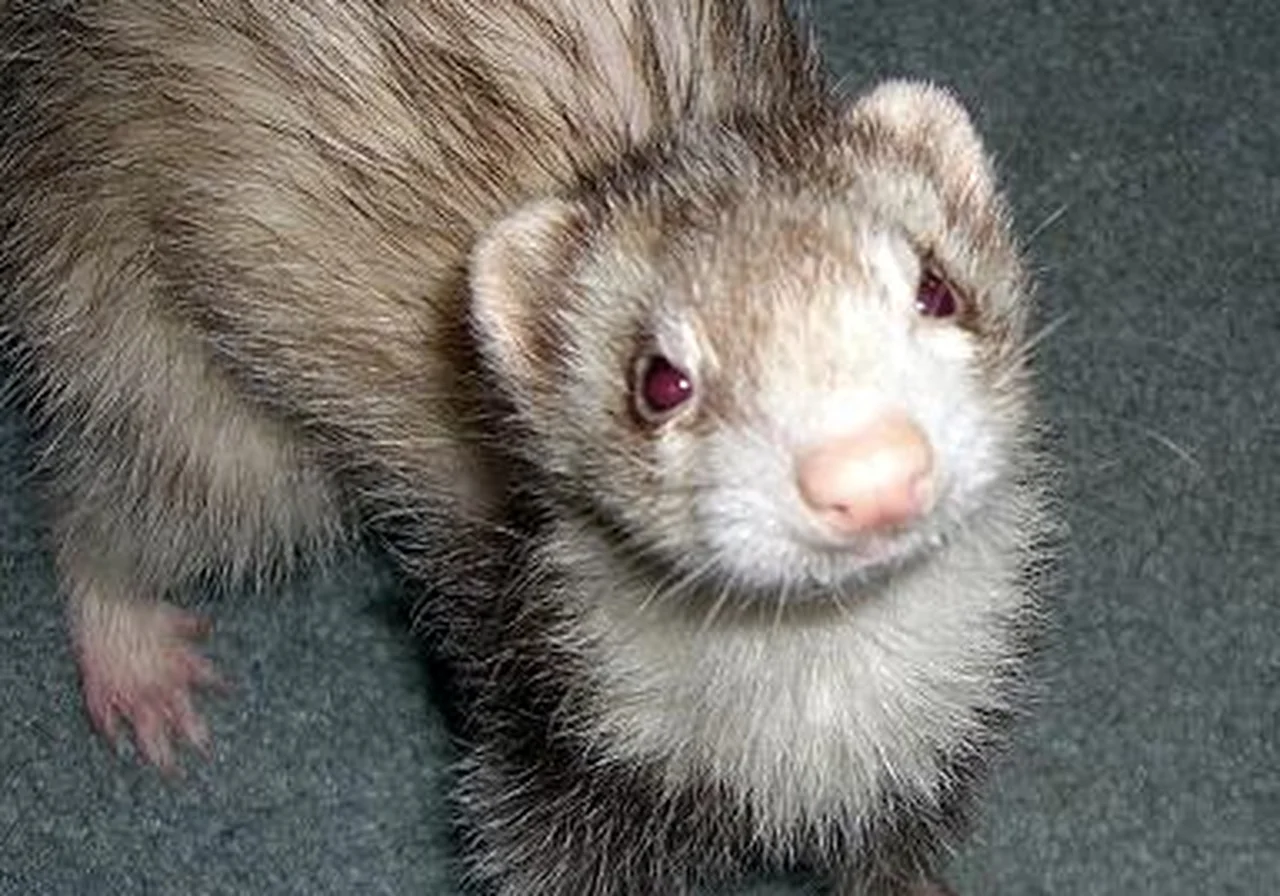
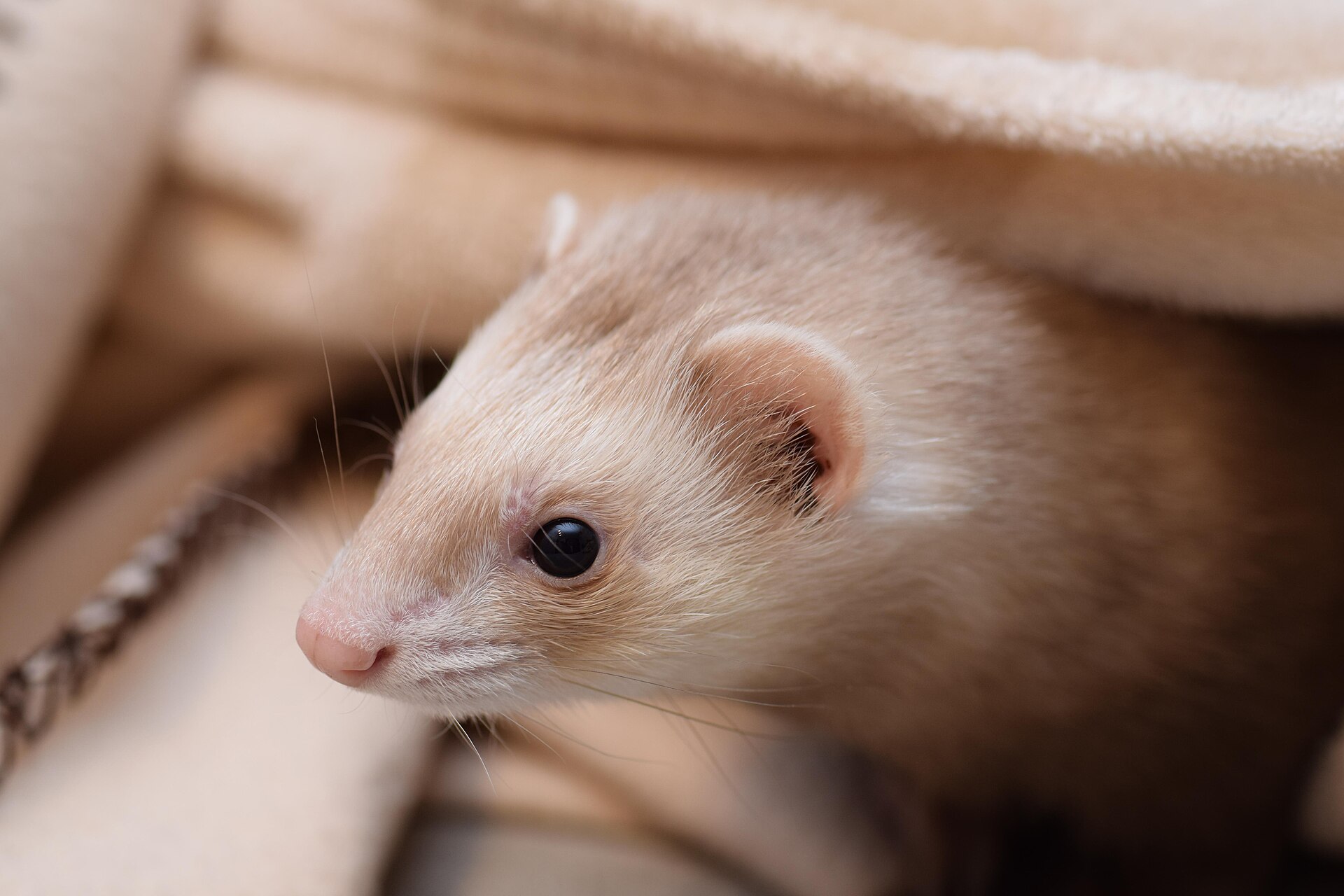
White fur and ruby-red eyes — one of the most recognisable ferret colour types in pet shops worldwide.
By WARN Research & Conservation TeamLast updated
In brief
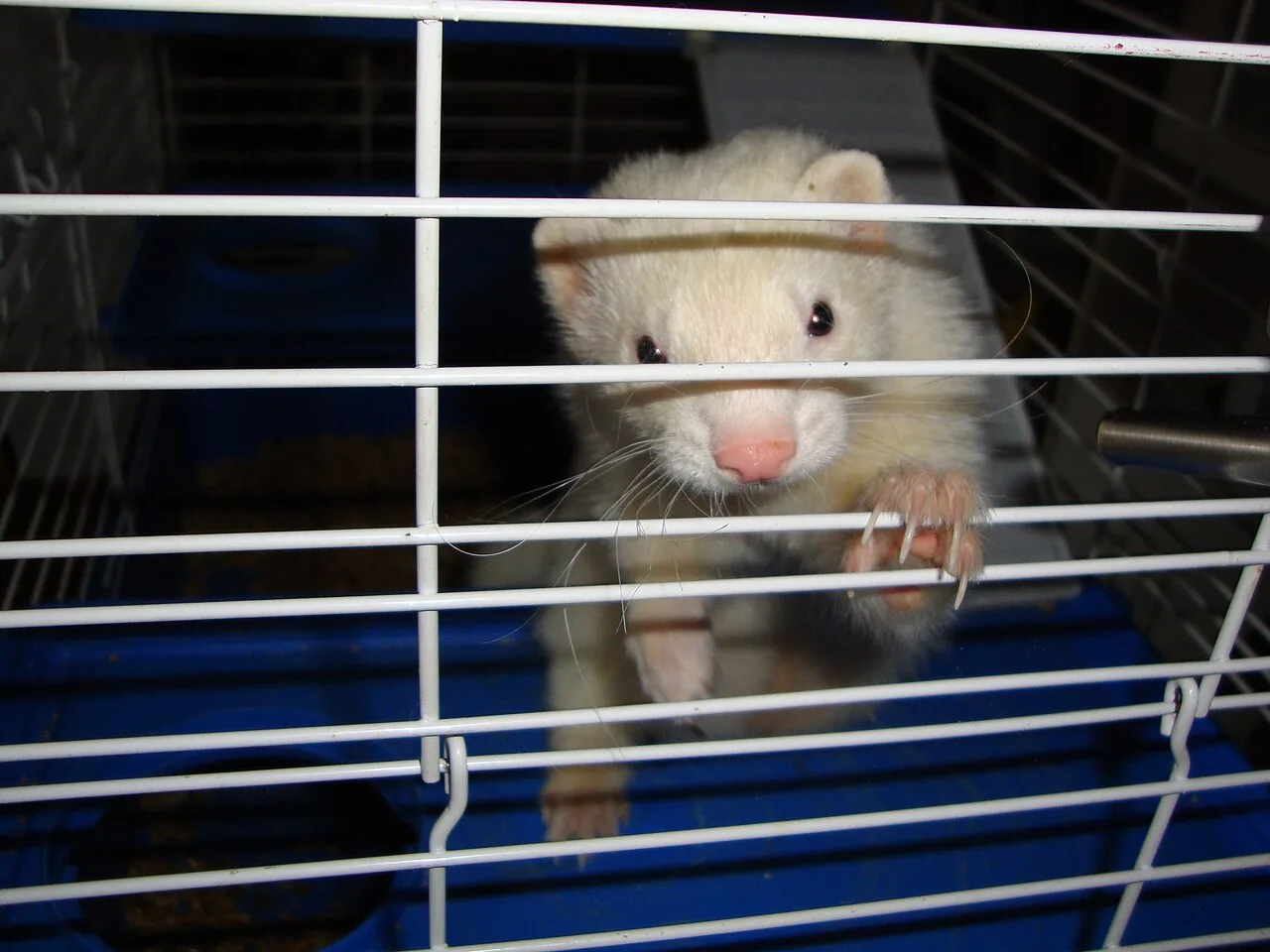
The albino ferret has pure white fur and red or pink eyes due to a lack of melanin pigment. Temperament matches other ferrets; coat colour does not change care needs. Albino ferrets are common in commercial breeding and rescues.
What are the key facts about a Albino?
The Albino is a ferret breed from Domestic (colour mutation): small (0.7–2 kg), energetic, friendly, bold. White fur and ruby-red eyes — one of the most recognisable ferret colour types in pet shops worldwide.
| Origin | Domestic (colour mutation) |
|---|---|
| Size | Small (0.7–2 kg) |
| Adult weight | 0.7–2 kg (1.5–4.4 lb) |
| Lifespan | 5–10 years |
| Coat & colour | Pure white fur; ruby or pink eyes; nose typically pink |
| Temperament | Energetic, friendly, bold |
| Best suited to | Indoor homes away from direct glare, ferret companions, owners who provide enrichment and exotics vet care |
Is a Albino a good ferret for you?
A Albino is a good ferret when your home matches indoor homes away from direct glare, ferret companions, owners who provide enrichment and exotics vet care. It is a energetic, friendly, bold small (0.7–2 kg) breed from Domestic (colour mutation).
White fur and ruby-red eyes — one of the most recognisable ferret colour types in pet shops worldwide. That one-line pitch is not a care plan. Factor grooming (Pure white fur; ruby or pink eyes; nose typically pink), typical adult size (0.7–2 kg (1.5–4.4 lb)), and the health issues listed below before you pay a deposit.
Meet adults of the breed, not only puppies or kittens, and prefer rescue or health-screened homes. A Albino that looks right in a photo can still be the wrong animal for a small flat, a full-time office job, or a household that wanted a low-energy companion.
What is a Albino?
White fur and ruby-red eyes — one of the most recognisable ferret colour types in pet shops worldwide. Origin is Domestic (colour mutation); coat or markings are described as Pure white fur; ruby or pink eyes; nose typically pink.
Kennel and registry labels describe a type. Individual Albinos still vary, and rescue animals may be mixes.
Where does the Albino come from?
Albinos come from Domestic (colour mutation). Albino ferrets arose from recessive colour mutations in domestic stock and were favoured because their pale coats made them easy to spot in dim burrows during hunting.
European and American breeders fixed albino lines for the pet trade from the twentieth century onward. Today albinos remain among the most widely sold ferret colour types.
That origin still shows. A Albino is small (0.7–2 kg) and energetic, friendly, bold, typically living 5–10 years. Use the history as context for care and conservation, not as folklore to repeat without sources.
How much care does a Albino need?
Plan 5–10 years of food, vet care, grooming and time. A Albino is small (0.7–2 kg) (0.7–2 kg (1.5–4.4 lb)) from Domestic (colour mutation), with coat care described as pure white fur; ruby or pink eyes; nose typically pink.
This temperament does not thrive on a 20-minute walk and eight hours alone.
Grooming follows the coat, not a generic clip: Pure white fur; ruby or pink eyes; nose typically pink. Keep the animal lean; extra weight is a joint and heart tax, especially in a small ferret.
Budget for unexpected vet bills. The health section below is why “cheap to buy” is not the same as cheap to keep.
What surprises people about the Albino?
A few details about the breed, alongside the practical care information in this guide.
- Albino ferrets lack dark eye rings, so their eyes can look entirely red in bright light.
- Coat colour does not predict personality — albino ferrets are as playful as sable types.
- They were historically popular for hunting because handlers could see them underground.
- Dark-eyed white ferrets look similar but have normal eye pigment and are a separate type.
What health issues should you know about in a Albino?
Health concerns to discuss with your vet, including changes to watch for and everyday care. This is general guidance, not veterinary advice — always speak to your vet.
Adrenal disease
Hair loss and hormonal changes from adrenal tumours affect albino ferrets as commonly as other colour types.
Care: Report coat thinning or behaviour changes early; your vet can discuss implants or surgery.
Insulinoma
Low blood sugar episodes cause hind-leg weakness, drooling or seizures in older ferrets.
Care: Keep glucose sources available as advised by your vet and schedule regular wellness checks after age three.
Dental disease
Tartar and fractured teeth cause pain and difficulty eating in ferrets fed soft diets without chewing material.
Care: Offer appropriate raw meaty bones or vet-approved dental care; schedule dental checks at annual exams.
Who should skip a Albino?
Skip a Albino if you are owners who wanted a low-exercise companion. This Domestic (colour mutation) ferret is small (0.7–2 kg) and energetic, friendly, bold — the mismatch is usually lifestyle, not a missing accessory.
This page is allowed to say no. Skip if you are owners who wanted a low-exercise companion.
A different ferret breed on this site may fit. Wanting “a Albino” after a film or a colour photo is not a reason to ignore the skip list.
What are the hidden catches with a Albino?
The hidden cost of a Albino is usually not the purchase price. It is years of care, the health list on this page, and the mismatch between a energetic, friendly, bold animal and a busy home.
The impulse-buy catch
A Albino from Domestic (colour mutation) is often sold on looks. Coat, colour and size are not a temperament test. Meet the adult animal, ask about health screening, and walk away from pressure sales.
The adrenal disease catch
Hair loss and hormonal changes from adrenal tumours affect albino ferrets as commonly as other colour types. Report coat thinning or behaviour changes early; your vet can discuss implants or surgery.
The insulinoma catch
Low blood sugar episodes cause hind-leg weakness, drooling or seizures in older ferrets. Keep glucose sources available as advised by your vet and schedule regular wellness checks after age three.
How does a Albino compare with Cinnamon and Dark-Eyed White?
A Albino is not interchangeable with Cinnamon and Dark-Eyed White. Compare origin, size, lifespan and temperament before you choose — those four lines prevent most regret.
| Ferret fact | Albino | Cinnamon | Dark-Eyed White |
|---|---|---|---|
| Origin | Domestic (colour mutation) | Domestic (colour type) | Domestic (colour type) |
| Size | Small (0.7–2 kg) | Small (0.7–2 kg) | Small (0.7–2 kg) |
| Lifespan | 5–10 years | 5–10 years | 5–10 years |
| Temperament | Energetic, friendly, bold | Affectionate, lively, mischievous | Playful, inquisitive, social |
What is the verdict on the Albino?
Choose a Albino only if the care, skip-if and health sections still look like your life after a week of thinking. Otherwise pick a different ferret or wait. Rescue is usually the better first door than a waiting-list puppy or kitten.
If the match is real, budget for 5–10 years of vet care and do not skip health screening. If it is not, walking away is the kind choice — for you and for the animal.
Ferrets need responsible homes
Ferrets are playful companions but often bought on impulse and abandoned when owners underestimate their care needs. WARN publishes these guides to promote responsible ownership and highlight the wider exotic-pet welfare issues our partners confront.