Chicken Breed · China
Silkie
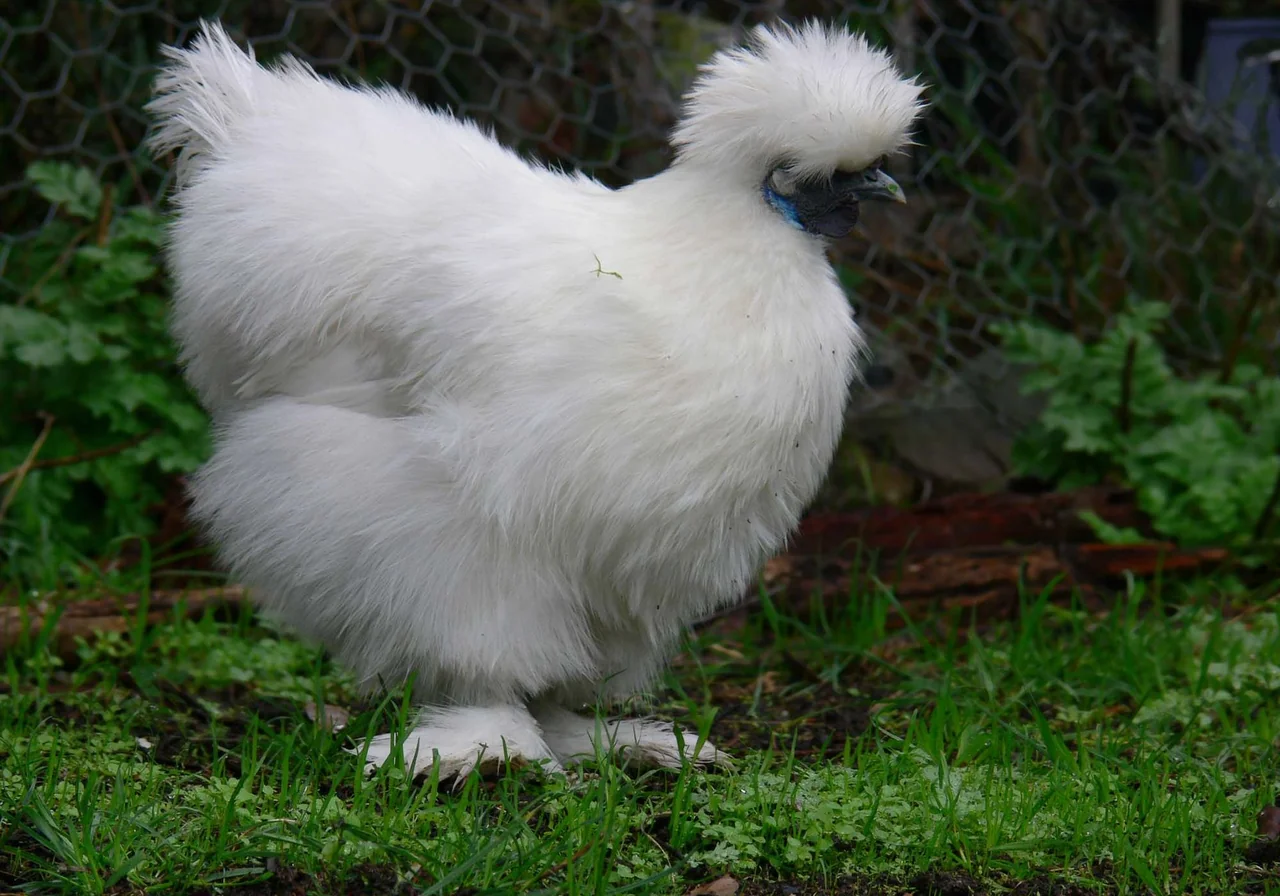
Fluffy silk-like feathers, black skin and five toes — ornamental favourite.
By WARN Research & Conservation TeamLast updated
In brief
The Silkie chicken is a Chinese bantam with fur-like plumage lacking barbicels, black skin and five toes — docile and famously broody. Its defining trait is non-waterproof 'silky' feathers requiring dry shelter, predator-safe housing and acceptance that Silkies see poorly behind crests.
What are the key facts about a Silkie?
The Silkie is a chicken breed from China: bantam (1–1.5 kg), docile, broody, gentle. Fluffy silk-like feathers, black skin and five toes — ornamental favourite.
| Origin | China |
|---|---|
| Size | Bantam (1–1.5 kg) |
| Typical weight | Hens 1–1.5 kg (2.2–3.3 lb); rounded bantam frame |
| Lifespan | 5–10 years (breed and husbandry dependent) |
| Plumage | Fluffy silk-like feathers in white, black, blue, buff and partridge — not waterproof. Crest feathers may obscure vision; trim carefully if welfare requires. Feathered feet need dry runs to prevent mud matting. |
| Temperament | Docile, broody, gentle |
| Best suited to | Gentle backyard flocks with covered runs, dry coops and keepers wanting broody hens or pet-tame birds — not free-range on muddy fields without foot care. |
Should you keep a Silkie?
Keep a Silkie only if you can meet livestock law, land, feed and veterinary care — not because the chicken looks friendly online. This China type is bantam (1–1.5 kg) and docile, broody, gentle.
A Silkie is husbandry, not a house pet. Check local zoning, neighbour rules, and whether you can provide species-appropriate shelter, forage and handling. Fluffy silk-like feathers, black skin and five toes — ornamental favourite.
Impulse “micro” livestock and Easter-gift birds are how chickens end up dumped. If you cannot commit for 5–10 years (breed and husbandry dependent), do not start. Rescue and rehoming exist; buying a cheap animal you cannot keep is the problem this page is trying to prevent.
What is a Silkie?
Fluffy silk-like feathers, black skin and five toes — ornamental favourite. Origin is China; coat or markings are described as Fluffy silk-like feathers in white, black, blue, buff and partridge — not waterproof. Crest feathers may obscure vision; trim carefully if welfare requires. Feathered feet need dry runs to prevent mud matting..
Kennel and registry labels describe a type. Individual Silkies still vary, and rescue animals may be mixes.
Where does the Silkie come from?
Silkies come from China. Silkies documented in China for centuries entered Western poultry fancy via maritime trade.
Marco Polo reportedly described similar birds. Black skin and bones feature in traditional Asian cuisine — separate from Western pet keeping. British Silkie keepers value broody hens for hatching other breeds' eggs. Wet feathers chill birds quickly — covered runs mandatory in rainy climates.
That origin still shows. A Silkie is bantam (1–1.5 kg) and docile, broody, gentle, typically living 5–10 years (breed and husbandry dependent). Use the history as context for care and conservation, not as folklore to repeat without sources.
What husbandry does a Silkie need?
Silkie husbandry is land, feed, handling and veterinary access — for 5–10 years (breed and husbandry dependent). This China type is bantam (1–1.5 kg) (Hens 1–1.5 kg (2.2–3.3 lb); rounded bantam frame) and docile, broody, gentle.
Shelter, clean water, species-appropriate forage and a plan for parasites and feet or hooves are the baseline. Coat notes (Fluffy silk-like feathers in white, black, blue, buff and partridge — not waterproof. Crest feathers may obscure vision; trim carefully if welfare requires. Feathered feet need dry runs to prevent mud matting.) tell you about weather and grooming, not whether the animal can live in a garage.
Know what you will do with offspring, and do not keep a single highly social chicken alone if the species is a flock or herd animal.
What surprises people about the Silkie?
A few details about the breed, alongside the practical care information in this guide.
- Silkie feathers lack barbicels, so they resemble fur and absorb water like sponges.
- Black skin and five toes per foot are breed hallmarks.
- Silkies are exceptionally broody — often used as foster mothers.
- Blue Silkie colour results from incomplete dominance — breeding produces splash chicks.
What health issues should you know about in a Silkie?
Health concerns to discuss with your vet, including changes to watch for and everyday care. This is general guidance, not veterinary advice — always speak to your vet.
Respiratory infections
Crest moisture and poor ventilation trigger mycoplasma.
Care: Dry housing, good airflow and veterinary antibiotics when sneezing persists.
External parasites
Fluffy feathering hides lice and mites until severe.
Care: Regular feather-base checks and licensed poultry treatments.
Predator vulnerability
Limited flight and vision make Silkies easy prey.
Care: Fully enclosed runs and dusk lock-up without exception.
Who should skip a Silkie?
Skip a Silkie if you are anyone without land, zoning permission, and a vet. This China chicken is bantam (1–1.5 kg) and docile, broody, gentle — the mismatch is usually lifestyle, not a missing accessory.
This page is allowed to say no. Skip if you are anyone without land, zoning permission, and a vet.
A different chicken breed on this site may fit. Wanting “a Silkie” after a film or a colour photo is not a reason to ignore the skip list.
What are the hidden catches with a Silkie?
The hidden cost of a Silkie is usually not the purchase price. It is years of care, the health list on this page, and the mismatch between a docile, broody, gentle animal and a busy home.
The impulse-buy catch
A Silkie from China is often sold on looks. Coat, colour and size are not a temperament test. Meet the adult animal, ask about health screening, and walk away from pressure sales.
The respiratory infections catch
Crest moisture and poor ventilation trigger mycoplasma. Dry housing, good airflow and veterinary antibiotics when sneezing persists.
The external parasites catch
Fluffy feathering hides lice and mites until severe. Regular feather-base checks and licensed poultry treatments.
How does a Silkie compare with Orpington and Sussex?
A Silkie is not interchangeable with Orpington and Sussex. Compare origin, size, lifespan and temperament before you choose — those four lines prevent most regret.
| Chicken fact | Silkie | Orpington | Sussex |
|---|---|---|---|
| Origin | China | England | England |
| Size | Bantam (1–1.5 kg) | Heavy (3.5–4.5 kg) | Medium (2.5–3.5 kg) |
| Lifespan | 5–10 years (breed and husbandry dependent) | 5–10 years (breed and husbandry dependent) | 5–10 years (breed and husbandry dependent) |
| Temperament | Docile, broody, gentle | Calm, friendly, broody | Curious, friendly, good forager |
What is the verdict on the Silkie?
Choose a Silkie only if the care, skip-if and health sections still look like your life after a week of thinking. Otherwise pick a different chicken or wait. Rescue is usually the better first door than a waiting-list puppy or kitten.
If the match is real, budget for 5–10 years (breed and husbandry dependent) of vet care and do not skip health screening. If it is not, walking away is the kind choice — for you and for the animal.
Backyard flocks need secure care
Chickens are the world's most numerous bird — kept for eggs, meat and companionship. Humane housing, predator-proof runs and veterinary care matter whether you keep layers or rescues.