Animal Comparison
Cheetah vs Jaguar
Tell cheetahs and jaguars apart by their coats, faces and build. Compare speed, size, hunting, range, behaviour and conservation with cited evidence.
By WARN Research & Conservation TeamLast updated
In brief — Cheetah vs Jaguar
A cheetah is a slender pursuit hunter with solid spots and dark tear lines; a jaguar is a muscular ambush hunter with rosettes, often containing central spots.
Cheetahs (Acinonyx jubatus) and jaguars (Panthera onca) are different wild cat species. Cheetahs are adapted for acceleration and turning during short chases. Jaguars use powerful limbs and jaws to seize prey at close range. Their native ranges are on different continents, so a natural encounter between them is not a useful wildlife scenario.
See the difference
Images are shown at different scales. Read each caption for the species, source and context.
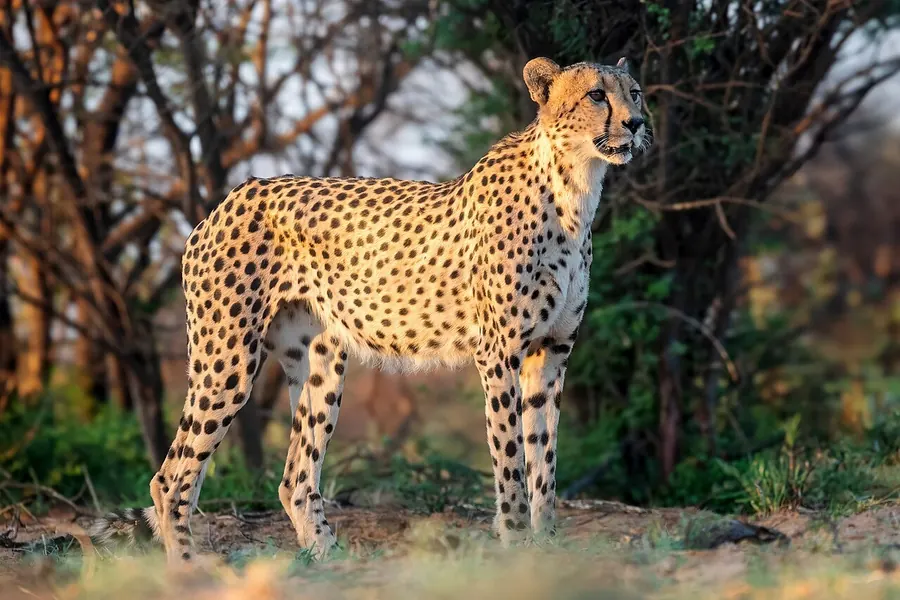
Cheetah — tear lines, spotted sprinting cat
AI-generated educational wildlife portrait — World Animal Rescue Network
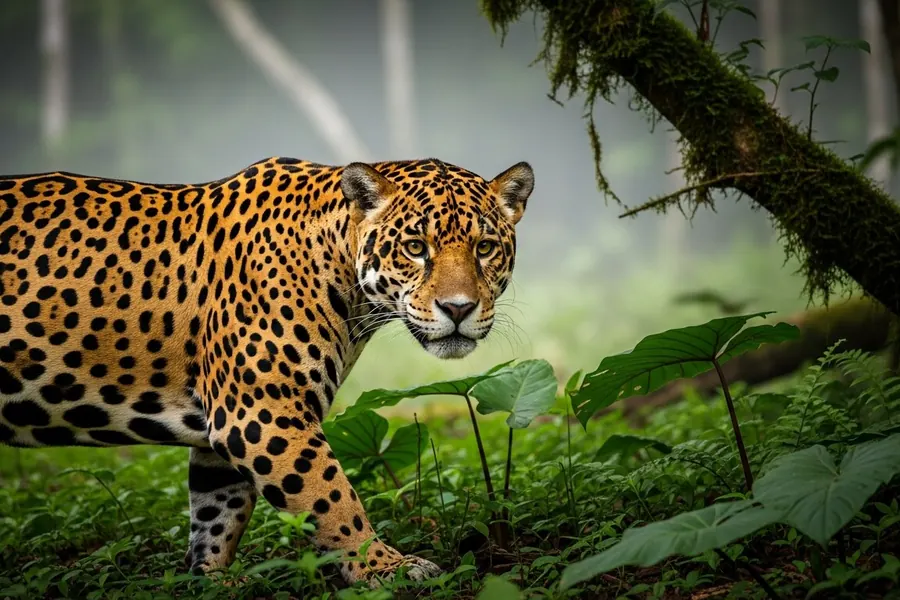
Jaguar — rosette coat, stocky build
AI-generated educational wildlife portrait — World Animal Rescue Network
Cheetah vs Jaguar: At a Glance
| Feature | Cheetah | Jaguar |
|---|---|---|
| Scientific name | Acinonyx jubatus | Panthera onca |
| Coat | Mostly separate, solid black spots | Rosettes, often with one or more spots inside |
| Face | Dark tear lines run from the eyes towards the mouth | Broad face; lacks the characteristic cheetah tear-line pattern |
| Build | Long legs, narrow waist, small rounded head | Broad head, muscular shoulders and sturdy limbs |
| Adult weight examples | About 34–64 kg (San Diego Zoo) | About 31–121 kg, with substantial regional variation (San Diego Zoo) |
| Hunting | Stalks, then pursues with rapid acceleration and turns | Usually stalks and ambushes at close range |
| Claws | Partly retractile; exposed claws help grip during running | Retractile claws used in climbing and gripping prey |
| Native range | Africa and a remnant Asiatic population in Iran | The Americas |
| Typical landscapes | Savannas, grasslands and other open or mixed habitats | Forest, wetland and other habitats with cover and prey |
| Calls | Chirps, purrs, growls and other calls; does not roar | Can roar; also uses other vocalisations |
| Conservation | Globally Vulnerable; some populations face greater risk | Globally Near Threatened; local populations can be much more threatened |
Size and physical differences
Jaguars are generally heavier and more robust; cheetahs are faster sprinters. Individual size overlaps, and neither a weight range nor a bite-force claim can predict a hypothetical fight.
A spotted coat can make these cats look similar in a cropped photograph, but the whole animal tells a different story. Look at the markings on the flanks, the lines below the eyes, the shape of the chest and the length of the legs. Then check where the animal was photographed. A jaguar in the Pantanal and a cheetah in southern Africa face different habitats, prey and conservation pressures. This guide explains those differences without turning them into a contest. Measurements are examples from the cited sources, not fixed limits for every sex, age or regional population. The comparison portraits are labelled illustrations; use documented photographs and a local field guide for an uncertain real-world identification.
How to identify the coat and face
Start with the side of the animal. Most cheetahs have individual dark spots scattered across a tan coat. A jaguar has clusters that form rings or broken rosettes, and many contain a dark spot in the middle. Look at several markings: the head, legs and tail can have patterns that are less useful than the flanks. Cheetahs also have conspicuous dark lines running down from their eyes.
No single patch of fur is an infallible test. A rare king-cheetah coat has joined spots and stripes, while a melanistic jaguar can look almost black until light reveals the rosettes. Age, shadow, blur and editing can conceal useful details. Combine the coat with the face and body rather than identifying an animal from colour alone. San Diego Zoo describes jaguar rosettes and melanism; Cheetah Conservation Fund explains cheetah markings and identification.
Why their bodies are so different
A cheetah has the silhouette of a specialised runner: long legs beneath a deep chest, a slim waist and a comparatively small head. Its flexible back and long tail contribute to movement during a chase. A jaguar looks compact and heavily built, with substantial shoulder muscles and a broad skull. These are adaptations to different ways of catching prey, not signs that one animal is a better-designed cat.
Weight needs context. San Diego Zoo gives cheetahs approximately 34–64 kg and jaguars approximately 31–121 kg. Those ranges overlap and are descriptive, not a guarantee that every jaguar outweighs every cheetah. Sex, maturity and region matter; jaguars in the Pantanal can be markedly larger than jaguars elsewhere. A camera angle can also exaggerate apparent size. For a meaningful comparison, use identified adults and measurements taken on the same basis.
How fast is a cheetah compared with a jaguar?
The cheetah is the faster sprint specialist, but a chase is more than a straight-line speed record. Wilson and colleagues equipped wild cheetahs with tracking collars and analysed 367 predominantly hunting runs in a 2013 study. The fastest recorded run reached 25.9 metres per second, about 93 km/h. Most hunts were slower. The work highlighted acceleration, braking and manoeuvrability as crucial parts of successful pursuit.
That is a measured maximum in a particular dataset, not a newly established ceiling for the species. It should not be mixed with a captive demonstration or an unsourced internet speed estimate for jaguars. A later predator–prey study compared cheetahs with impala and lions with zebras, showing why the ability to change speed and direction belongs in the explanation. We do not give a precise jaguar top speed because the sources here do not supply a comparable field measurement.
How their hunting strategies differ
Both cats must get close enough to make an attack worthwhile. A cheetah typically approaches before launching a pursuit; it does not simply run at top speed across the landscape until something is caught. Prey can turn sharply, and the cat must respond. Research on the energy cost of hunting distinguishes time spent travelling, stalking and chasing, so the brief sprint alone does not describe the full cost of obtaining a meal.
A jaguar often uses vegetation, terrain or a riverbank to approach unseen before a short attack. Its strong jaws can penetrate hard prey structures, including the skull in some kills. This does not mean every jaguar kills every kind of prey in the same way. Hunting varies with opportunity, prey size and habitat. A video of one dramatic caiman capture shows a behaviour that occurred; it cannot establish the normal diet or success rate of all jaguars.
Where do cheetahs and jaguars live?
Their native ranges provide one of the most useful checks on identification. Wild cheetahs survive mainly in Africa, with a small remnant Asiatic population in Iran. Jaguars are native to the Americas. A zoo location or a social-media uploader’s address says little about an animal’s origin, so use the location where a wild image was actually made.
Neither species occupies every suitable-looking place on its continent. Roads, agriculture, loss of prey and past persecution have broken ranges into separate populations. Panthera’s conservation programmes emphasise landscape connections for both cats. Habitat maps show possible or recorded distribution, not a promise of seeing an animal at a given point. They also need a date and a source. We do not publish precise den, cub or sensitive tracking locations as travel tips.
Are jaguars forest cats and cheetahs grassland cats?
Those descriptions are useful starting points, but they are incomplete. Jaguars use tropical forests and major wetlands, including the Pantanal, and can also occupy drier landscapes. Water can be an important part of their hunting environment. Cheetahs are associated with open country, yet surviving populations also use varied landscapes where cover, prey and space permit them to live.
The conservation implication is that a single photograph of “ideal habitat” is not enough to design protection. A forest patch without safe links to other patches may isolate jaguars. Open land crossed by an impassable fence or a dangerous road may fail to connect cheetah populations. Assessing habitat means considering how an animal feeds, moves, breeds and encounters people over time. Protecting a view that looks wild is not necessarily the same as protecting a functioning landscape.
Claws, swimming and climbing
Cheetah claws are only partly retractile. Their exposed claws help provide traction, whereas a jaguar has retractile claws suited to gripping and climbing. The shorthand “cheetahs cannot retract their claws” loses that distinction. Footprints can be useful, but substrate and movement affect what a track records, so a single print without scale or context is a weak identification.
Jaguars are capable swimmers and often use waterside habitat. They can also climb. A cheetah standing on a low trunk or mound may be using an observation point; it does not turn the species into a jaguar-like climber. Avoid ranking animals across an invented obstacle course. The useful question is how an anatomical feature works in the animal’s own setting, and how altering that setting might affect its survival.
Social life, cubs and calls
Cheetah social organisation differs between sexes. Females normally rear cubs without a male partner, while males may form coalitions. Jaguar mothers also raise cubs, and jaguars are often described as solitary. “Solitary” does not mean animals never meet, tolerate one another or share resources: Panthera reports research documenting male jaguar coalitions. Behavioural descriptions should allow for such observations.
Cheetahs make a range of calls, including chirps and purrs, but do not roar as jaguars do. That contrast is helpful when learning about cat biology; it is less reliable for identifying a heavily edited clip with an added soundtrack. Cubs need time to develop and learn. Close approaches, baiting or handling for photographs can interrupt normal behaviour. Observe with an experienced guide who respects distance and lets the animals choose whether to remain visible.
Cheetah, jaguar, leopard and black panther
A leopard is a third species, Panthera pardus, rather than a small jaguar or a cheetah with different spots. Leopards usually have rosettes without the central spots typical of many jaguar rosettes. They are native to Africa and Asia. Jaguars generally have a broader head and heavier build, while cheetahs show the most obvious long-legged running silhouette.
“Black panther” is not a separate species name. It commonly describes a melanistic leopard or jaguar, so geography and body shape still matter when the coat looks black. An image caption that says only “panther” is incomplete evidence for a species-level claim. In an uncertain record, keep the original photograph, date and location, describe what is visible and seek an informed identification. It is better to leave a record unresolved than attach conservation information to the wrong cat.
Which animal would win in a fight?
A fight between these species is a hypothetical scenario, not a normal ecological relationship. Their native ranges do not overlap. Jaguars generally have the more robust build, while cheetahs excel at rapid pursuit; those differences do not establish the outcome of an encounter between two particular animals. Age, condition, opportunity to escape and the setting would all matter.
Claims that a jaguar has an exact bite pressure in pounds per square inch often omit whether the figure was measured, modelled or repeated from another website. Bite force also varies with the bite point and the size of the skull. We do not turn such figures into a ranking or suggest staging contact. Understanding how each species survives, and reducing the threats it faces, provides a more useful comparison than treating living animals as opponents.
Conservation: what actually helps each cat?
Panthera lists cheetahs as globally Vulnerable and jaguars as Near Threatened. These are global categories, not descriptions of the condition of every population. A species can retain a broad global range while disappearing locally. Nor does Near Threatened mean that habitat loss or killing is harmless. Assessments and regional evidence should be read together.
For both cats, connected habitat, adequate wild prey and workable coexistence with livestock owners matter. Effective support needs a named programme, a stated purpose and evidence of delivery. Before donating, look for reporting that distinguishes planned work from completed work and identifies who received the funds. WARN’s related guides explain the species in more depth, and our transparency page explains our funding approach. Reading this comparison or viewing a partner’s public research does not establish that WARN funded that work.
Did you know?
The “king cheetah” is a coat-pattern variant of the cheetah, not a cheetah–jaguar hybrid.
Cheetah vs Jaguar: FAQs
What is the quickest way to tell a cheetah from a jaguar?
Is a jaguar bigger than a cheetah?
Can a jaguar run as fast as a cheetah?
Do jaguars and cheetahs ever meet in the wild?
Can cheetahs roar?
Is a black panther a jaguar?
Are cheetahs or jaguars suitable pets?
Does WARN operate cheetah or jaguar reserves?
Help protect animals
Learning about animals can help more people understand their needs. WARN raises funds for eligible animal-welfare organisations. Read the relevant appeal’s purpose, recipient status and fund terms, or share this free guide to raise awareness.
Sources
- San Diego Zoo — cheetah biology and measurements
- San Diego Zoo — jaguar identification, biology and measurements
- Wilson et al. (2013) — locomotion dynamics of hunting in wild cheetahs
- Wilson et al. (2018) — predator–prey locomotion in the wild
- Hubel et al. (2016) — energy cost and return for hunting
- Cheetah Conservation Fund — anatomy, social life and coat patterns
- Panthera — cheetah conservation
- Panthera — jaguar conservation and current research