Wildlife · Animal myth busters
Why do cats purr?
Cats purr through laryngeal vibrations at 25–150 Hz — often when content, but also when stressed, injured or dying.
In brief
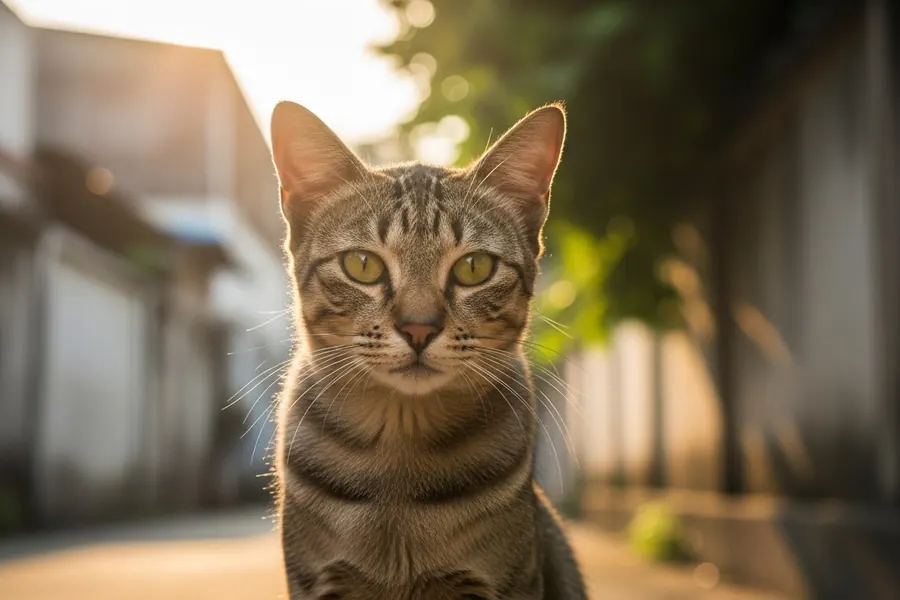
Cats purr by vibrating muscles in the larynx and diaphragm at roughly 25–150 Hz. Domestic cats purr when content, but also when stressed or in pain — likely for self-soothing and communication.
By the WARN Research & Conservation TeamChecked against IUCN Red List & CITES sourcesLast updated
Domestic cats produce purr by rapid twitching of laryngeal and diaphragmatic muscles during both inhalation and exhalation — unlike big cats that roar. Purring is commonly linked to contentment on a lap, but cats also purr at the vet, during labour and when injured — likely self-soothing and signalling to caregivers. Low-frequency vibrations may promote bone density and pain relief in some research. Roaring lions and tigers cannot purr continuously this way; cheetahs and cougars can. Context matters as much as the sound for welfare interpretation.
25–150 Hz
Typical purr frequency range
600M+
Domestic cats worldwide (estimate)
2
Purr types — soliciting vs non-soliciting contexts
Roar vs purr
Hyoid bone structure separates big cat groups
Quick facts
| Mechanism | Laryngeal and diaphragm muscle twitching |
|---|---|
| Not only happy | Also purr when stressed, in pain or near death |
| Frequency | Roughly 25–150 Hz — may aid bone healing in studies |
| Big cats | Lions/tigers roar — cannot purr like house cats |
| Purring cats | Domestic cats, cheetahs, cougars — different throat anatomy |
| Communication | Signals to kittens and humans — soliciting food or comfort |
| Welfare | Context — body language — determines if purr means relaxation |
Key takeaways
- Purring is laryngeal vibration — not only a happiness signal.
- Cats purr when stressed, injured and in labour — context matters.
- 25–150 Hz frequency — possible self-soothing and communication roles.
- Lions and tigers roar; domestic cats and cheetahs purr — anatomy differs.
- Welfare assessment requires body language, not purr alone.
- Kittens purr early — maternal and human bonding communication.
How purring works mechanically
The purr cycle involves neural oscillator signals to laryngeal muscles causing sudden glottal opening and closing — air turbulence creates the rumble during both inhale and exhale. Domestic cats can purr while eating or breathing quietly — a continuous cycle unlike roars that expel large air volumes. Frequencies around 25–50 Hz overlap with ranges associated in some studies with increased bone density and tissue repair — intriguing but not proven as deliberate “healing behaviour.” Kittens purr within days of birth — mother cats purr during nursing — establishing early communication. Veterinarians note injured cats purring on examination tables — historically misread as “fine” when actually stressed or painful.
Purring when not happy
Ethologists document “solicitation purrs” — embedded high-frequency cries humans perceive as urgent — used near feeding time. Pain purring appears in dying or injured cats, possibly self-soothing like humans humming through discomfort. Queens purr during labour. Feral cats purr when trapped before obvious relaxation. Welfare assessment must combine purr with ear position, pupil size, tail and muscle tension — a purring cat can still be terrified. Rescue workers learn not to equate purr with low stress during intake exams. WARN’s cat care newsroom guide stresses context for adopters and foster carers interpreting feline signals accurately.
Roarers vs purrers among felids
Felidae split into subfamilies by hyoid anatomy. Panthera — lion, tiger, leopard, jaguar, snow leopard — has a partially ossified flexible hyoid enabling roars but not true continuous purring on inhale and exhale. Domestic cats, cheetahs, cougars and ocelots have rigid hyoids suited to purring but not roaring. This is why “big cats purr” is partly wrong — lions chuff and make friendly noises but not house-cat purrs. Misconceptions matter for sanctuary welfare: expecting lion purrs misframes normal vocalisations. Cheetah purrs are famous in hand-rearing videos — cheetahs are purring felids, not roaring pantherines.
Welfare and rescue context
Street and shelter cats use purring to negotiate human proximity — adaptive in adoption settings. Chronic pain purring complicates triage: always examine purring intake cats for injury, dehydration and disease. Purring frequency research does not replace veterinary assessment. In WARN network countries, community cats and rescue intakes benefit when staff read body language holistically — purr-plus-hunched posture differs from purr-plus-kneading on a blanket. Public education reducing “purr equals happy” prevents premature return of injured cats to colonies or misjudged readiness for surgery.