Habitat · Why species are endangered
Why are orangutans losing their habitat?
Orangutan rescue is inseparable from forest loss, fragmentation and human-wildlife conflict.
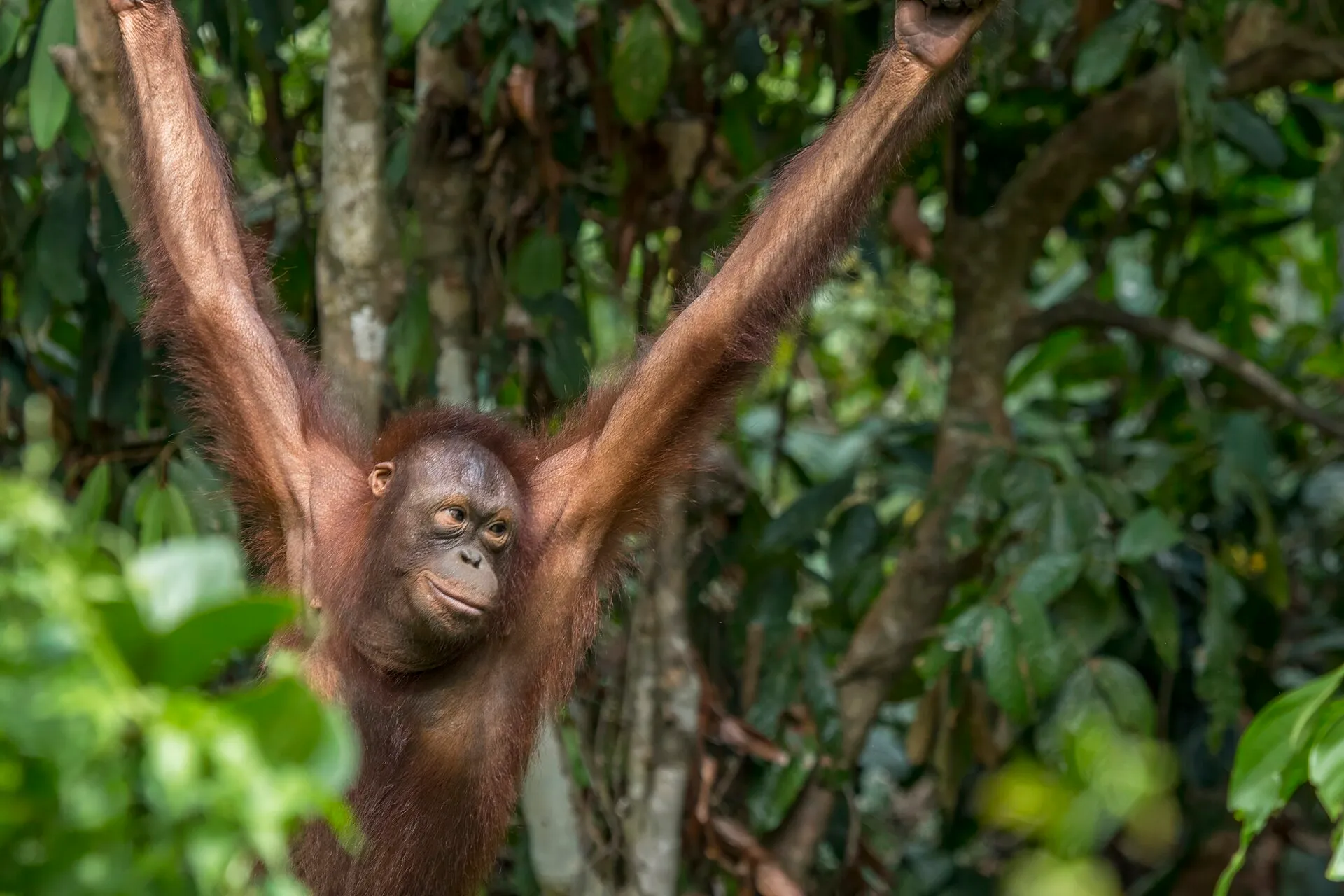
In brief
Orangutans are losing habitat because lowland rainforest in Borneo and Sumatra is cleared or fragmented for palm oil, timber, mining, roads, fires and agriculture. Fragmentation isolates animals and increases conflict with people. Forest conversion and fragmentation leave orangutans with less connected habitat.
By WARN Research & Conservation Team Last updated
Forest conversion and fragmentation leave orangutans with less connected habitat. Protecting remaining forest and restoring connections matter alongside care for displaced animals.
Quick facts
| Main threat | Lowland rainforest loss and fragmentation |
|---|---|
| Drivers | Palm oil, timber, roads, mining, fires and agriculture |
| Impact | Isolation, conflict, starvation and orphaned infants |
| Recovery | Rescue plus habitat protection and corridors |
Key takeaways
- Palm oil, logging, mining and fires drive habitat loss.
- Forest fragmentation increases human-orangutan conflict.
- Females with infants are especially vulnerable to displacement.
- Rescue must be paired with habitat protection.
Why this question matters
Orangutans are often presented as rescue stories, but the deeper issue is the disappearing forest that made rescue necessary.
The welfare-first answer
A welfare-first response helps individuals while protecting the habitat that lets future orangutans avoid rescue entirely.
What to do next
Support forest protection, responsible sourcing, conflict response and long-term rehabilitation programmes that release only where habitat is secure.
What WARN does
WARN links species facts to habitat and rescue needs so readers understand why individual animal care and landscape protection must work together.
Frequently asked questions
Is palm oil the only cause?
Can rescued orangutans always be released?
Why does fragmentation matter?
Sources & references
Read the linked sources for the welfare guidance behind this answer. Check local requirements and contact an appropriate professional about an individual animal.