Wildlife · Animal myth busters
What is the largest animal on Earth?
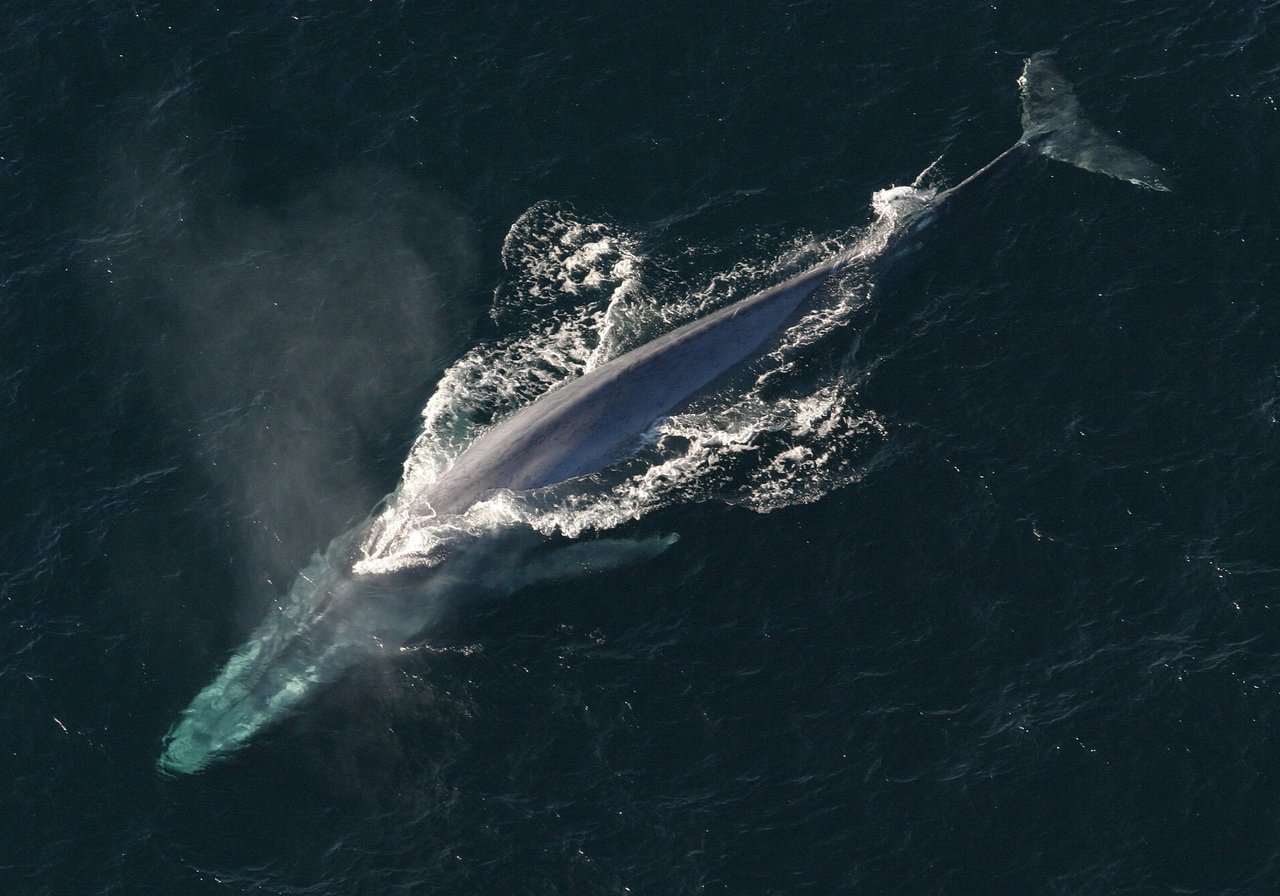
The blue whale outweighs every dinosaur — up to 30 metres and 180 tonnes of filter-feeding marine mammal.
In brief
The blue whale (Balaenoptera musculus) is the largest animal ever known — reaching about 30 metres and 180 tonnes. It is a marine mammal, not a fish.
By the WARN Research & Conservation TeamChecked against IUCN Red List & CITES sourcesLast updated
The blue whale (Balaenoptera musculus) is the largest animal known to have lived — larger than any sauropod dinosaur. It feeds almost exclusively on krill, filtering millions of tiny crustaceans through baleen plates. Commercial whaling drove the species to the edge of extinction in the twentieth century; international protection allowed partial recovery in some oceans. Ship strikes and ocean noise are modern threats alongside climate-driven shifts in krill distribution. Blue whales are mammals — they breathe air, nurse calves and are warm-blooded, not fish.
30 m
Maximum recorded blue whale length
180 t
Maximum weight — heaviest known animal
EN
Blue whale — Endangered (IUCN)
4 tonnes
Krill consumed daily in feeding season
Quick facts
| Species | Blue whale — Balaenoptera musculus |
|---|---|
| Feeding | Baleen filter-feeder on krill — not a predator of large prey |
| Class | Mammal — order Cetacea |
| Heart size | Roughly car-sized — largest of any animal |
| Whaling impact | Hunted to near extinction — 1900s commercial whaling |
| Modern threats | Ship strikes, noise, krill distribution shifts |
Key takeaways
- Blue whale — largest animal ever, up to 30 m and 180 tonnes.
- Baleen filter-feeder on krill — not a toothed predator.
- Marine mammal — breathes air, nurses calves, warm-blooded.
- Commercial whaling nearly eliminated the species — partial recovery ongoing.
- Ship strikes and climate-affected krill are leading modern threats.
- Larger than any land mammal or living fish — ocean health is critical.
Why blue whales grew so large
Marine environments support enormous body size because buoyancy reduces skeletal load — whales can grow far heavier than land mammals limited by gravity. Krill blooms in cold productive oceans offer dense, predictable food allowing bulk filter feeding. Evolution favoured larger mouths and faster lunge feeding in rorquals including blues, fin and humpback whales. The blue whale heart weighs hundreds of kilograms; arteries wide enough for a child to crawl through. Size brings efficiency in long migrations between polar feeding and tropical calving grounds — but also vulnerability to ship strikes in busy shipping lanes overlapping migration routes.
Feeding without teeth
Blue whales lack functional teeth as adults — baleen plates hang from the upper jaw like a comb, trapping krill when the whale engulfs a mouthful of water and expels it through the baleen. A single adult may consume several tonnes of krill daily during Antarctic or California upwelling seasons. They do not chew seals or fish like toothed whales — diet specialization keeps blues at the base of a short food chain vulnerable to krill decline from ocean warming and acidification. Krill depend on sea ice and phytoplankton dynamics — climate models predict shifting abundance even where whaling no longer kills blues directly.
Recovery from whaling
Industrial whaling killed an estimated 350,000–400,000 blue whales in the twentieth century. The International Whaling Commission moratorium and national protections allowed some populations — notably in the eastern North Pacific — to rebound from hundreds to thousands. Antarctic blues remain far below pre-whaling numbers. Recovery is slow because females calve every two to three years and calves nurse for months. Genetic diversity bottlenecks may limit adaptation. IUCN lists blue whale as Endangered globally with population trend increasing in some regions, unknown or decreasing in others — status is not uniform across oceans.
Compared to other large animals
African bush elephants are the largest land mammals at roughly six tonnes — thirty times lighter than the biggest blue whales. Prehistoric dinosaurs reached comparable lengths but current evidence suggests blue whales match or exceed dinosaur mass. Sperm whales dive deeper but weigh less. Whale sharks are large fish filter feeders but smaller than blue whales. Public quizzes often guess “dinosaur” or “elephant” — correct answer anchors marine conservation: the largest life on Earth depends on ocean health and krill ecosystems, linking climate policy to cetacean survival in ways land-species comparisons do not capture.