Wildlife · Mammal facts hub
What do gorillas eat?
Gorillas eat leaves, stems, shoots and fruit — up to 30 kg daily; western lowland gorillas disperse rainforest seeds.
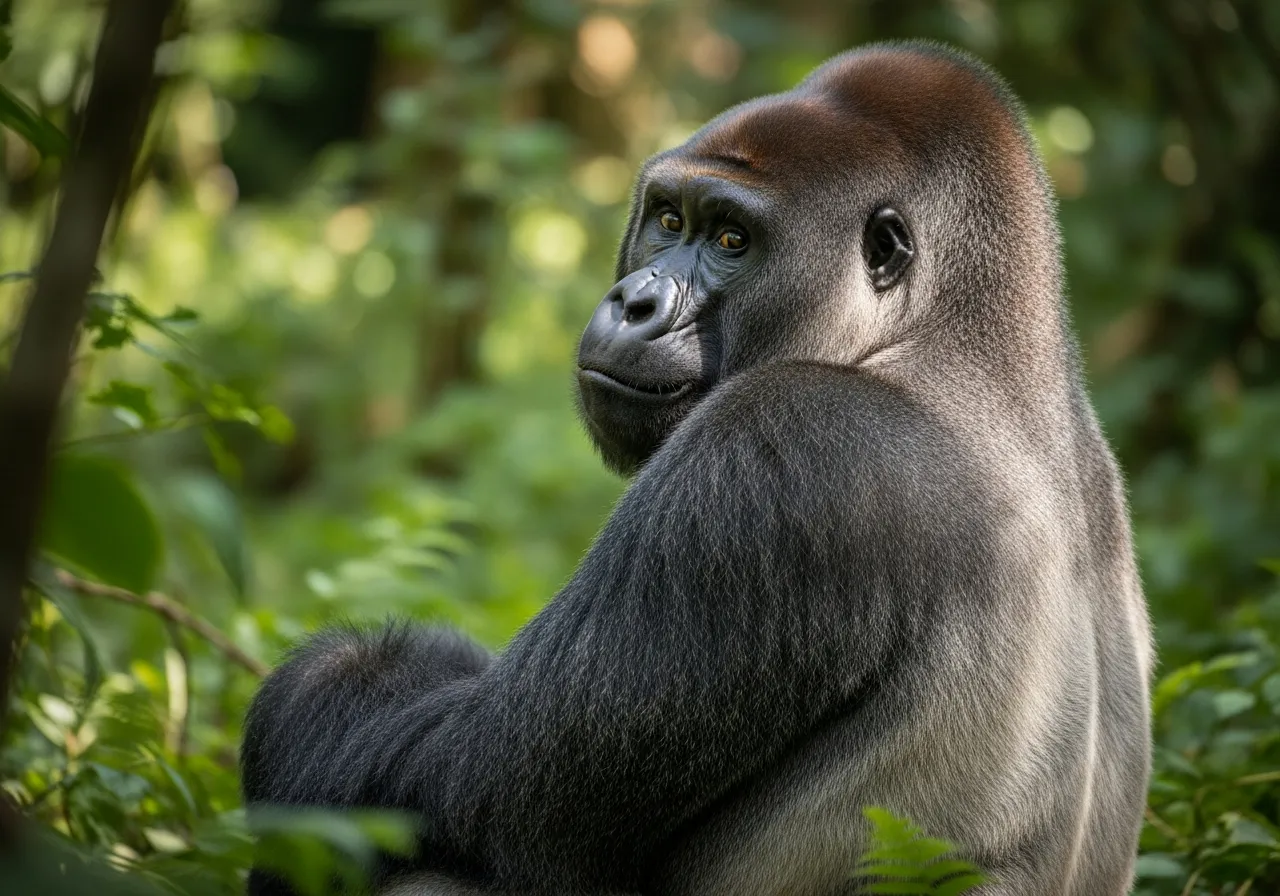
In brief
Gorillas are mostly herbivorous — eastern gorillas eat leaves, stems, shoots and some fruit; western lowland gorillas eat more fruit and ants or termites occasionally. Adults may consume 20–30 kg of vegetation daily. Gorillas are primarily herbivorous great apes — eastern gorillas browse foliage and bamboo; western lowland gorillas eat more fruit and occasional insects.
By WARN Research & Conservation TeamLast updated
Gorillas are primarily herbivorous great apes — eastern gorillas browse foliage and bamboo; western lowland gorillas eat more fruit and occasional insects. Adults consume 20–30 kg vegetation daily. All gorilla subspecies Critically Endangered or Endangered from habitat loss, bushmeat and Ebola. Diet depends on intact forest — see bushmeat and habitat answers.
20–30 kg
Daily vegetation intake — adult
CR/EN
All gorilla subspecies threatened
140+
Plant species in mountain gorilla diet
Fruit
Higher proportion in western lowland diet
Quick facts
| Mountain gorilla | Leaves, stems, shoots, bamboo — Virunga/Bwindi |
|---|---|
| Western lowland | More fruit — seed disperser role |
| Protein | Ants/termites occasionally — minor supplement |
| Water | Most moisture from food — rarely drink |
| Threat | Bushmeat, Ebola, deforestation |
| Size | Silverback male 180+ kg — massive gut for foliage |
Key takeaways
- Herbivorous — leaves, stems, fruit, shoots.
- 20–30 kg daily vegetation adults.
- Western lowland gorillas disperse seeds via fruit.
- All gorilla subspecies threatened.
- Bushmeat and Ebola — human and ape risk.
- Forest loss removes food before hunting kills.
Mountain vs lowland diets
Mountain gorillas in Rwanda, Uganda, DRC eat high-altitude vegetation — wild celery, thistle, bamboo shoots seasonal delicacy. Lowland gorillas in Congo Basin fruit when available — figs and pulp rich calories. Gorilla gut bacteria ferment cellulose — long digestive tract like other folivores. Silverback eats first at food patches — dominance hierarchy allocates best stems.
Seed dispersal ecology
Western lowland gorillas swallow large seeds intact — defecation deposits seeds away from parent tree — forest regeneration service. Loss of gorillas reduces seed dispersal for tree species relying on apes — cascade effect on forest structure. Ecotourism revenue from habituated mountain gorillas funds protection — model linking diet ecology to economics in Virunga.
Bushmeat crisis
Commercial bushmeat markets sell gorilla meat illegally — Ebola risk from handling documented. Single killed silverback removes breeding male permanently — slow reproduction cannot replace. Snares set for antelope catch gorillas — see what is bushmeat hunting. WARN gorilla guide and topics link trafficking and forest protection donors can fund.
Contrast with other apes
Chimpanzees more omnivorous — hunt colobus monkeys occasionally. Orangutans fruit specialists in Asian rainforest — all great apes threatened. What is a primate and monkey vs ape answers place gorilla diet in primate conservation context — sixty percent primate species threatened highest mammal share.