Wildlife · Marine facts
How do seahorses reproduce?
Male seahorses become pregnant — females deposit eggs in the male’s brood pouch where he incubates and releases live young.
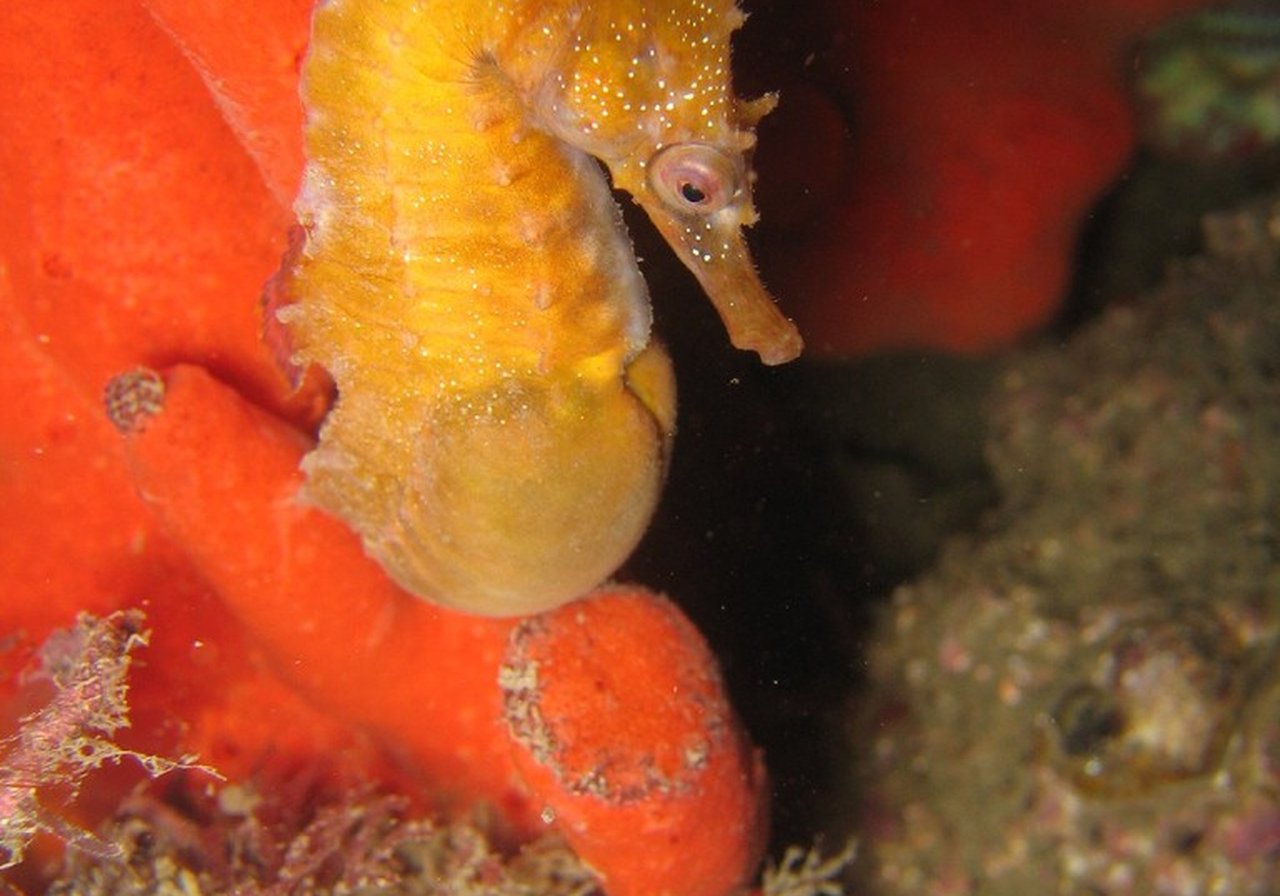
In brief
Male seahorses become pregnant — females deposit eggs into the male’s brood pouch, where he fertilises and incubates them for two to four weeks before releasing live young. It is one of the only examples of male pregnancy in the animal kingdom.
By the WARN Research & Conservation TeamChecked against IUCN Red List & CITES sourcesLast updated
Seahorses and pipefish are rare examples of male pregnancy in the animal kingdom. Females produce eggs; males fertilise and incubate them in a brood pouch on the abdomen — providing oxygen and nutrients for two to four weeks before releasing hundreds of fully formed fry. Courtship includes daily bonding dances — synchronised swimming and colour changes — reinforcing pair bonds in monogamous species. Dried seahorse trade and habitat loss threaten wild populations globally.
2–4 wks
Male brood pouch incubation period
1,000+
Fry released by some species per brood
46
Seahorse species — many Data Deficient or threatened
1
Known vertebrate group with male pregnancy
Quick facts
| Male pregnancy | Female deposits eggs in male brood pouch — he carries to term |
|---|---|
| Courtship | Daily bonding dances — synchronised swimming in monogamous species |
| Live birth | Male expels fully formed fry — not egg-laying |
| Survival | Tiny fraction of fry survive — intense predation |
| Trade threat | Dried seahorses for traditional medicine — no proven efficacy |
| Habitat | Seagrass and coral — lost to trawling and pollution |
Key takeaways
- Male seahorses carry eggs in brood pouch — rare male pregnancy.
- Courtship dances maintain pair bonds in monogamous species.
- Dried trade threatens wild populations — no proven medicine value.
- Seagrass habitat loss from trawling drives declines.
- Tiny fraction of fry survive predation after birth.
- Marine protected areas with seagrass meadows support recovery.
Male brood pouch biology
The male brood pouch is not merely storage — tissue lining provides oxygen and nutrients to developing embryos, analogous to a simplified placenta. Females deposit eggs through an oviduct into the pouch; males fertilise internally. Gestation lasts two to four weeks depending on species and water temperature. Birth involves muscular contractions expelling hundreds of miniature seahorses — each independent immediately but vulnerable to predation. Some pipefish and seadragons share male-care strategies with variations in pouch structure. The adaptation may allow females to begin producing the next clutch while males carry the current brood.
Courtship and pair bonding
Monogamous seahorse species perform daily greeting dances — synchronised swimming, colour changes and tail linking — maintaining pair bonds across breeding seasons. Promiscuous species show less elaborate ritual. Males compete for access to females; larger males often carry larger broods. Daily interaction may synchronise reproductive cycles — ensuring readiness when eggs are available. Disruption from aquarium trade capture breaks pair bonds and removes wild breeders from populations already under pressure.
Trade and aquarium pressure
Dried seahorses supply traditional medicine markets across China and Southeast Asia — claimed treatments without clinical evidence, similar to pangolin scale claims. Tens of millions traded annually before CITES listing restrictions. Live capture for aquarium trade removes wild individuals — many die in transit. Captive breeding exists for some species but does not satisfy global demand — laundering wild-caught animals persists. Project Seahorse and IUCN assessments document population declines across Indo-Pacific range countries.
Habitat protection needs
Seahorses anchor to seagrass, coral and mangrove holdfasts with prehensile tails — vulnerable to trawling that razes seabed habitat. Coastal development, pollution and anchor damage destroy meadows. Marine protected areas with seagrass conservation support recovery where enforced. Climate change and ocean acidification add stress. Donors funding marine habitat protection address root cause — trade enforcement alone cannot restore populations without living habitat. WARN marine guides link seahorse facts to broader ocean health context.